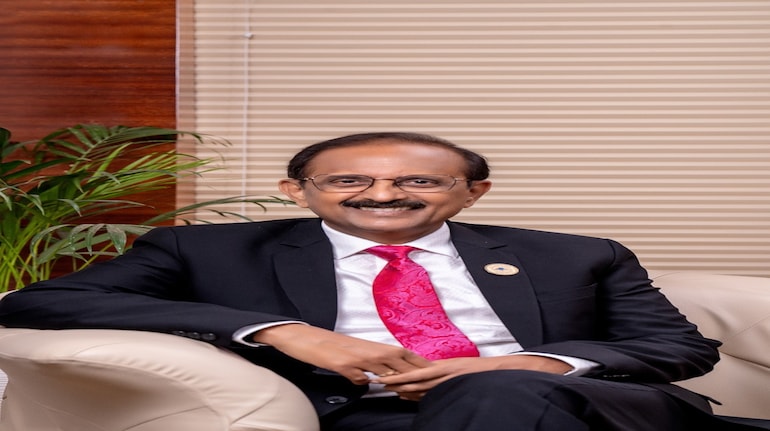
State Bank of India recently went past Rs 100 lakh crore-business mark but the milestone is not enough for it to crack the global top 20-bank list, which includes the likes of JP Morgan, Citi and MUFG.
Speaking to Moneycontrol, chairman CS Setty attributed it to India's overall global standing and the way banking is done in the country.
“The size of the bank, both in terms of assets or business is a function of economy. JP Morgan is 13 percent of the US economy but despite being 20 percent of the Indian economy, SBI is not in the global bank list because the Indian economy requires that scale. We believe that as India progresses and we make ourselves 25% of the GDP, our ability to be in the global ranking, along with India's rank, would be much better,” he said.
Balance-sheet constructFor profitability to keep pace with scale, a shift in how the bank does business is essential, Setty said.
“Balance sheets globally are structured heavily on to the market borrowings,” he said. In India, banks rely heavily on deposits. On average, deposits account for 70-80 percent of a bank’s liabilities.
“They (global banks) are not deposit based liabilities”. Therefore, if banks are not earning enough from deposits, there is a cost to it.
“It is not only interest cost but it is also cost of servicing,” he said, adding servicing cost in India is very high. “We can't charge too many things on the liabilities side. Market is not deep enough and it is not cheap,” the chief of India’s largest bank, which represents about 20 percent of the country’s GDP.
Watch the full interview here
When asked if the model is sustainable as the country aspires to be a $5-trillion economy in a year or two, Setty’s reply was a firm no.
“It will structurally alter,” he said, though may not be in the next five years “but maybe 10 years later, it will definitely happen”.
With retail saving moving towards insurance, mutual funds and pension funds, it could propel a change in the way money is consumed, as these forms of savings too will have funnel into the banking system.
Tackling costAs that shift happens, Setty said it could free up one of the biggest costs of the banking industry that of mobilising resources.
“Today, the biggest cost for any bank is cost of mobilising resources, not the cost of business alone. We need a branch network, digital offerings, technology, manpower and so this gamut of costs are here to stay for some time. This is a structural problem. Some banks in India also have managed it by having a significant other income share,” he said.

Discover the latest Business News, Sensex, and Nifty updates. Obtain Personal Finance insights, tax queries, and expert opinions on Moneycontrol or download the Moneycontrol App to stay updated!
Find the best of Al News in one place, specially curated for you every weekend.
Stay on top of the latest tech trends and biggest startup news.