






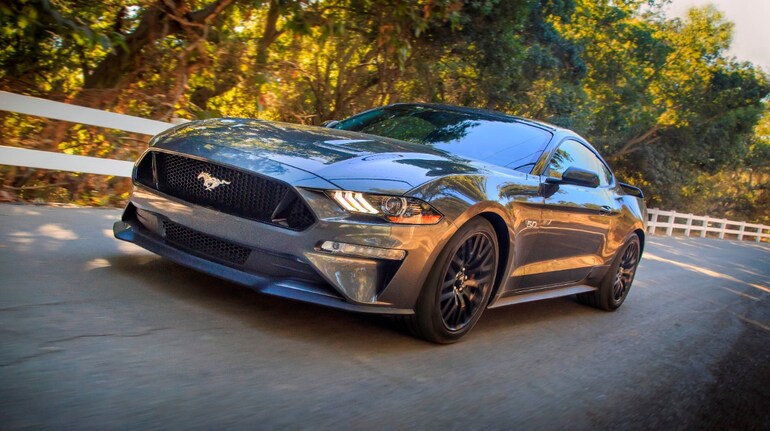

The interim India–US trade agreement could significantly reduce import duties on large-capacity vehicles but its real-world impact on the Indian car market is expected to be minimal. Most US-made cars are not compatible with Indian driving laws, which mandate right-hand-drive (RHD) vehicles.
Under the proposed deal, India will initially lower tariffs on diesel cars above 2,500cc and petrol cars above 3,000cc to 50 percent before reducing them further to 30 percent over a 10-year period.
While this appears to create an opportunity for high-capacity American vehicles, structural and regulatory challenges mean that only a limited number of vehicles can enter India.
Left hand vs right hand drive
The United States manufactures left-hand-drive (LHD) vehicles, while India is an RHD market. Converting LHD vehicles to RHD is expensive, complex and often not undertaken by manufacturers unless volumes justify the investment.
Ford Mustang: The Lone Contender
Among American manufacturers, Ford stands out as the only brand with a viable RHD petrol model above 3,000cc. The Ford Mustang, Ford’s iconic muscle car, is the only US-built Ford model available in factory RHD configuration.
The Mustang was launched in India in 2016, getting an enthusiast reception with its V8 performance and global appeal. However, due to high prices, limited demand and changing emissions norms, the model was discontinued within five years.
Following Ford’s exit from India in 2021, the Mustang remains the brand’s only theoretical candidate for re-entry under the new trade framework, as other models have downsized engines or transitioned to electric powertrains.
Jeep: The strongest US brand in India
After Ford’s exit, Jeep is the largest US automotive brand operating in India.
Owned by Stellantis, Jeep manufactures models such as the Wrangler, Grand Cherokee and Compass locally at its plant near Pune.
Some Jeep models benefit from lower import duties of around 15 percent, as they are brought into India as completely knocked down (CKD) kits before local assembly.
Jeep’s Toledo assembly complex in Ohio does produce RHD versions of the Jeep Wagoneer but these vehicles are powered by engines smaller than 3,000cc and therefore fall outside the scope of the reduced-tariff category.
The Wagoneer brand is currently not available in India.
General Motors and Cadillac: No Immediate Path Back
General Motors (GM), another major US automaker, has had a chequered history in India. The company exited the Indian market in 2017, after operating through brands such as Chevrolet and Opel.
While GM has recently begun producing right-hand-drive Cadillac Lyriq electric SUVs, the company does not manufacture any non-electric RHD Cadillac sedans or SUVs that would qualify under the new tariff structure.
GM has no immediate internal-combustion offerings suitable for India under the trade agreement.
Limited impact
Despite the apparent liberalisation of import duties, India’s RHD regulations, engine-capacity thresholds and the shrinking portfolio of large petrol and diesel engines mean that the India–US trade deal is unlikely to flood the Indian market with American cars.
It may only reopen a narrow window for niche, enthusiast-focused models, with the Ford Mustang remaining the most realistic example.
Unless US manufacturers invest in dedicated RHD production for larger-capacity vehicles, the trade agreement’s impact on India’s automotive landscape will remain symbolic rather than transformative.

Discover the latest Business News, Sensex, and Nifty updates. Obtain Personal Finance insights, tax queries, and expert opinions on Moneycontrol or download the Moneycontrol App to stay updated!
Find the best of Al News in one place, specially curated for you every weekend.
Stay on top of the latest tech trends and biggest startup news.





