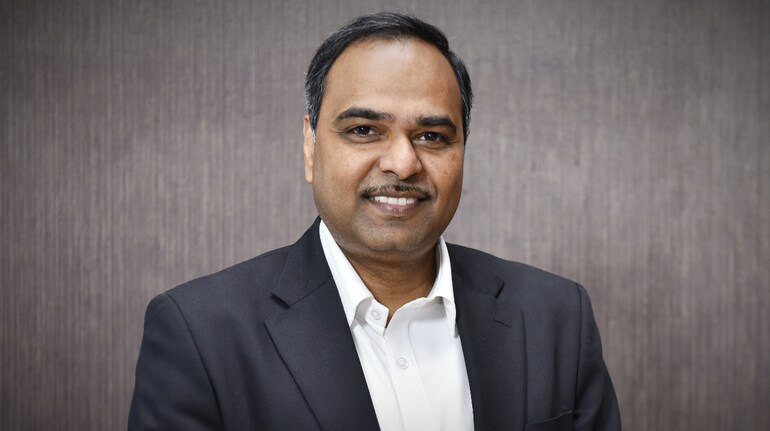
Tata Motors Passenger Vehicles (TMPV) has had a mixed year — slipping to fourth place before reclaiming the No. 2 spot — and is back in focus for investors. Led by managing director and CEO Shailesh Chandra, the company is targeting a 20 percent market share by 2030 and plans to take its next-gen EVs overseas.
With global automakers reassessing strategies amid rapid technological and regulatory shifts, partnerships have become an important lever for growth. Chandra says TMPV has held discussions with multiple entities for collaborations across products, technology and new markets. Edited excerpts:
Partnerships have taken centre stage globally. Many companies want to partner in India. Does Tata Motors need a partner?We have always been open to collaboration like any other global manufacturer. Everybody has to do many things dictated by disruption in technology, sustainability and changing consumer preferences. Companies are looking to optimise investments and explore partnerships. Every manufacturer has certain gaps that can be complemented by another. We have explored collaborations in the past and will continue to do so. Whenever there is meaningful, asymmetric collaboration with a win-win outcome, we would pursue it. There is nothing on the cards right now, but we are open to it.
Are you talking to anybody for a partnership?At this moment, I cannot say. I cannot say both ‘yes or no’. There will always be conversations. When you say a partnership is “on”, you must have crossed a certain milestone, because there are stages —exploration, deeper pilots, feasibility, and then serious execution.
Would these partnerships be for EVs or internal combustion engine (ICE) vehicles?It can be for anything—powertrains, platforms, cross-badging—the whole spectrum. And this won’t be restricted to the India market; it can extend to global markets as well.
Your EV company is well placed on products and finances. Would you consider merging it back with the parent to give investors an exit?We are not looking for any immediate investment. We have used the earlier investment to expand our portfolio, improve technology and strengthen the value proposition of our products. The current portfolio will become even more compelling. We are EBITDA positive and receiving PLI funds for localisation and technology investments. We are not thinking in the direction of merging the EV company back into TMPV. Those are open questions. There is no firm opinion on that right now.
Most EV action today is in the above-Rs 10 lakh segment, but there is demand in the affordable segment too. How do you see that space?To offer a certain range, the battery pack size remains the same. In a bigger car, the same battery pack becomes a lower percentage of overall cost. The challenge in the entry segment is delivering a 400+ km range without significant price premium over ICE. When you hit the sweet spot of 500 km range, lifetime warranty and lower charging times, demand picks up very fast. This is the journey for the entry segment. Once cost reductions allow us to reach that point, we will be there.
TMPV is now independently listed and under more scrutiny. When do you expect standalone profitability, independent of Jaguar Land Rover?While subsidiarisation was underway, we were confident of generating enough cash for the ICE business. It has been self-sufficient since 2022. For EVs, we needed funds to build technology and platforms. Now, we have become EBITDA positive and localised enough to secure PLI funding. The focus now is to ensure EBITDA exceeds capital expenditure and reaches benchmark levels—greater than 10 percent in two years for the ICE business, followed by EVs. Our target is 18–20 percent market share.
It is a halo product. There is a delay. We earlier wanted to bring it in 2025, but engineering feasibility challenges pushed timelines. That is why 2025 became end-2026. We have shown two different concepts at two auto expos. Avinya will be a family of products.
You have opposed reducing GST on strong hybrids. Has your stance changed?Strong hybrids are an alternative powertrain for performance and fuel efficiency within ICE technology, similar to diesel. They have their own value proposition, with operating costs equivalent to diesel. If diesel does not receive GST incentives, why should hybrids? Some manufacturers who intend to go slow on EVs may rely on hybrids to meet CAFÉ 3 norms and avoid penalties. You cannot subsidise something that is not a destination technology.
The new manufacturing plant near Chennai—will it be only for JLR or for TMPV as well?Initially, the plan was only for JLR. But it can be considered for Tata Motors Passenger Vehicles too. Right now, we are producing at around 600,000 units a year, with headroom to go up to 900,000. Based on run-rate, we are heading towards 700,000.
EV penetration within your portfolio is rising. When will it surpass CNG?In the September quarter, EV penetration was 17 percent. We want the CNG portfolio to grow, and it has been growing much faster. In October retail sales, we did 25,000 units in CNG and 9,500 in EVs. We expect EVs to reach 30 percent of our portfolio by 2030.

Discover the latest Business News, Sensex, and Nifty updates. Obtain Personal Finance insights, tax queries, and expert opinions on Moneycontrol or download the Moneycontrol App to stay updated!
Find the best of Al News in one place, specially curated for you every weekend.
Stay on top of the latest tech trends and biggest startup news.