






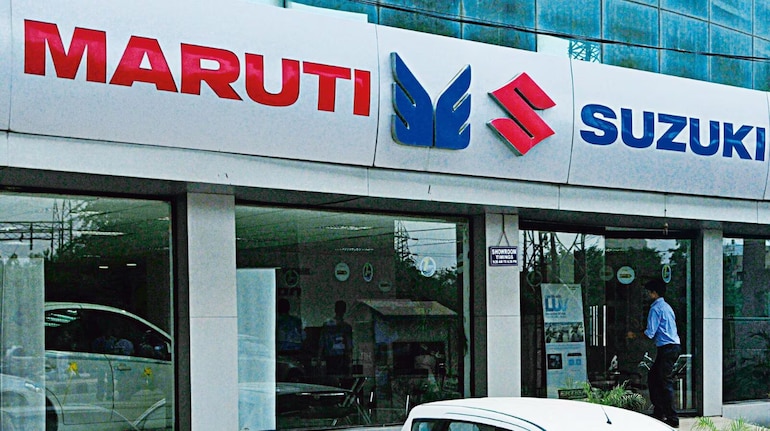
Maruti Suzuki, the undisputed leader of India’s passenger vehicle (PV) market, is facing its toughest challenge yet as rising competition from home-grown rivals Mahindra & Mahindra (M&M) and Tata Motors steadily erodes its market dominance. In 2025, the automaker’s 12-month market share slipped below the 40% mark for the first time, highlighting a structural shift in the Indian auto industry.
According to vehicle registration data released by the Federation of Automobile Dealers Association (FADA), Maruti Suzuki’s market share declined to 39.91% in 2025. This marks a sharp fall of nearly five percentage points over the past five years, from around 44% in 2021. Once synonymous with dominance in the PV segment, the company has gradually ceded ground as consumer preferences and competitive dynamics evolved.
The impact of this shift is also visible in sales rankings. In 2021, Maruti Suzuki occupied eight of the top ten slots when it comes to best-selling car. By November 2025, that number had fallen to six, a position the company also ended 2024 with. While still a formidable player, the narrowing presence reflects intensifying competition across segments.
A key reason behind Maruti’s waning grip has been the rapid rise of sports utility vehicles (SUVs). Historically strong in small cars and compact sedans, Maruti was relatively slow to build a comprehensive SUV portfolio just as the segment emerged as the dominant force in the Indian PV market. This gap created an opportunity for rivals to expand aggressively.
Mahindra & Mahindra and Tata Motors capitalised on the SUV wave, together capturing about 26% of the domestic market by the end of 2025. Models such as the Mahindra XUV3XO, Scorpio and Thar, along with Tata’s Nexon, reshaped buyer preferences. In a symbolic turning point, the Tata Punch emerged as India’s best-selling car in 2024, ending Maruti Suzuki’s four-decade-long reign at the top of the sales charts.
Despite the mounting pressure, Maruti Suzuki has laid out an ambitious roadmap. The company has stated its intent to reclaim a 50% market share by 2030, a milestone it last achieved in FY2019. To support this goal, Maruti plans to introduce eight new models by FY31, expanding its total portfolio to 28 vehicles. The strategy signals a renewed push to address gaps, particularly in high-growth segments.
Competition, however, is only expected to intensify
Tata Motors has gained fresh momentum with the launch of the Sierra SUV, which reportedly attracted 70,000 expressions of interest on the very first day of bookings, making it one of the company’s most successful launches. At the launch in late November 2025, Tata Motors’ Passenger Vehicles Managing Director and CEO Shailesh Chandra said the model could significantly boost Tata’s SUV market share from the current 16–17% to as high as 20–25%, helping strengthen areas where its portfolio was previously weak.
Mahindra & Mahindra, meanwhile, continues to increase its offerings. On January 5, it introduced the XUV 7XO, the successor to the popular XUV700, and is also preparing to roll out a refreshed Scorpio N. Analysts expect these updates to drive incremental volumes for the Scorpio brand, which remains M&M’s best-selling model and a consistent presence in India’s top ten selling cars.
Looking further ahead, M&M’s most consequential move is expected in 2027, when it plans to debut vehicles based on its NU.IQ platform. Designed specifically for the sub-4 metre compact segment, the platform could significantly expand Mahindra’s footprint in a space where it currently has limited representation through the XUV 3XO and the Bolero.
A Maruti Suzuki India spokesperson said, “This is giving a misleading picture. Pre-GST, there was a decline in the mass segment, which has now clearly improved following the government's GST 2.0 reform that revived demand in the passenger vehicle market. Post GST 2.0, we are seeing more than 91% growth for our small cars. We continue to see very strong demand across segments, our network stock is as low as three days, and our plants are operating additional days to convert this demand into timely customer deliveries. Our wholesale market share for December crossed 44% and we recorded our highest-ever monthly retails of 2.86 lakh units in the month, a 13.2% year-on-year growth. The calendar year also ended with highest-ever wholesale and retail volumes of 18.44 lakh units and 18.71 lakh units respectively.”
As India’s passenger vehicle market continues to evolve, Maruti Suzuki finds itself at a crossroads. While its scale, brand strength and dealer network remain unmatched, reclaiming lost market share will depend on how effectively it adapts to changing consumer tastes and responds to increasingly aggressive competition in the SUV-dominated landscape.

Discover the latest Business News, Sensex, and Nifty updates. Obtain Personal Finance insights, tax queries, and expert opinions on Moneycontrol or download the Moneycontrol App to stay updated!
Find the best of Al News in one place, specially curated for you every weekend.
Stay on top of the latest tech trends and biggest startup news.






