






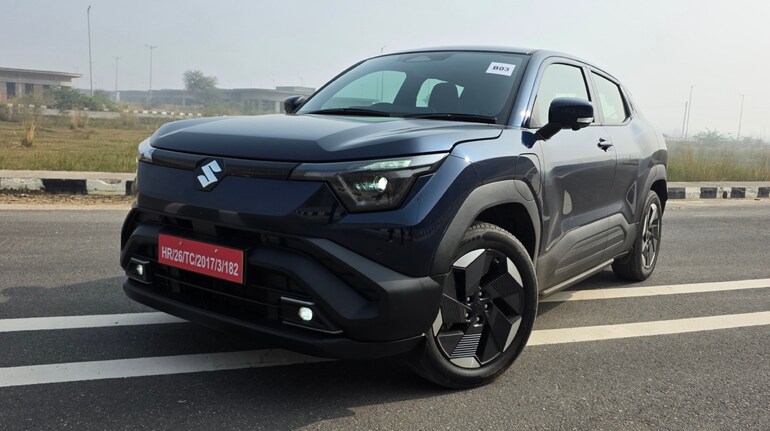
Maruti Suzuki India is finally entering the electric vehicle (EV) space with the e Vitara. Is it too late to the party, though? Tata Motors, Mahindra & Mahindra, JSW MG Motor India and Hyundai Motor India are already selling electric cars in the country. Competition is intense, and India's largest carmaker does not have a first-mover advantage this time.
The e Vitara has not been launched yet, and bookings are still not open. Test drives are expected to begin in January 2026. Maruti Suzuki will initially dispatch the electric SUV across 500 showrooms, including 350 outlets in December and another 150 in January.
Ahead of the start of official test drives, we got an opportunity to drive the e Vitara. Here is our first-drive review.
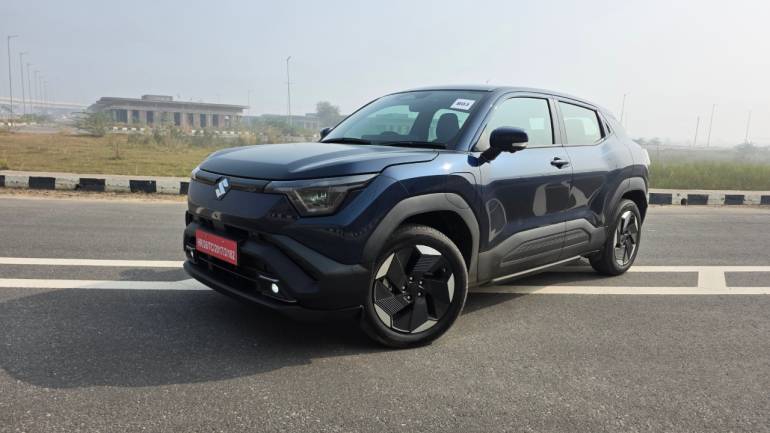
The e Vitara is Maruti Suzuki's first battery electric SUV and is built on the all-new Heartect-e EV platform. It measures 4,275mm in length, 1,800mm in width and 1,640mm in height, with a wheelbase of 2,700mm. Ground clearance stands at 185mm.
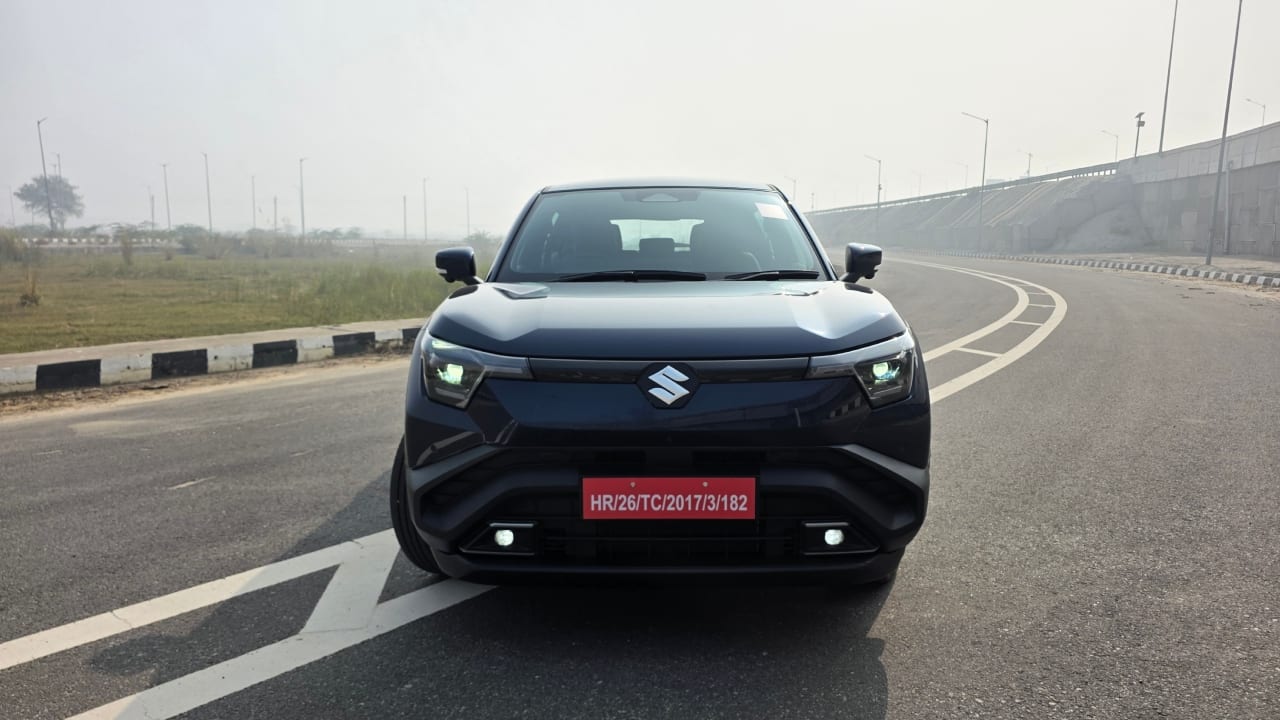
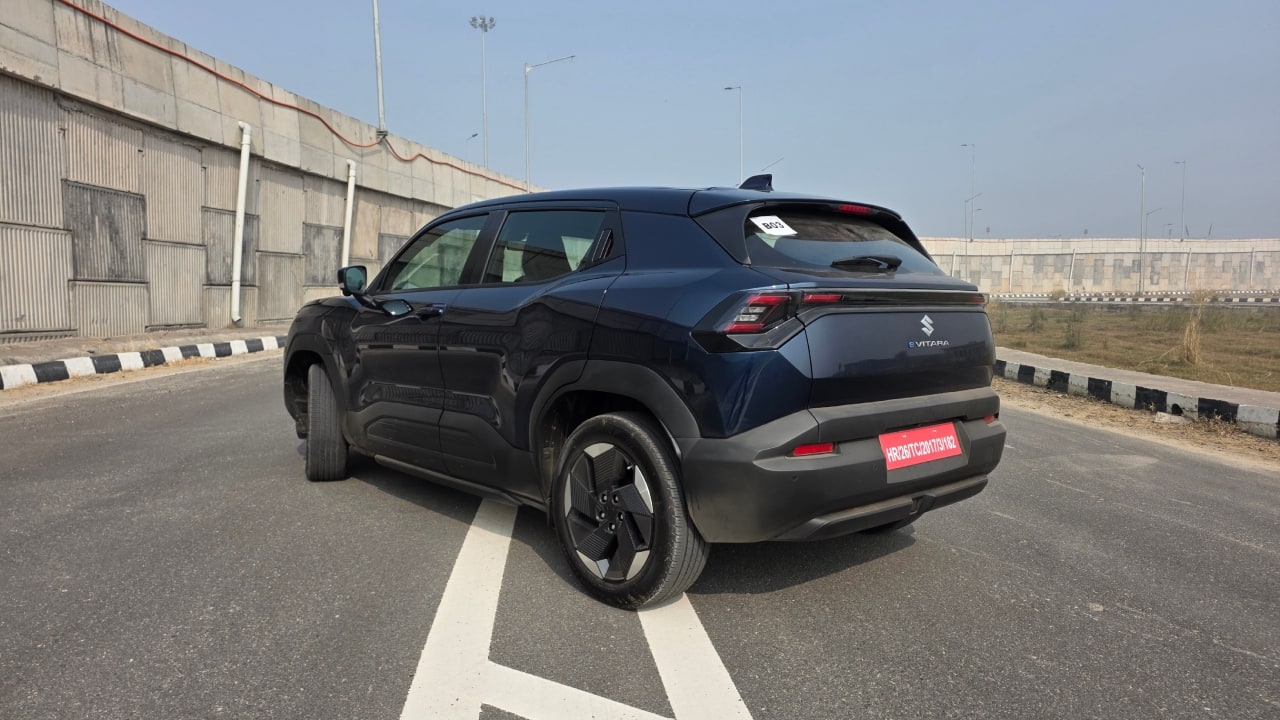
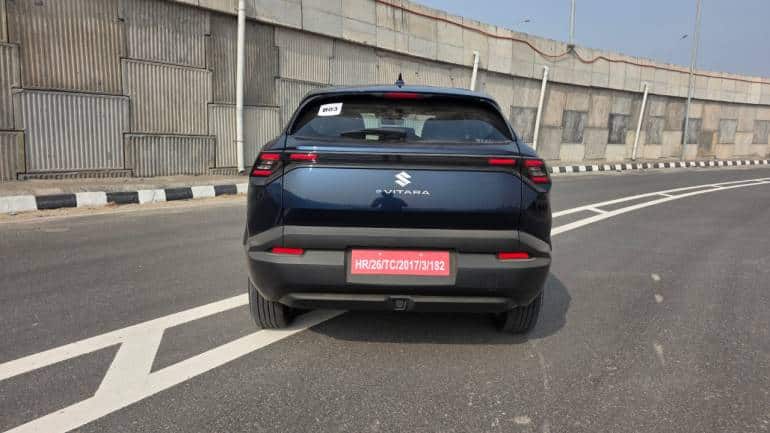
The design is familiar, having been showcased earlier at the Bharat Mobility Global Expo 2025. Unlike some electric SUVs from Tata or Mahindra, the e Vitara takes a more understated approach. Lighting elements are used, but not overdone. The SUV gets 3-point Matrix LED DRLs, LED projector headlamps and LED tail lamps. Aerodynamic detailing is evident across the body.
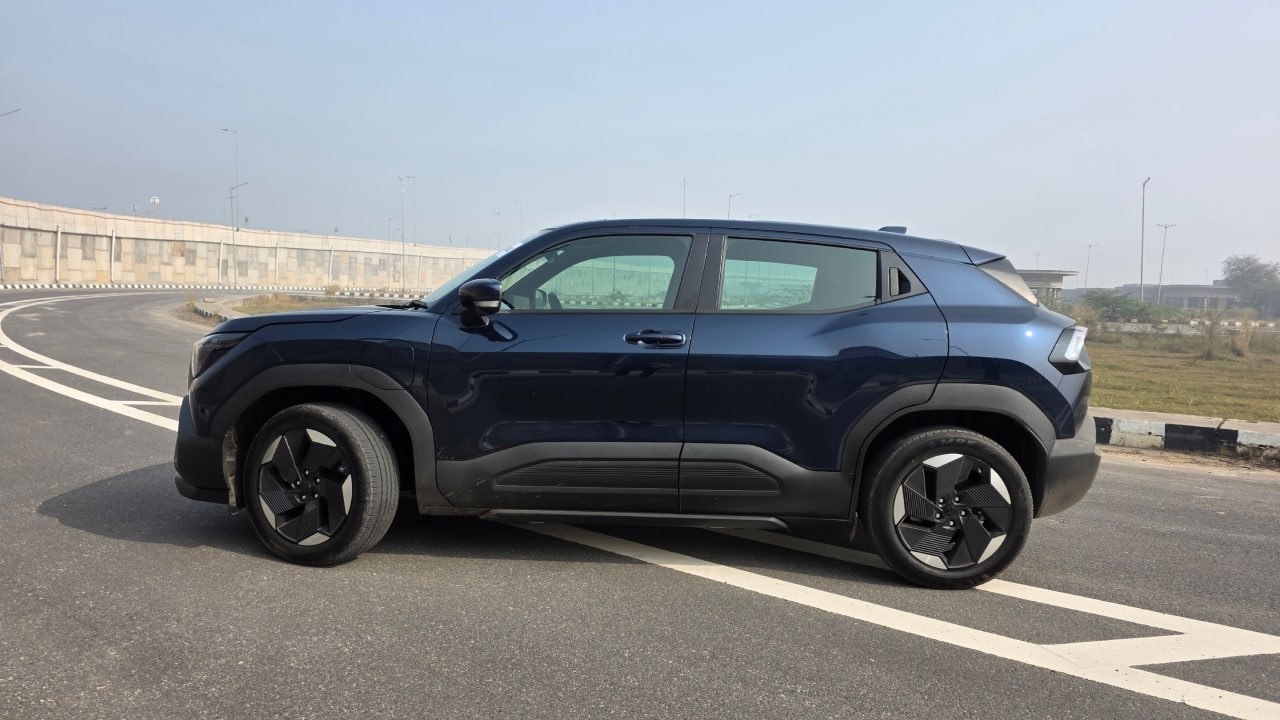
It rides on 18-inch aerodynamic alloy wheels shod with low-resistance MRF Wanderer tyres, aimed at improving efficiency. A roof-end spoiler is also part of the exterior package.
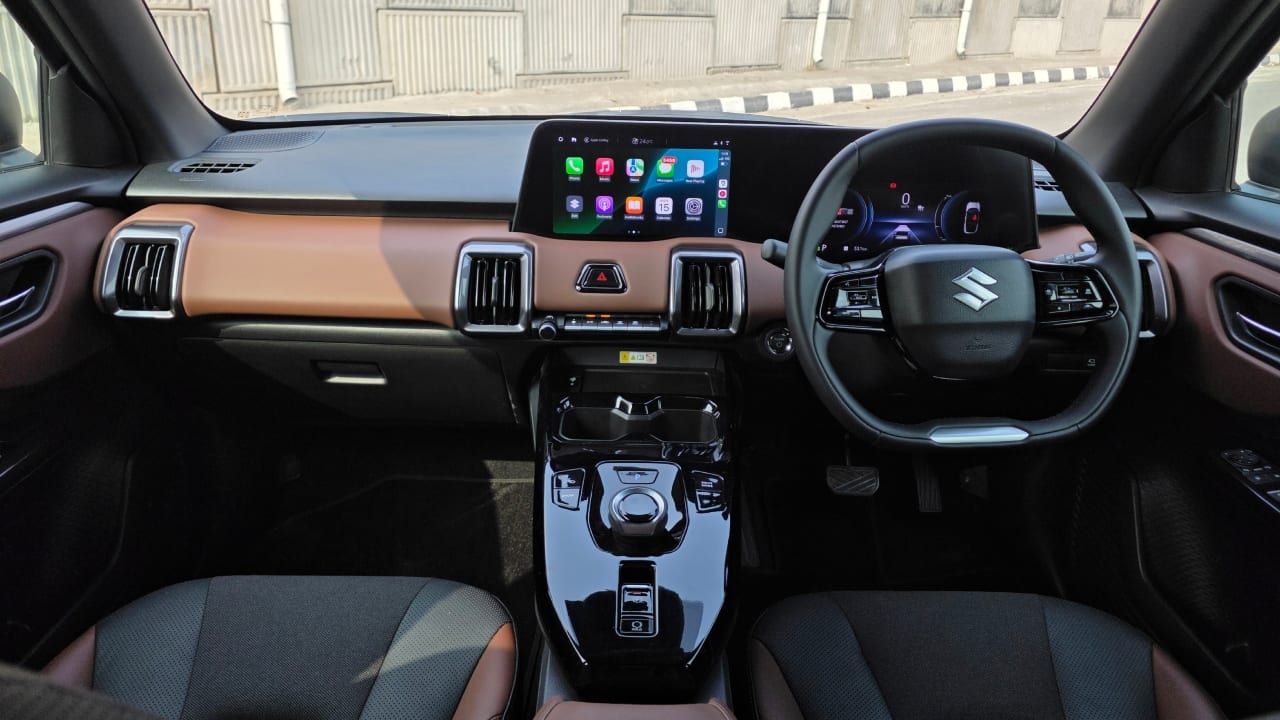
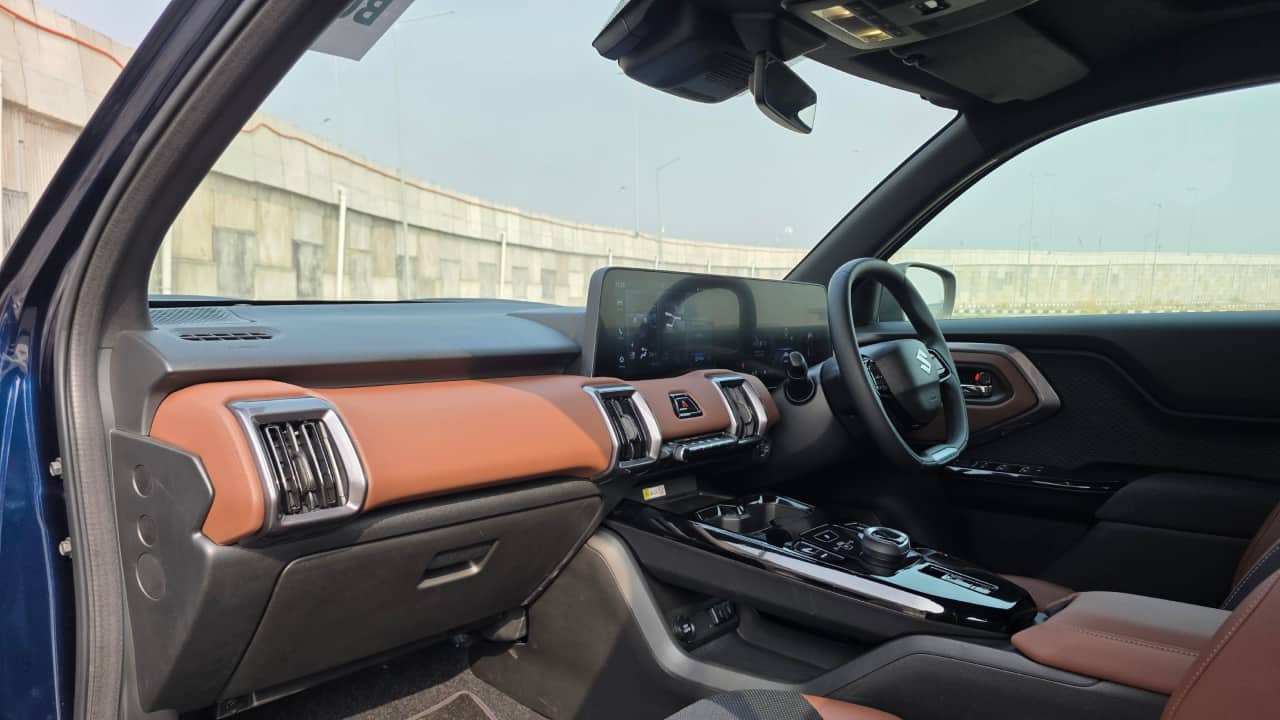
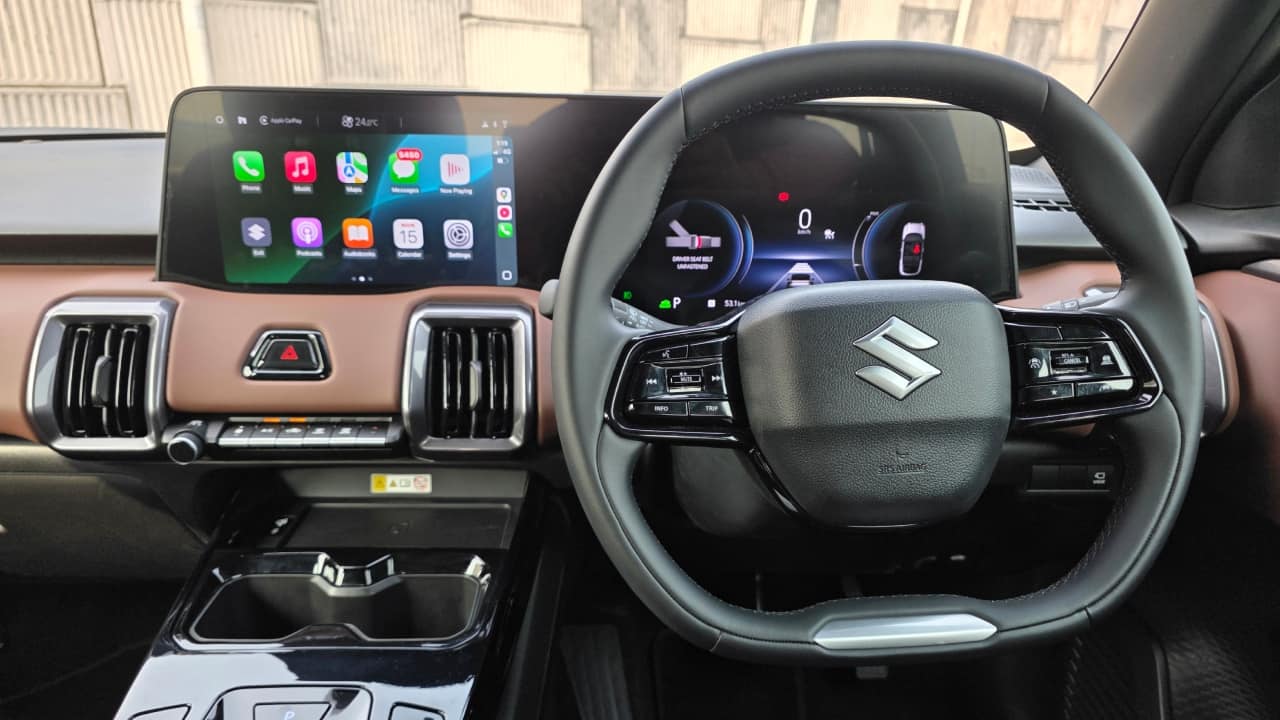
Inside, the e Vitara features a twin-deck floating centre console and a fixed-glass sunroof. The dashboard integrates two digital screens -- a 10.1-inch touchscreen infotainment system and a 10.25-inch multi-information display. The cabin uses a mix of dual-tone soft-touch materials and hard plastics.
The screens are functional, but the bezels are on the thicker side. The infotainment system is easy to navigate, though it falls short in terms of perceived quality. The same applies to the 360-degree camera, which is useful but offers sub-par feed quality.
That said, Maruti Suzuki deserves credit for cabin ergonomics. Physical controls for key functions such as electronic parking brake, auto hold and drive modes are neatly laid out on the centre console, while climate controls remain separate on the dashboard. The gear selector is also well integrated.
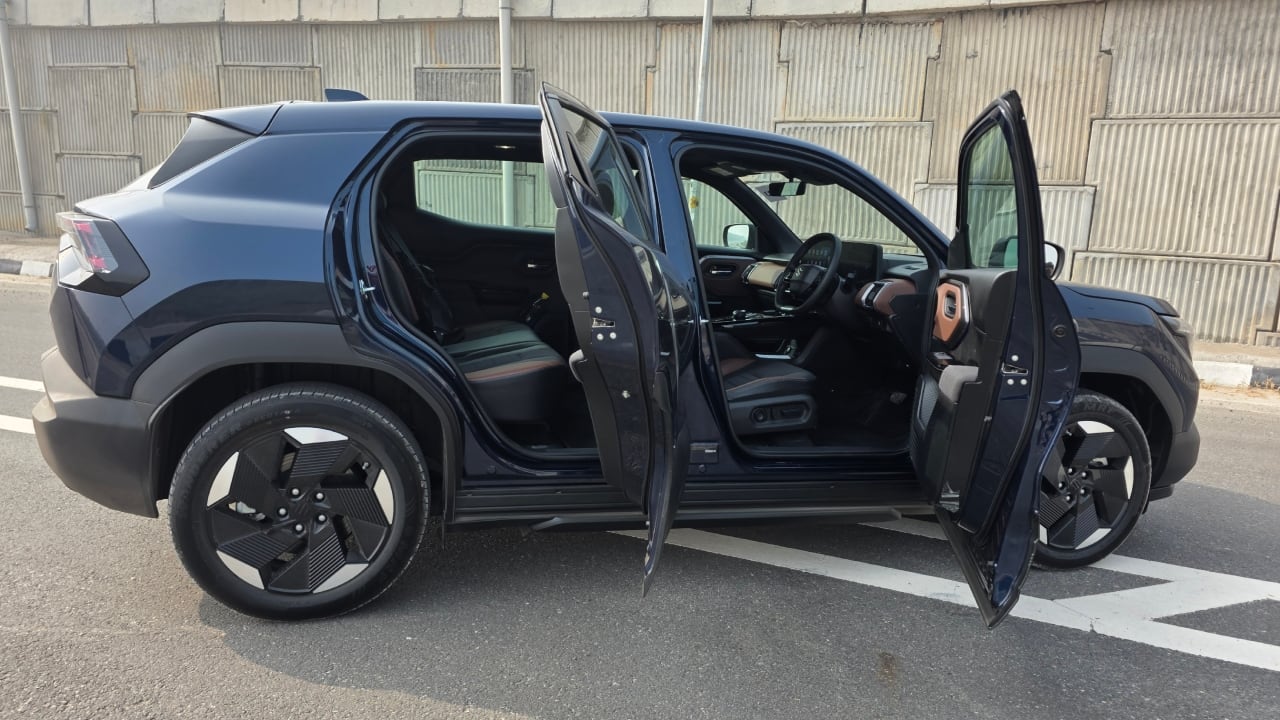
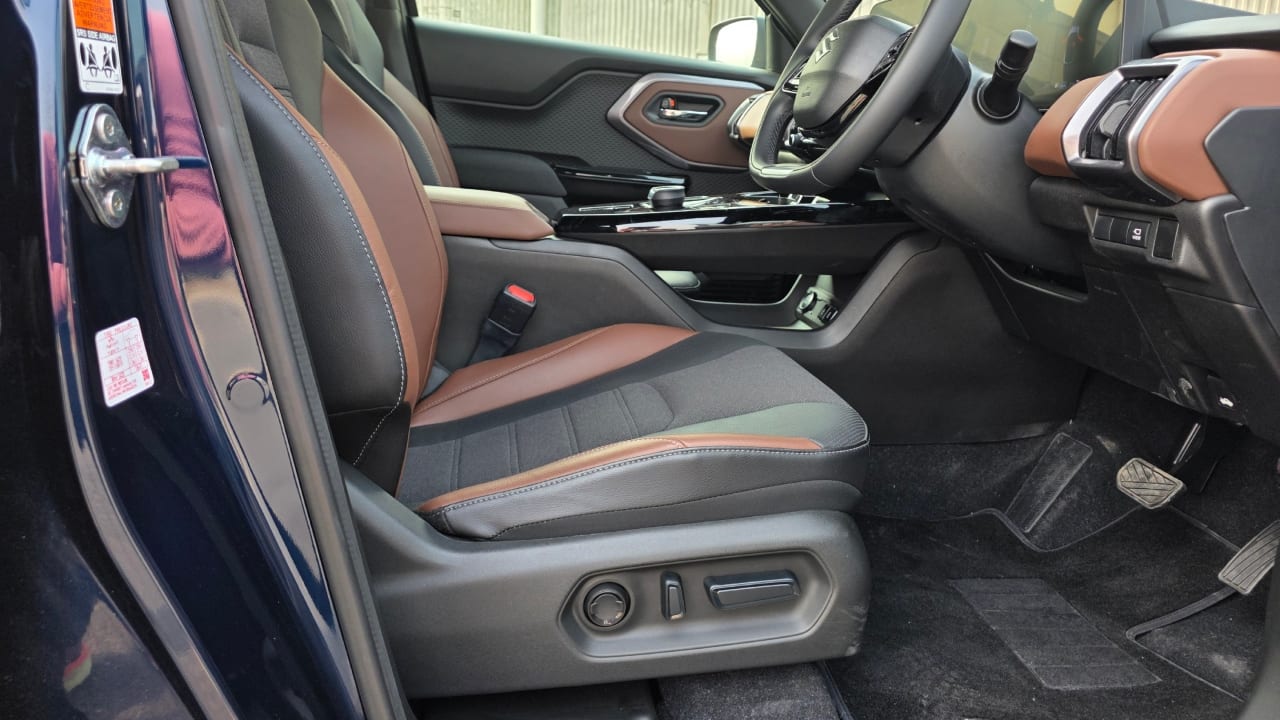
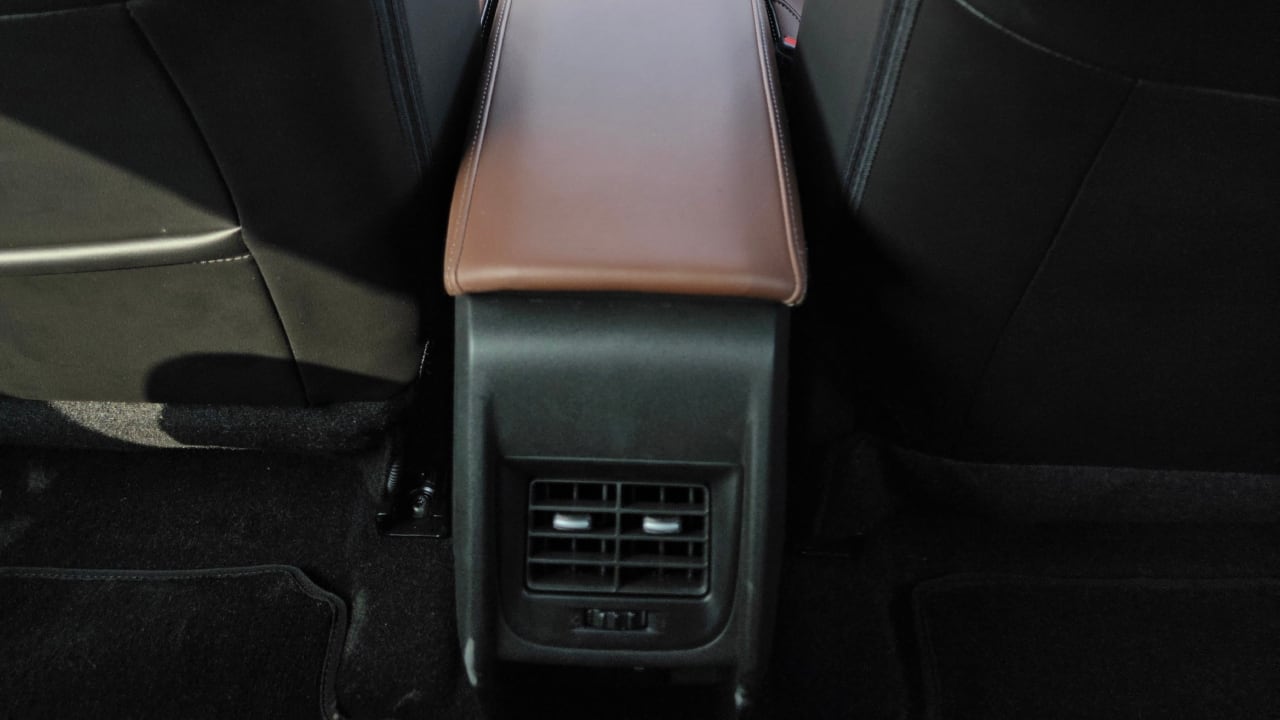
You get ventilated front seats with a 10-way power-adjustable driver seat. The rear bench offers a 40:20:40 split with sliding and reclining functions, along with a centre armrest and cup holders. The long wheelbase translates into generous cabin space.
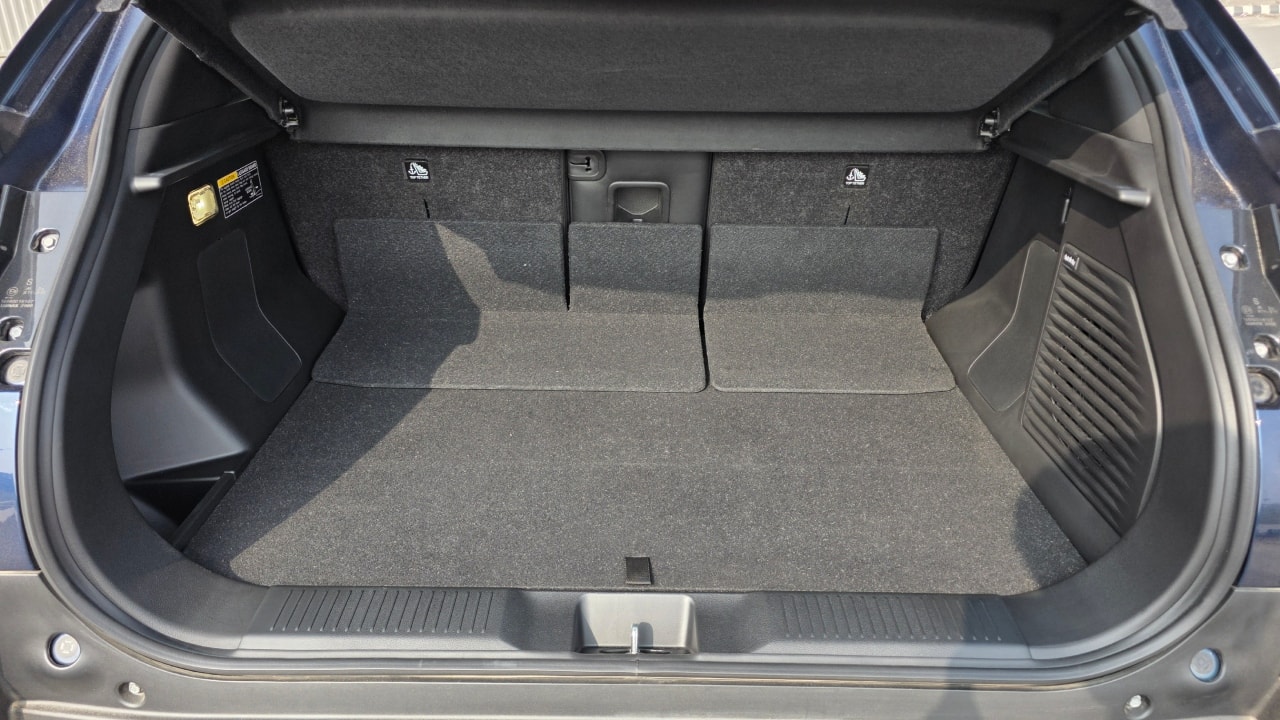
At 5'11", with a 6'0" co-driver, both of us were comfortable in the front. Rear-seat legroom and knee room were more than adequate, though headroom could be a concern for taller occupants. Seat comfort is good. Boot space, however, is limited to 310 litres, and with the motor mounted up front, there is no frunk to compensate.
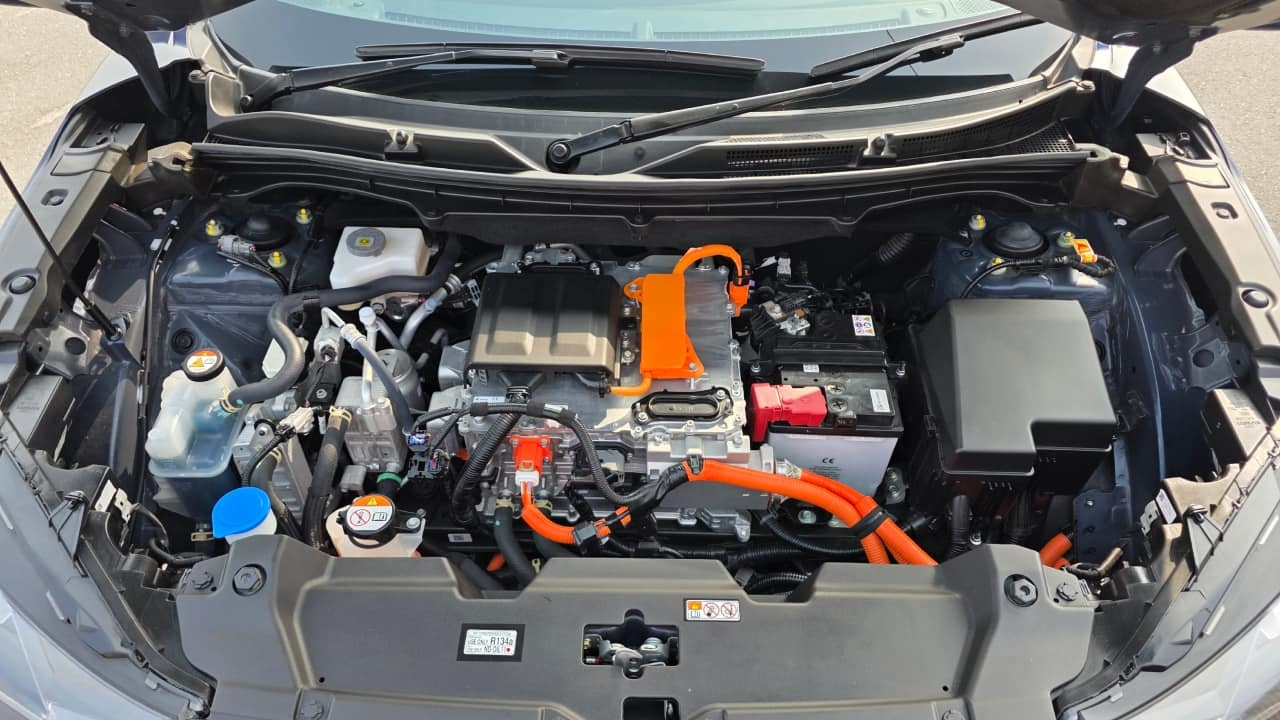
The e Vitara uses a permanent magnet synchronous motor paired with a single-speed electric drive. It is offered with two lithium iron phosphate (LFP) battery options -- 49kWh and 61kWh. A dual-motor setup is not planned for India, at least initially.
The 49kWh variant delivers 105.8kW, while the 61kWh version produces 128kW. Maximum torque is rated at 192.5Nm. The motor, inverter and transmission are integrated into a single 3-in-1 unit. Maruti Suzuki states that the battery system has been tested for temperatures ranging from minus 30 degrees Celsius to 60 degrees Celsius.
Our drive was in the 61kWh version. At the start, the car showed 97% charge with a displayed range of 457km. Based on the drive, a real-world range of over 400km on a full charge appears achievable, with the possibility of touching 440-450km with efficient driving. The claimed range for the 61kWh variant is 543km.
The e Vitara is not aimed at enthusiasts. It is positioned as a daily commuter designed to get you from point A to point B without fuss.
Unlike some EVs that deliver a sharp surge of torque from standstill, the e Vitara's power delivery feels linear. Throttle response is progressive rather than abrupt, with power building in a measured manner during initial acceleration.
It offers Eco, Normal and Sport drive modes, along with a dedicated Snow mode. Regenerative braking supports one-pedal driving, though regen levels can only be adjusted via the touchscreen when the vehicle is stationary. The difference between drive modes is noticeable, with Eco tuned for relaxed driving, Sport adding urgency, and Normal balancing the two.
The steering is light at city speeds, making it easy to manoeuvre. However, it does not gain sufficient weight at higher speeds, which slightly affects confidence when driving in triple-digit territory. Responses to small inputs are precise. Tyre and road noise become noticeable when pushing harder. The compact 5.2-metre turning radius makes the car easy to handle on narrow roads.
The suspension setup feels firm. At low speeds, speed breakers and potholes are felt distinctly, which could be unsettling for some occupants, both at the front and rear. Through corners, body roll is evident, and quick direction changes reveal limited composure. At highway speeds of around 100kmph, the car feels stable, though additional steering weight would have improved overall confidence.
Braking hardware includes ventilated disc brakes at both ends. Braking performance is adequate, though initial bite could be stronger. The pedal feel takes some getting used to.
The e Vitara has secured a five-star safety rating at Bharat NCAP. This is likely to reassure buyers who have previously questioned Maruti Suzuki's safety credentials.
The Heartect-e platform uses over 50% high-tensile steel and incorporates a dedicated battery protection system. Seven airbags are standard, including a driver-side knee airbag. The e Vitara also gets Level 2 ADAS.
In real-world use, the ADAS system works effectively, detecting lane markings accurately, even when they are faded. Overall, the system functions reliably without feeling intrusive.
The EV penetration in the Indian passenger vehicle (PV) market currently stands at around 5%. This appears low, considering the policy push from the government so far and the efforts made by carmakers across segments, from mass-market players to luxury brands. One of the primary reasons for this slow adoption has been the lack of adequate charging infrastructure.
The carmaker has consistently maintained that it wanted to put an EV ecosystem in place before launching its first electric car in India. With the e Vitara, it appears to have stayed true to that stated approach.
Maruti Suzuki has developed a dedicated EV charging ecosystem for the e Vitara under a single digital platform called 'e for me'. The company has partnered with 13 charge point operators and aggregators, enabling access to multiple public charging networks through one interface.
Over 2,000 exclusive charging points have been installed across Maruti Suzuki's dealer and service network, supplemented by partner-operated public chargers. The company aims to enable over 1,00,000 public charging points by FY30.
Charging access, payments and home-charger management are integrated through the 'e for me' mobile app. More than 1,500 service workshops across over 1,100 cities have been made EV-ready and are supported by a trained workforce.
Like any car, the e Vitara has its strengths and weaknesses. It does not chase visual drama or class-leading gimmicks. Instead, it comes across as a dependable companion. Most of what Maruti Suzuki has equipped this EV with works well, barring a few misses, the most prominent being camera quality.
The e Vitara is not an eyeball-grabber, but a car that goes about its job quietly and efficiently.
Pricing has not been announced yet, which limits a final judgement on value. Maruti Suzuki has confirmed that the e Vitara will be offered with a Battery-as-a-Service (BaaS) option, along with an assured buyback programme. Combined with the company's charging ecosystem, this strengthens the overall proposition.

Discover the latest Business News, Sensex, and Nifty updates. Obtain Personal Finance insights, tax queries, and expert opinions on Moneycontrol or download the Moneycontrol App to stay updated!
Find the best of Al News in one place, specially curated for you every weekend.
Stay on top of the latest tech trends and biggest startup news.




