






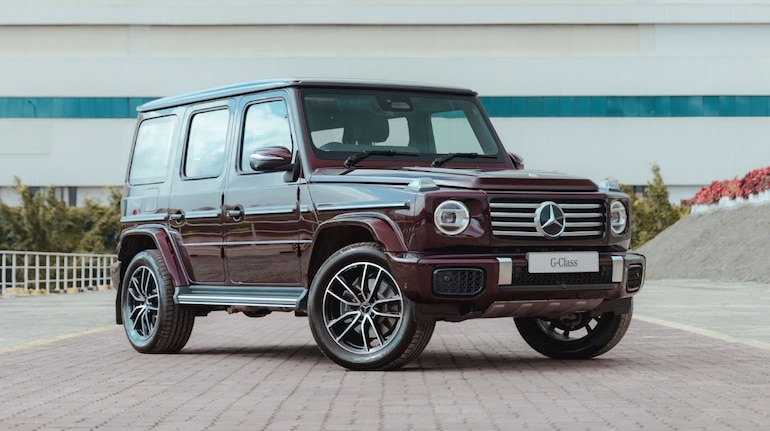

The European Union (EU) and India today concluded negotiations on a landmark Free Trade Agreement (FTA) that will sharply reduce import tariffs on cars manufactured in Europe from as high as 110% to as low as 10%, subject to an annual quota of 2,50,000 vehicles.
The deal is expected to significantly improve market access for European automakers in India, which is the third-largest passenger vehicle (PV) market in the world and one of the fastest-growing large economies globally.
Under the agreement, tariffs on cars exported from the EU to India will be gradually lowered from the current 110% to 10%. In addition, tariffs on car parts will be fully abolished over a period of five to 10 years, the European Commission said in an official statement.
In India, cars imported as completely built units (CBUs) priced up to USD 40,000 attract a 70% Basic Customs Duty. Models priced above USD 40,000 face the same 70% Basic Customs Duty, along with an additional 40% Agriculture Infrastructure and Development Cess, taking the effective total import tax to around 110%.
In contrast, completely knocked down (CKD) kits imported for local assembly attract a significantly lower Basic Customs Duty of about 16.5%.
In the calendar year (CY) 2024, EU exports of motor vehicles to India were valued at 1.6 billion euros (around Rs 17,400 crore).
In CY25, India's luxury PV market, dominated by German brands such as Mercedes-Benz and BMW, posted sales of around 51,000-52,000 units. Nearly 90% of luxury vehicle volumes in the country were driven by locally assembled models.
Top luxury carmakers like Mercedes-Benz, BMW, Audi and Jaguar Land Rover operate assembly plants in Maharashtra and Tamil Nadu, where they manufacture cars using CKD kits sourced from overseas production facilities.
Mercedes-Benz India MD and CEO Santosh Iyer said: "Mercedes-Benz welcomes the India-EU FTA as it will have a positive cascading effect on customer sentiments for the luxury segment, with a boost in overall economic growth. A gradual tariff reduction on vehicles and fully liberalised automotive parts are strategically important decisions in the FTA for the automotive industry."
"The FTA opens up new avenues for customers with improved vehicle allocations, better availability of top-end global models for the Indian market, faster access to the latest technology and creating a stronger luxury car ecosystem. Mercedes-Benz will, however, continue to value add to customers with local production of world-class models from our manufacturing plant," Iyer added.
BMW Group India President and CEO Hardeep Singh Brar said: "The conclusion of the India-EU FTA is a historic and ambitious milestone, reflecting the growing strategic and economic relevance of India on the global stage. We have always advocated free trade as it enhances fair market access, strengthens economic collaboration, leverages mutual strengths, and builds more resilient supply chains, especially at a time when such cooperation is more critical than ever."
"The proposed phased reduction of tariffs on cars and auto components has the potential to positively impact consumer confidence, enable greater product choice, and foster technological innovation and sustainable growth within the Indian automotive sector, particularly in future mobility," Brar observed.
Mercedes-Benz imports models like G63 AMG, CLE 53 AMG and AMG S 63 E-Performance as CBUs, while BMW cars such as M4, M5, M8, i4, i5, i7 and iX arrive in India as CBUs. Jaguar Land Rover imports the Defender as a CBU from its Slovakia facility.
Audi India Brand Director Balbir Singh Dhillon said: "We welcome the FTA between India and the European Union and recognise its potential to deepen economic ties with one of the world's largest trading blocs. This constructive approach to trade could support the broader automotive ecosystem, including innovation, supply-chain efficiency, and technology collaboration."
"That said, any implications for pricing and market can only be assessed once the final terms are available and carefully reviewed, including the timeframe of implementation. Until then, it would be premature to draw conclusions on specific commercial or product strategies. We are positive that India-EU FTA will create a stable and predictable environment for European automakers to invest, innovate, and better serve customers in India," Dhillon noted.
However, the major beneficiaries of the India-UK FTA could be niche supercar brands such as Lamborghini, Porsche, Ferrari and Maserati, all of which currently sell fully imported (CBU) models in India.
Besides, British luxury brands such as Rolls-Royce, Aston Martin, Bentley, McLaren and Lotus currently retail only CBU models in India. These brands are expected to gain from tariff reductions under the India-United Kingdom Comprehensive Economic and Trade Agreement (CETA), signed in July last year.
The India-EU FTA is designed to reduce trade barriers across 96.6% of EU goods exports to India, with total tariff savings on European products estimated at around 4 billion euros (Rs 43,488 crore) per year. The European Commission expects EU goods exports to India to double by 2032 as a result of the agreement.
The FTA grants EU companies privileged access to India's domestic market of approximately 1.45 billion people, supported by tariff reductions, removal of regulatory barriers, and improved transparency and predictability in trade rules.
The agreement also includes a dedicated chapter to help small and medium-sized enterprises (SMEs) benefit from new export opportunities, including dedicated contact points to assist with implementation and compliance.
Beyond automotive products, tariff reductions will apply to sectors such as machinery, chemicals, and pharmaceuticals. However, the motor vehicle segment is identified as one of the key industrial beneficiaries of the trade opening.

Discover the latest Business News, Sensex, and Nifty updates. Obtain Personal Finance insights, tax queries, and expert opinions on Moneycontrol or download the Moneycontrol App to stay updated!
Find the best of Al News in one place, specially curated for you every weekend.
Stay on top of the latest tech trends and biggest startup news.





