






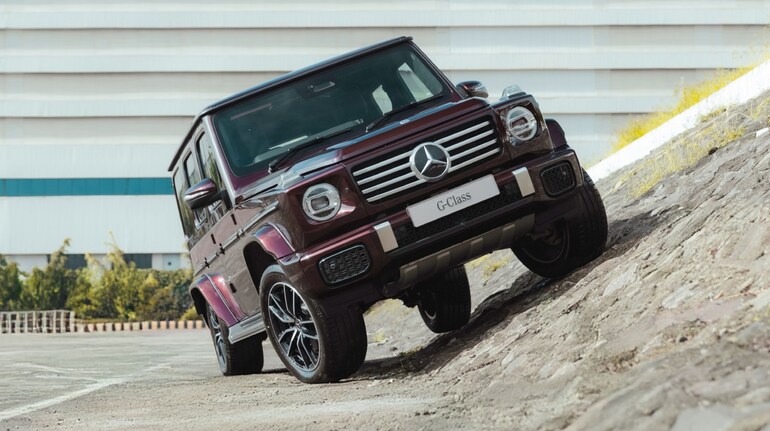

The proposed free trade agreement (FTA) between India and the European Union (EU) may not lead to immediate price reductions for most luxury cars sold in the country, with manufacturers saying the impact on consumer pricing is likely to be limited in the near term. Industry executives and analysts said while certain niche, fully imported models could benefit over time, the bulk of the luxury car market is unlikely to see a material change.
After nearly a decade of negotiations, India and the EU are expected to announce the conclusion of the proposed trade deal on January 27.
More than 90 percent of luxury vehicles sold in India — around 51,000–52,000 units annually — are assembled locally. Brands such as Mercedes-Benz, BMW, Jaguar Land Rover and Audi operate assembly facilities in Maharashtra and Tamil Nadu, producing vehicles that often retail above Rs 1 crore. These models are assembled from completely knocked down (CKD) kits imported from overseas manufacturing hubs.
CKD kits attract an import duty of 15 percent along with a 1.5 percent social welfare surcharge, taking the total to 16.5 percent. In contrast, completely built units (CBUs) face substantially higher duties of 70 percent or 110 percent, depending on vehicle value. Under the proposed FTA, duties on fully imported vehicles could be reduced to around 40 percent initially, with a phased reduction to 10 percent over time.
Given that locally assembled luxury vehicles already attract comparatively lower duties, the scope for meaningful reductions in the prices of these models remains limited. Responding to a query from Moneycontrol, Santosh Iyer, managing director and CEO of Mercedes-Benz India, said the agreement was unlikely to materially influence pricing. With over 90 percent of Mercedes-Benz India’s sales coming from locally assembled models and only about 5 percent from EU CBUs, the company does not anticipate any near-term price relief stemming from the FTA, he said.
Follow our live blog for the latest on India-EU FTA
Mercedes-Benz assembles its vehicles at its Chakan plant near Pune, importing kits primarily from Germany. The company recently began local production of the Mercedes-Maybach GLS — its first such move outside the US — which resulted in a price reduction of about Rs 42 lakh, or roughly 13 percent, compared to the imported version, underscoring the impact of localisation rather than trade concessions.
BMW, the country’s second-largest luxury carmaker, follows a similar approach, with nearly nine of ten models assembled locally. While the company does not expect immediate price changes to its current lineup, it views the proposed FTA as a longer-term opportunity. BMW Group India president and CEO Hardeep Singh Brar said lower duties on CBUs could help broaden the brand’s portfolio by enabling the introduction of globally popular models and allowing manufacturers to test demand before committing to deeper localisation.
Also read: FTA with EU could give an initial $5 billion boost to Indian exports
Jaguar Land Rover also signalled that trade agreements are unlikely to translate into immediate price changes for its India-assembled models. The company assembles several Range Rover and Discovery models at its Pune facility, with a larger plant near Chennai expected to get operational soon. Even as the proposed Indo-UK FTA awaits implementation, the company has indicated that customers should not expect near-term pricing benefits.
Industry observers said the biggest beneficiaries of lower import duties could be niche supercar manufacturers such as Ferrari, Maserati, Lamborghini and Porsche, all of which import fully built vehicles into India. Similarly, UK-manufactured ultra-luxury brands such as Rolls-Royce and Bentley could see some benefit under a future Indo-UK trade agreement.
That said, analysts caution that currency movements may offset a significant portion of any duty-related gains. Luxury carmakers implemented multiple price hikes in 2025 and again in early 2026, largely due to exchange-rate pressures. “The rupee depreciated by nearly 19 percent against the euro in 2025 alone, which could dilute much of the benefit from lower import duties on fully built cars in the next couple of years,” a market expert said.
While trade agreements may gradually reshape the structure of luxury car imports into India, meaningful price relief for most premium car buyers is likely to remain a longer-term prospect rather than an immediate outcome.

Discover the latest Business News, Sensex, and Nifty updates. Obtain Personal Finance insights, tax queries, and expert opinions on Moneycontrol or download the Moneycontrol App to stay updated!
Find the best of Al News in one place, specially curated for you every weekend.
Stay on top of the latest tech trends and biggest startup news.





