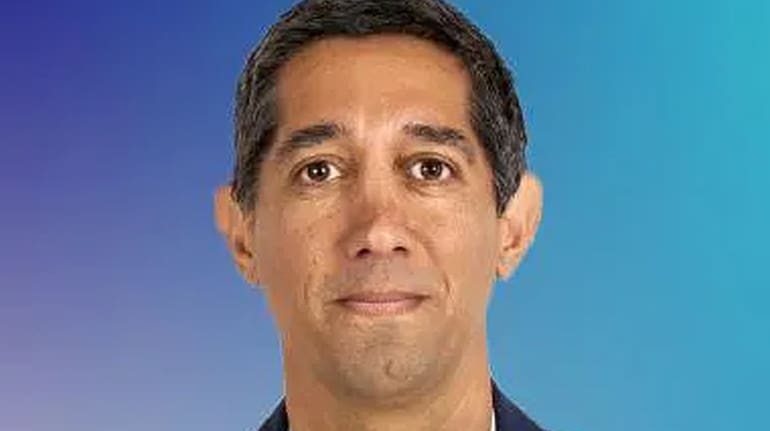
India has a clear opportunity to attract global artificial intelligence (AI) talent as the United States becomes less welcoming to foreign students and immigrants due to tightening visa and immigration policies, according to Babak Hodjat, Chief AI Officer at Cognizant.
British computer scientist Hodjat, was the co-founder and CEO of Sentient Technologies and was also a co-inventor of the technology that led to the development of Apple's virtual assistant Siri.
Hodjat said the shift is already visible, with foreign students and researchers educated in the US rethinking long-term plans to stay, creating openings for other countries to position themselves as talent destinations.
“There's this unfortunate reality in the US that we are losing talent and this is not going to be very easily rectified with the crackdowns on foreign students and just making life more difficult for immigrants and so forth. I'm not taking sides here, whether it's good or bad. I'm just saying that's the reality and that's something that we're seeing,” Hodjat told Moneycontrol at the company’s newly unveiled India AI Lab and Moment Studio in Bengaluru.
The United States has been tightening immigration and visa policies, reshaping how foreign students and skilled workers view the American opportunity since Donald Trump's return to the White House.
The administration has restricted the issuance of many non-immigrant visas, including student and work visas, and introduced enhanced vetting and higher fees for skilled worker programs such as the H-1B visa, creating uncertainty and longer processing times for international applicants.
Also, read: 20 US states sue to block Trump’s $100,000 H-1B visa fee: 'Illegal and harmful to vital services'
US losing its pull for global talent
Hodjat added that the crackdowns on foreign students and tougher immigration policies have made the country less welcoming, prompting many to consider alternatives such as Canada and Europe.
This marks a shift from the past, when the US benefited significantly from attracting global researchers and scientists, a factor Hodjat described as key to technological progress.
He highlighted that much of America’s historic innovation was driven by immigrants rather than domestically born talent alone.
Meanwhile, the Trump administration’s anti-immigrant policies triggered widespread debate over their impact on innovation and global talent flows. An old video of American physicist Michio Kaku, recorded before Trump’s presidency, has resurfaced in which he warns that restrictive immigration policies could drive scientific talent away from the US.
Also, read: Indian diaspora keen to contribute to AI growth, R&D investment needed: MeitY's Abhishek Singh
India’s advantage on talent and universities
Meanwhile, Hodjat said India is well placed from a talent and university perspective.
He said the country is competitive and, in some areas, even ahead when it comes to the depth of technical talent available.
Unlike China, where students typically return home driven by patriotism, Hodjat said India’s democratic setup could make it an attractive alternative for global talent seeking stability, freedom, and opportunity.
Also, read: Infosys founder Narayana Murthy urges overhaul in archaic rules on donating shares to education institutions
Infrastructure remains the missing link
However, Hodjat cautioned that talent alone will not be enough.
He pointed to limited access to processing capacity, especially at universities, as a major bottleneck.
Researchers and students often lack the computing resources that commercial entities can afford, a constraint that slows innovation despite strong intellectual capacity.
He said targeted investment in GPUs and computing infrastructure for universities could significantly strengthen India’s position, adding that many breakthroughs in AI originate from academic research and doctoral work rather than mature industry teams.
Startup culture, risk-taking, and critical
Hodjat also flagged the importance of a vibrant startup ecosystem and a culture that encourages risk-taking.
While India has produced successful entrepreneurs and long-standing business institutions, he said sustained innovation requires graduates and researchers to feel comfortable experimenting and starting companies.
As global competition for AI talent intensifies amid geopolitical and policy shifts, Hodjat said India has a narrow but meaningful window to position itself as a destination for the next generation of AI researchers and builders.
Discover the latest Business News, Sensex, and Nifty updates. Obtain Personal Finance insights, tax queries, and expert opinions on Moneycontrol or download the Moneycontrol App to stay updated!
Find the best of Al News in one place, specially curated for you every weekend.
Stay on top of the latest tech trends and biggest startup news.