






The United States is once again preparing for the possibility of major military action in the Middle East. Carrier strike groups, bombers, fighter jets, and refuelling aircraft are now positioned within reach of Iran. Yet unlike previous moments that led to war, there has been little attempt to explain to the American public why force may be necessary, why it must happen now, or what success would look like.
That absence is striking. When President George W. Bush laid the groundwork for the 2003 invasion of Iraq, he spent months making his case publicly, however flawed that case later proved to be. He warned of weapons of mass destruction, invoked the Cuban Missile Crisis, and framed inaction as the greater danger. History has judged those arguments harshly, but they were arguments nonetheless.
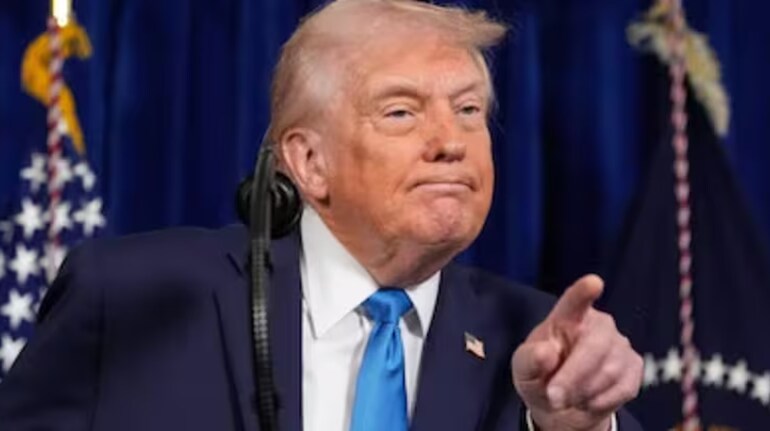
By contrast, President Donald Trump is threatening a second major strike on Iran within a year while offering almost no sustained justification, the New York Times reported. He has claimed that previous attacks “obliterated” Iranian nuclear facilities, raising an obvious question. If the threat was neutralised, why is another strike now urgent?
Shifting rationales, unclear objectives
At different moments, Trump and his advisers have floated several reasons for action. They have pointed to Iran’s nuclear programme, the killing of protesters during recent unrest, Tehran’s missile arsenal, and its support for Hamas and Hezbollah. These are all serious issues, but they do not add up to a single, coherent objective.
Crucially, it is unclear how airstrikes would achieve many of these goals. Iran’s near-bomb-grade uranium is already buried deeper underground after earlier attacks. Bombing does little to protect protesters in Iranian cities. Nor is there evidence that limited strikes would force Tehran to abandon long-standing regional alliances.
Trump has also avoided stating whether regime change is his real aim. When asked, he deflects, leaving allies and adversaries guessing about the desired end-state beyond a vague promise that Iran must never obtain nuclear weapons.
US Congress sidelined, allies kept in the dark
Another difference from past conflicts is the lack of formal political process. Trump has not sought authorisation from US Congress. He has not delivered a major speech preparing the country for war against a nation of roughly 90 million people. Instead, threats are delivered through brief remarks and offhand warnings.
Allies appear equally uncertain. At the Munich Security Conference, senior officials from several NATO countries said they had received almost no detail from Washington about US plans. Britain’s prime minister, Keir Starmer, reportedly refused to allow US forces to use British facilities for operations against Iran, a signal of how isolated Washington may be. Israel appears to be the only clear partner in the current military posture.
Diplomacy running out of room
Behind the scenes, negotiations continue, most recently in Geneva. Trump’s envoys are pressing Iran to permanently abandon all uranium enrichment. Tehran, according to officials familiar with the talks, is willing to suspend production for a period but refuses to give up what it sees as its rights under the Nuclear Nonproliferation Treaty.
The gap is wide, and time is short. Trump has boxed himself in politically. Having torn up the 2015 nuclear deal under President Barack Obama and labelled it a disaster, he now needs to prove that any new agreement is dramatically tougher. Iran, meanwhile, sees little incentive to capitulate under threat.
The risk of force without clarity
Trump’s secretary of state, Marco Rubio, has acknowledged that toppling Iran’s leadership would be vastly more complex than past US-backed efforts elsewhere. Yet the administration continues to hint at dramatic outcomes without explaining how they would be achieved or at what cost.
This runs counter to a core lesson drawn from Vietnam and later articulated by the so-called Powell Doctrine: the political objective must be clear before force is used. As one scholar quoted in the debate put it, offering multiple justifications at once usually means none has been fully thought through.
The shadow of Israel also looms large. Prime Minister Benjamin Netanyahu has long argued that Iran’s regime must be decisively weakened or removed. Some former US officials warn that promises of quick success and regional gratitude should be treated with scepticism.
An open-ended moment
What makes this moment unsettling is not just the scale of US military power being assembled, but the lack of explanation accompanying it. Wars rarely begin with full clarity, but they usually begin with a case. Here, force is being readied first, and the rationale seems to be catching up later.
Whether Trump ultimately strikes or pulls back, the episode highlights a deeper shift. The United States appears closer than at any point in recent memory to a major act of war without a clear public debate about why it is necessary, what it is meant to achieve, or how it would end.
Discover the latest Business News, Sensex, and Nifty updates. Obtain Personal Finance insights, tax queries, and expert opinions on Moneycontrol or download the Moneycontrol App to stay updated!
Find the best of Al News in one place, specially curated for you every weekend.
Stay on top of the latest tech trends and biggest startup news.




