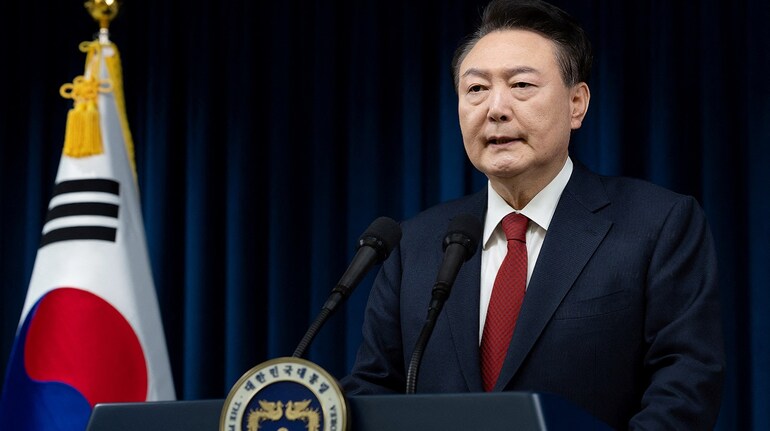

A South Korean court is set to deliver its verdict on Thursday in the insurrection trial of former president Yoon Suk Yeol, a case that has become a stress test for the country’s democratic system.
The ruling by the Seoul Central District Court follows more than a year of political turmoil triggered by Yoon’s sudden declaration of martial law in December 2024. Prosecutors have asked for the death penalty, arguing that Yoon showed no remorse for actions they say amounted to an attempt to overturn constitutional order.
If convicted, Yoon could face either life imprisonment or death. No democratically elected South Korean president has ever received such a sentence, the Financial Times reported.
What Yoon is accused of doing
At the heart of the case is Yoon’s attempt to impose military rule during a standoff with an opposition-controlled National Assembly. Lawmakers had been blocking key legislation and backing investigations into alleged corruption involving Yoon’s wife, Kim Keon Hee.
According to prosecutors, Yoon responded by declaring martial law and ordering security forces to enforce emergency measures. The move backfired almost immediately. Mass protests erupted, parliament convened an emergency session to reject the decree, and Yoon was impeached and removed from office soon after.
Yoon has insisted that the declaration was meant as a political warning rather than a genuine bid to establish military rule. The court must now decide whether that explanation holds up under South Korea’s insurrection laws.
The broader legal fallout
The insurrection trial is only the most serious of several cases tied to the crisis. Last month, Yoon was sentenced to five years in prison in a separate case involving obstruction of justice, abuse of power and falsification of official documents.
Other senior figures have already been jailed. Former prime minister Han Duck-soo, who briefly served as acting president after Yoon’s impeachment, received a 23-year sentence for helping facilitate the emergency measures. Former interior minister Lee Sang-min was sentenced to seven years.
Together, the cases point to a coordinated effort at the top of government rather than a single rogue decision.
Why the death penalty is unlikely to be carried out
While prosecutors are seeking capital punishment, South Korea has not carried out an execution since 1997. Legal experts say that even if the court hands down a death sentence, it would almost certainly be commuted.
There is historical precedent. Former military ruler Chun Doo-hwan was sentenced to death in 1996 for his role in a coup and the 1980 Gwangju massacre. His sentence was later reduced to life imprisonment, and he was pardoned the following year.
That context matters. The symbolic weight of the verdict may prove more important than the punishment itself.
Political aftershocks still unfolding
Yoon retains a vocal base of right-wing supporters who see the prosecution as politically motivated. Protests continue, though they have thinned out in recent months.
His conservative People Power Party is struggling in the polls, trailing President Lee Jae Myung’s Democratic Party by more than 20 points ahead of local elections later this year.
Whatever the verdict, the case has already reshaped South Korean politics. It has clarified how far a president can go in moments of crisis, and how quickly the system can push back when those limits are crossed.
The ruling will close one chapter of the crisis. It will not end the debate over power, accountability and the boundaries of executive authority in South Korea’s democracy.
Discover the latest Business News, Sensex, and Nifty updates. Obtain Personal Finance insights, tax queries, and expert opinions on Moneycontrol or download the Moneycontrol App to stay updated!
Find the best of Al News in one place, specially curated for you every weekend.
Stay on top of the latest tech trends and biggest startup news.