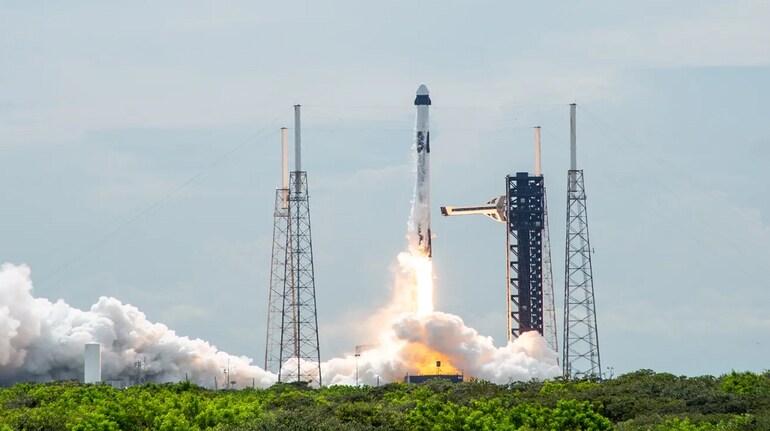
China has ambitious plans to rival Starlink with two massive low Earth orbit satellite networks—Qianfan and Guowang—promising global internet access and national security gains. But data shows that as of now, these projects are far off track. Of the nearly 27,000 satellites planned, fewer than 125 have been launched, and technical setbacks continue to hamper progress. Meanwhile, SpaceX already has around 8,000 Starlink satellites in orbit and launches more every month, the New York Times reported.
China’s satellite gap: What the numbers reveal
The Qianfan network, operated by Shanghai Spacesail Technologies, was supposed to launch 650 satellites by the end of 2025. So far, only 90 have reached space, and 13 of those appear to have failed to reach the proper orbit. The Guowang network is even further behind, with only 34 satellites launched of a planned 13,000. In contrast, SpaceX’s Starlink is expanding rapidly with a reusable launch system that has completed nearly 500 missions.
Why China is falling behind: It’s the rocket
The core reason for China’s delay is that it lacks a reusable rocket like SpaceX’s Falcon 9. Reusability dramatically reduces costs and launch time. While China’s Long March 8 was intended to be its answer to the Falcon 9, development stalled and the program abandoned reusability. Other rockets, like the Zhuque-3 and Tianlong-3, are in testing, but none have achieved reliable reusability. Without it, China’s launch costs remain high and launch frequency low.
National security and economic stakes are high
For China, falling behind in satellite internet isn’t just a commercial loss—it’s a strategic one. Low Earth orbit satellites are critical for everything from military surveillance and drone warfare to autonomous vehicles and communications. Chinese military analysts see Starlink as a threat, describing it as increasingly embedded in U.S. combat systems. Beijing is also racing to secure its own share of orbital radio frequencies, or risk losing the rights altogether under UN rules.
China is marketing satellite deals—but the service isn’t online
Despite delays, Chinese firms are aggressively pursuing satellite internet contracts in countries that are cautious of U.S. influence. Shanghai Spacesail has signed deals in Brazil, Thailand, Malaysia, and Kazakhstan. But their systems are not yet operational, and some satellites are not functioning. Still, these deals are shaping up as tools of geopolitical influence in an increasingly protectionist global economy.
Why the clock is ticking for China’s megaconstellations
Under rules set by the International Telecommunication Union, countries must launch half of their planned satellites within five years of receiving frequency approval. If they miss the deadline, they risk having to scale down their constellations. With megaconstellations like Qianfan and Guowang far behind, 2025 and 2026 will be critical. If China doesn’t accelerate its launches—or break through with a reusable rocket—it may lose its place in the orbital internet race.
What happens next
Though China’s progress lags, experts caution against counting it out. Satellite launches often ramp up in the second half of the year, and several Chinese private companies are pushing for rocket breakthroughs. If successful, they could close the gap with SpaceX and reshape the global balance in space communications. As astrophysicist Jonathan McDowell notes, the field remains dynamic. The next 18 months will reveal whether Starlink’s dominance continues—or if China manages to catch up.
Discover the latest Business News, Sensex, and Nifty updates. Obtain Personal Finance insights, tax queries, and expert opinions on Moneycontrol or download the Moneycontrol App to stay updated!
Find the best of Al News in one place, specially curated for you every weekend.
Stay on top of the latest tech trends and biggest startup news.