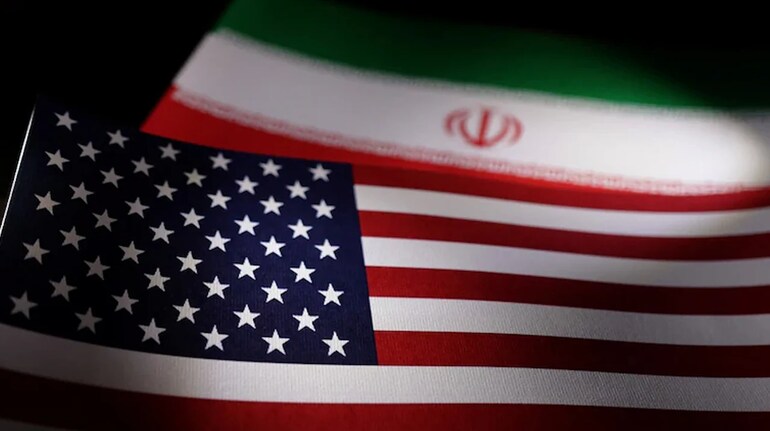
When US President Donald Trump compared possible action against Iran to the recent US operation in Venezuela, the implication was speed and control. But military and regional experts say the comparison breaks down quickly. An attack on Iran would be harder to execute, far more unpredictable, and much more likely to spiral into a prolonged conflict, the New York Times reported.
Iran can hit back, immediately and at range
Unlike Venezuela, whose air defences were limited, Iran has one of the largest and most diverse missile arsenals in the Middle East. Its medium-range ballistic missiles can travel more than 1,200 miles, putting US bases across the region, as well as Israel and Gulf states, within reach. Iran has also invested heavily in drones, anti-ship missiles and air defences.
Recent Iranian military drills, including tests of sea-based air-defence missiles near the Strait of Hormuz, are widely seen as signals of deterrence. The message is simple: any strike would not remain contained.
US allies would be exposed
American bases across the Gulf sit close to Iranian missile range. Saudi Arabia and the United Arab Emirates have already signalled discomfort, with both saying earlier this year that they would not allow their airspace to be used for strikes on Iran. That stance may limit US options, but it does not guarantee their safety.
Israeli cities could also face retaliation. Israel intercepted most Iranian missiles during last year’s conflict, but intelligence officials say interceptor stockpiles are under strain after years of fighting Hamas and Hezbollah. A larger barrage would test those defences.
Iran’s proxy network multiplies the risk
Iran’s influence does not stop at its borders. It operates a loose but effective network of armed groups across the region, including Hezbollah in Lebanon, Shiite militias in Iraq, and the Houthis in Yemen. These groups have been weakened in recent years, but they retain the ability to disrupt shipping, target US forces, and open multiple fronts at once.
Analysts at International Crisis Group describe Iran’s strategy as spreading the cost of conflict across several theatres. Even limited US strikes could trigger responses far beyond Iran itself, from attacks on bases in Iraq to renewed threats in the Red Sea.
Regime change is not a clean operation
The Venezuela operation hinged on speed and proximity. Caracas lies close to the coast, and power was concentrated around a small circle. Iran is different. Its political system is layered and ideological, with authority resting not just with the supreme leader but with institutions like the Islamic Revolutionary Guards Corps.
Tehran sits hundreds of miles inland, making a decapitation-style raid far harder. Even if one leader were removed, there is no obvious successor structure for the US to work with. Power in Iran is embedded, not personalized.
The global economic shock would be immediate
Iran’s most potent non-military lever is geography. The Strait of Hormuz, a narrow waterway through which about a fifth of the world’s oil and liquefied natural gas flows, sits within its reach. Iran has repeatedly threatened to disrupt traffic there.
Any serious interference would send energy prices sharply higher, with ripple effects across global markets. While closing the strait would also hurt Iran, analysts say Tehran may see disruption as a viable pressure tactic in a wider conflict.
Why the comparison fails
The Venezuela raid was fast, contained and geographically simple. Iran presents the opposite profile: strong defences, regional reach, ideological resilience and global economic leverage. Even supporters of tougher action acknowledge there is no low-cost option.
That is why many experts warn that once a strike begins, controlling what happens next may be far harder than initiating it.
Discover the latest Business News, Sensex, and Nifty updates. Obtain Personal Finance insights, tax queries, and expert opinions on Moneycontrol or download the Moneycontrol App to stay updated!
Find the best of Al News in one place, specially curated for you every weekend.
Stay on top of the latest tech trends and biggest startup news.