






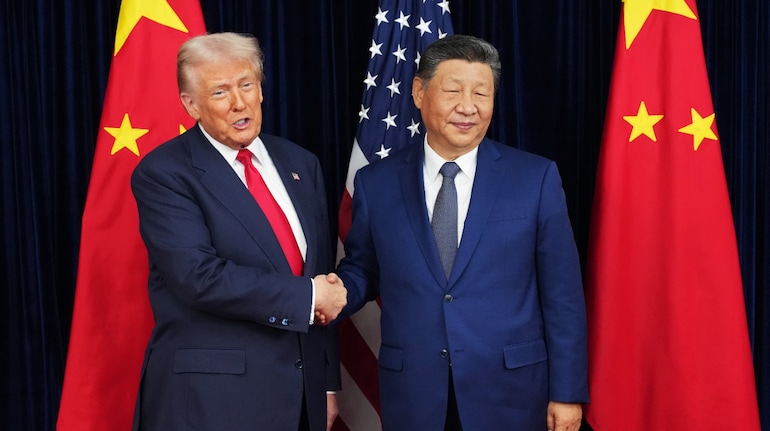

The Trump administration in the US has paused a multibillion-dollar arms package for Taiwan even after senior lawmakers from both parties informally signed off on it.
According to US officials, the proposed sale — valued at roughly USD 13 billion — is sitting at the State Department as President Donald Trump prepares for a planned April visit to Beijing.
The package is said to include interceptor missiles for Patriot air-defence systems, NASAMS missile platforms, anti-drone equipment and smaller arms and sustainment items. It had advanced through the usual review process in January, when the State Department quietly sent it to key Senate and House committees for informal approval.
Lawmakers endorsed it. Ordinarily, a public announcement would follow soon after. Instead, the process has stalled, the New York Times reported.
Summit diplomacy versus deterrence
Officials familiar with the matter say the White House does not want to provoke Xi
Jinping ahead of a high-stakes summit. Taiwan’s status remains the most sensitive
issue in US-China relations, and Beijing has repeatedly warned Washington to “handle
arms sales to Taiwan with extreme caution.”
The topic surfaced during a February 4 phone call between Trump and Xi, according to Chinese state media summaries. Xi reportedly reiterated that Taiwan is the “most important issue” in bilateral ties and said China would never allow the island to separate formally from the mainland.
Trump later told reporters he was “talking to him about it,” referring to the arms sales question, though he did not elaborate.
The legal and political backdrop
Under the 1979 Taiwan Relations Act, the United States is obligated to provide Taiwan with defensive weapons. Over decades, arms sales have become a routine — if contentious — part of US policy toward the island, which Beijing claims as its territory but which operates as a self-governing democracy.
There is also the diplomatic framework known as the Six Assurances, issued during the Reagan administration, one of which is widely interpreted to mean that Washington will not consult Beijing before selling weapons to Taipei. Some policy experts argue that explicitly tying the timing of a sale to Chinese preferences risks undercutting that principle.
Congress, for its part, has generally supported arms packages for Taiwan with little resistance. The informal review stage that this package cleared is typically the most consequential hurdle before formal notification.
A pattern of selective assertiveness
The pause stands out in contrast to the administration’s handling of other security relationships. In recent years, the White House has bypassed Congress to accelerate certain arms transfers to Israel. In Taiwan’s case, however, the hesitation appears driven less by legislative opposition and more by diplomatic calculation.
Trump’s posture toward China has long combined confrontation and personal rapport. He has described Xi as a “very good friend” even while waging tariff battles and trade negotiations. The upcoming summit in Beijing is expected to focus on stabilizing economic tensions and extending a trade truce first agreed upon in Busan last year.
In that context, the timing of a major arms announcement could complicate optics.
What this means for Taiwan
For Taipei, the delay does not necessarily signal abandonment. The administration has already approved an USD 11 billion package in December, and officials maintain that the US commitment to Taiwan remains unchanged.
Still, symbolism matters. Taiwan’s annual military exercises routinely showcase US-supplied systems such as Patriot missile batteries, underscoring how central American hardware is to the island’s defence strategy.
Holding back a sale that has cleared Congress suggests that, at least temporarily, summit choreography with Beijing is taking precedence over the usual cadence of security support.
Whether the package is announced before or after Trump’s visit to China will offer a clearer signal of how this administration intends to balance deterrence and diplomacy in one of the world’s most volatile flashpoints.
Discover the latest Business News, Sensex, and Nifty updates. Obtain Personal Finance insights, tax queries, and expert opinions on Moneycontrol or download the Moneycontrol App to stay updated!
Find the best of Al News in one place, specially curated for you every weekend.
Stay on top of the latest tech trends and biggest startup news.





