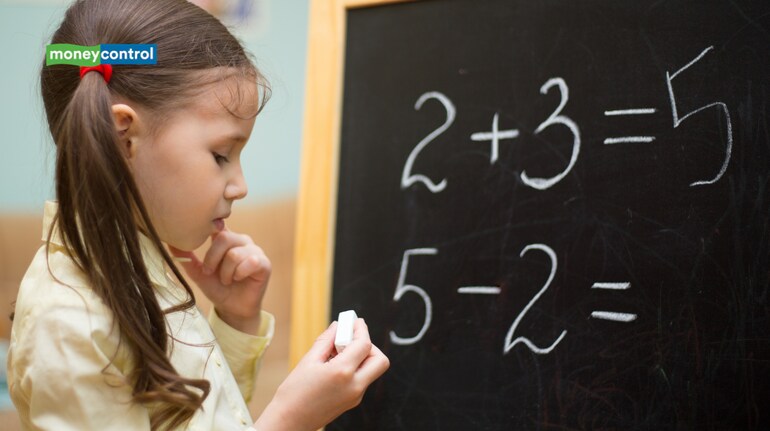

It often starts in an ordinary moment. A child asks for help with homework. A parent sighs, hesitates, or says something familiar: “I was never good at maths.” Nothing dramatic happens. But something sticks.
A recent survey by a charity founded by former UK prime minister Rishi Sunak and his wife Akshata Murty suggests that this everyday exchange may be one of the ways maths anxiety gets passed down, especially from mothers to daughters.
The survey found that women were far more likely than men to say they feel nervous when dealing with numbers. This was not about advanced equations, but everyday maths. Helping with homework. Reading bills. Doing quick calculations. Many mothers said they felt uncomfortable supporting their children with maths and worried they might “get it wrong.”
What matters is not the maths itself, but the signal it sends.
Children are sharp observers. When they see a parent tense up around numbers, they learn that maths is something stressful, something to avoid, something people either “get” or don’t. Over time, that belief can turn into self doubt, even in children who are doing perfectly well at school.
This seems to affect girls more strongly. The survey suggests daughters are particularly likely to absorb their mother’s anxiety and mirror it. Not because mothers are doing anything wrong, but because children tend to model themselves on parents they identify with most closely.
The irony is that maths anxiety has very little to do with actual ability. Many adults who say they are “bad at maths” did fine at it once. The fear usually comes from early experiences of embarrassment, pressure, or being told, directly or indirectly, that maths just “wasn’t for them.”
That emotional baggage does not disappear. It shows up years later at the kitchen table.
The good news is that passing on confidence does not require parents to suddenly love maths or remember everything they learned in school. What seems to matter most is language and attitude. Saying “let’s try this together” instead of “I can’t do this” changes the tone. Treating mistakes as normal rather than proof of failure makes maths feel less intimidating.
Experts often point out that children do not need perfect explanations. They need to see that struggling with a problem is acceptable and temporary, not a verdict on intelligence.
The survey’s findings are less about blaming parents and more about noticing a pattern that is easy to miss. Maths fear is rarely taught outright. It is absorbed, quietly, through tone, reactions and offhand comments.
If that fear can be learned, it can also be unlearned. Sometimes, the shift begins not with a workbook or a tutor, but with a parent choosing different words in a small, ordinary moment.
Discover the latest Business News, Sensex, and Nifty updates. Obtain Personal Finance insights, tax queries, and expert opinions on Moneycontrol or download the Moneycontrol App to stay updated!
Find the best of Al News in one place, specially curated for you every weekend.
Stay on top of the latest tech trends and biggest startup news.