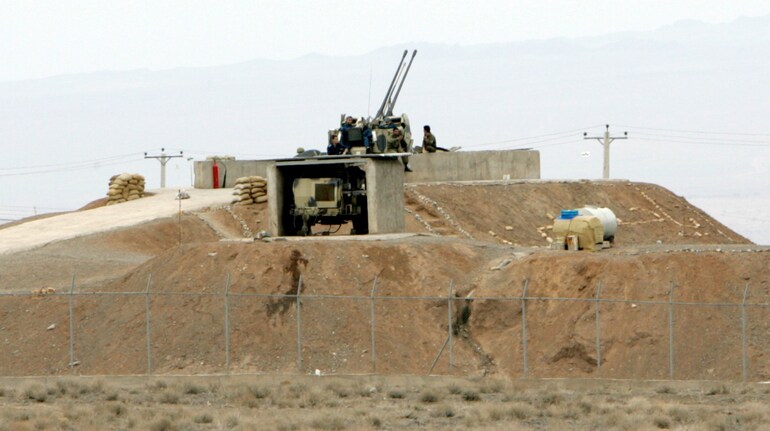

As tensions escalate between the United States, Israel and Iran, the world’s attention is focused on Tehran’s nuclear infrastructure, which could be central to any military action. Strategic analysts point to several core facilities that form the backbone of Iran’s nuclear programme. These sites are likely to figure prominently in planning by Washington and Jerusalem if strikes intensify.
Both US and Israeli leaders have made clear their intent to confront what they describe as Iran’s expanding military and nuclear capabilities. US President Donald Trump has said he is prepared to act militarily to neutralise Iran’s missile arsenal and nuclear threat. “We can’t take it anymore,” Trump said, confirming that a US campaign against Iranian targets is underway and vowing to “destroy their missiles”.
On the Israeli front, Prime Minister Benjamin Netanyahu stated that the joint operation with the United States aims to “stop Iran’s murderous regime”. These statements underscore how nuclear facilities, regarded as critical infrastructure in Tehran’s programme, are seen as strategic pressure points that both capitals have under scrutiny.
Natanz Uranium enrichment complex
Natanz remains a central pillar of Iran’s uranium enrichment efforts. Located near the city of Qom, it houses large numbers of centrifuges that spin uranium gas to higher levels of enrichment. The Fuel Enrichment Plant is deeply buried to protect it from potential airstrikes, but Iran’s history of sabotage and covert hits demonstrates that such facilities remain vulnerable targets.
In recent years, Iran has enriched uranium at Natanz to levels around 60 percent purity, approaching the 90 percent associated with weapons-grade material. This capability makes Natanz a likely focus should military planners seek to degrade Iran’s enrichment capacity.
Fordow underground enrichment facility
Fordow is another key enrichment site, built deep into a mountain east of Qom. Its location makes it significantly harder to penetrate with conventional munitions. After being restricted from enrichment under the 2015 nuclear deal, Fordow resumed activities following the deal’s collapse, installing advanced centrifuges capable of high-level enrichment.
Its fortified position reflects Iran’s efforts to shield crucial infrastructure, but that same importance could place it high on a target list in any conflict scenario.
Isfahan nuclear technology centre
The Isfahan site supports Iran’s nuclear programme by converting uranium ore into uranium hexafluoride gas, the feedstock for enrichment plants. It also houses fuel fabrication facilities and stores enriched material. Unlike Natanz and Fordow, Isfahan is not deeply buried, making it more exposed and accessible.
The presence of conversion and fabrication infrastructure means that damaging operations at Isfahan could disrupt the supply chain feeding enrichment facilities, potentially slowing overall nuclear progress.
Khondab heavy-water reactor (Arak)
The partially completed facility near Arak, often referenced by analysts as the Khondab reactor, had been a concern because heavy-water reactors can produce plutonium usable in weapons. Under past agreements, the original reactor core was disabled, but plans for redesign and restart could make it sensitive in future.
Because of its potential role in plutonium production, the Arak site could draw attention if conflict broadens beyond enrichment targets.
Tehran research centre
Iran’s capital hosts research reactors and related facilities that support scientific work connected to the broader nuclear programme. While these do not directly produce weapons-grade material, their role in training, testing and technology development gives them strategic value. These sites may be considered for disruption in wider military planning.
Bushehr nuclear power plant
Bushehr on the Persian Gulf is Iran’s only operational civilian nuclear power plant, fuelled and maintained with Russian assistance. Under agreements, spent fuel is exported for reprocessing, reducing proliferation concerns. While not a primary target for nuclear dismantling, its strategic location and symbolic significance mean it could feature in broader operational scenarios.
Iran’s fortification and concealment efforts
Anticipating strikes, Iran has been reinforcing its nuclear “gold” with enhanced fortification. Satellite imagery shows work on deeper bunkers and hardened access points at enrichment facilities such as Natanz and Fordow. Analysts note that Tehran’s strategy is influenced by past strikes and sabotage, prompting reconstruction and deeper protection of key infrastructure. These defensive measures may complicate any future air campaign and require more powerful ordnance to achieve significant damage.
Strategic context with Trump and Netanyahu’s statements
President Trump’s confirmation of a US military campaign against Iran and promise to “destroy their missiles” reflects Washington’s widening focus on Iran’s strategic military capabilities. Trump’s remarks underscore that the nuclear infrastructure is part of a larger set of threats that US planners may prioritise, including missile production and delivery systems.
Similarly, Prime Minister Netanyahu’s declaration that the operation with the United States “aims to stop Iran’s murderous regime” elevates the confrontation to a broader geopolitical contest over Tehran’s influence and capabilities. Netanyahu’s framing suggests that nuclear sites, seen by Israel as part of a broader security threat, could be considered legitimate targets within a sustained campaign.
Strategic implications
If the United States and Israel move to strike Iran’s nuclear facilities, it would represent a major escalation with far-reaching implications. Natanz and Fordow, as the core enrichment hubs, would likely be at the top of any target list. Secondary sites such as Isfahan and Arak would also factor into calculations due to their roles in the fuel cycle and potential plutonium pathways.
Targeting these sites would be intended to disrupt Iran’s ability to enrich uranium rapidly and to curtail infrastructure that could support weaponisation. However, such action would risk broad regional escalation, possible retaliation against civilian and military targets, and disruption of global energy markets.
As diplomatic efforts continue and military posturing intensifies, the fate and vulnerability of these nuclear facilities remain central to international strategic calculations. Both Tehran and its adversaries are watching closely, and any shift toward kinetic action against these sites would mark a pivotal moment in decades of nuclear standoff.
Discover the latest Business News, Sensex, and Nifty updates. Obtain Personal Finance insights, tax queries, and expert opinions on Moneycontrol or download the Moneycontrol App to stay updated!
Find the best of Al News in one place, specially curated for you every weekend.
Stay on top of the latest tech trends and biggest startup news.