






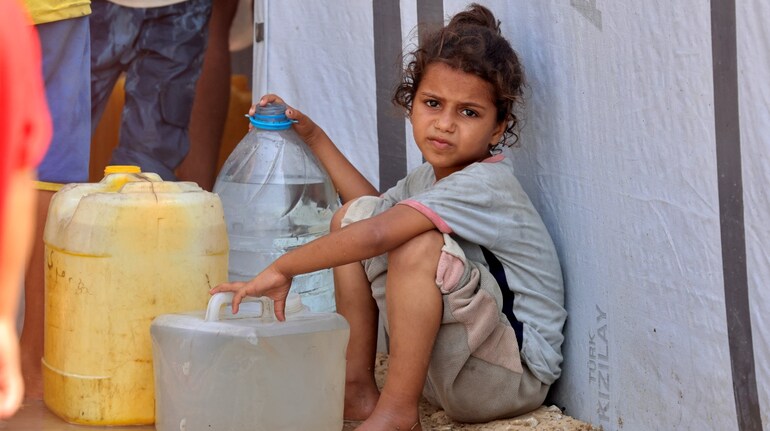

For decades, the global water problem was described as a crisis waiting to happen. Governments warned of shortages, scientists spoke of stress, and policy debates focused on future risks. That framing is now outdated.
According to new research cited by the United Nations, the world has already crossed a dangerous threshold. Water systems are being depleted faster than nature can replenish them, and many can no longer return to their historical state. The UN now calls this condition global water bankruptcy.
This is not a warning about what might happen. It is a diagnosis of what is already unfolding.
What 'water bankruptcy' actually means
Water bankruptcy is not just a dramatic phrase. In scientific terms, it describes a situation where long-term water withdrawals exceed natural recharge and where the ecosystems that store and regulate water are damaged beyond easy repair.
These natural systems include aquifers, wetlands, rivers, lakes and glaciers. When they are overused or destroyed, water availability does not simply bounce back after a wet year. The loss becomes permanent.
Researchers at the UN University Institute for Water, Environment and Health say this is the reality now facing large parts of the world.
The scale of the problem
The numbers reveal how widespread water bankruptcy has become.
Nearly 4 billion people, almost half the global population, experience severe water scarcity for at least one month every year. Reservoirs are shrinking, droughts are intensifying, crops are failing, and cities are beginning to ration water.
Across continents, the signs are similar. In Tehran, repeated droughts and unsustainable extraction have depleted reservoirs that supply the city. In the United States, demand on the Colorado River has exceeded sustainable supply for decades, affecting seven states that rely on it for drinking water and agriculture.
UN researchers stress that these are not short-term emergencies. They are symptoms of structural collapse, similar to living on financial debt until the account runs dry.
How water bankruptcy develops over time
Water bankruptcy does not arrive suddenly. It develops quietly.
At first, societies respond to rising demand by drilling deeper wells, installing stronger pumps, diverting rivers, and draining wetlands. These steps create the illusion of stability.
Over time, the hidden costs emerge. Lakes shrink year after year. Rivers stop flowing seasonally. Coastal aquifers become salty and unusable.
One of the clearest warning signs is land subsidence. When groundwater is extracted too quickly, underground structures collapse permanently. Mexico City is sinking by about 25 centimetres every year. Once the ground compacts, the lost storage capacity cannot be restored, even if water later returns.
According to the UN study, groundwater extraction has already caused subsidence across more than 6 million square kilometres, including major urban areas where nearly 2 billion people live. Cities such as Jakarta, Bangkok, and Ho Chi Minh City are among the most affected.
Why food systems are at risk
Agriculture accounts for nearly 70 percent of global freshwater withdrawals, making it especially vulnerable.
More than 3 billion people and over half of global food production are concentrated in regions where water storage is already declining. Around 1.7 million square kilometres of irrigated farmland face high or very high water stress.
As water becomes scarcer, farming costs rise, yields fall, and food prices become more volatile. This increases the risk of job losses, migration, political instability, and social unrest.
Climate change intensifies these pressures. Between 2022 and 2023, over 1.8 billion people experienced drought. Higher temperatures increase crop water demand, raise energy use for pumping, and accelerate glacier melt.
The loss of nature’s water buffers
Natural systems that once protected water supplies are disappearing rapidly.
The UN estimates that nearly 410 million hectares of wetlands have been lost over the past 50 years, an area roughly the size of the European Union. Around 70 percent of heavily used aquifers show long-term depletion.
Glaciers offer another stark warning. Since 1970, the world has lost more than 30 percent of its global glacier mass, reducing the reliability of water supplies for hundreds of millions of people who depend on seasonal melt.
These losses mean that even when rainfall improves, many systems can no longer recover.
Why old labels no longer work
Terms such as “water stress” or “water crisis” suggest a temporary condition that can still be avoided.
The UN researchers argue that this language no longer reflects reality. Many water systems have crossed irreversible thresholds. Old baselines will not return.
UNU-INWEH director Kaveh Madani described the situation as a turning point, telling AFP:
“Let’s adopt this framework. Let’s understand this. Let us recognise this bitter reality today before we cause more irreversible damages.”
Can water bankruptcy be reversed?
The researchers say water bankruptcy must be treated like financial collapse. The first step is acknowledging it.
That means setting water-use limits based on what nature can actually supply, rather than compensating for shortages by drilling deeper and shifting the burden to the future.
Protecting natural capital is equally critical. Restoring wetlands, rebuilding soil health, reconnecting rivers, and enabling groundwater recharge are no longer optional environmental goals. They are essential for survival.
Cutting water use must also be fair. Policies that protect powerful users while burdening poorer communities are unlikely to succeed. Transitions may require social protections, crop changes, and large investments in efficiency.
Better measurement is another priority. Many countries still manage water with incomplete data. Satellite monitoring now allows early detection of groundwater depletion, land subsidence, glacier loss, wetland destruction, and pollution.
A new reality that demands new thinking
Water bankruptcy forces a psychological shift.
It means abandoning assumptions of endless abundance and redesigning cities, farms, and economies for a world with less water. As the UN researchers argue, bankruptcy can be a turning point, but only if societies accept the reality of their depleted water accounts and act before the damage deepens further.
The era of warning is over. The era of reckoning has begun.
Discover the latest Business News, Sensex, and Nifty updates. Obtain Personal Finance insights, tax queries, and expert opinions on Moneycontrol or download the Moneycontrol App to stay updated!
Find the best of Al News in one place, specially curated for you every weekend.
Stay on top of the latest tech trends and biggest startup news.





