






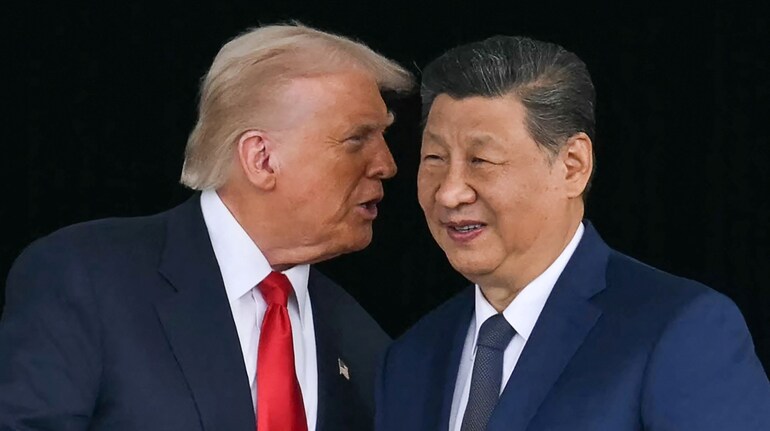

US President Donald Trump said he stopped calling COVID-19 the “China virus” at the request of Chinese President Xi Jinping, even as he praised Xi’s leadership and confirmed he plans to visit China in April 2026.
Trump made the remarks on Wednesday at the 56th Annual Summit of the World Economic Forum in Davos, Switzerland. His comments came amid talks on global economic issues and shifting geopolitical relationships.
“I used to call it the China virus, but he said, do you think you could use a different name and I decided to do that because why should we have a problem over that?” Trump told reporters, describing the change as a matter of avoiding unnecessary tension.
Trump praises Xi as “incredible” and “highly respected”
Speaking at Davos, Trump stressed his positive personal rapport with Xi and also with Vladimir Putin of Russia.
“I’ve always had a very good relationship with President Xi and with President Putin. President Xi of China is an incredible man. What he's done is amazing. He's highly respected by everybody,” Trump said. He added that the pandemic had interrupted their interaction but that he respects Xi’s achievements.
The US leader’s remarks highlighted his effort to emphasize diplomacy and personal relationships with major powers even as broader tensions persist between Washington and Beijing on issues like trade, technology competition, and climate policy.
China and US diplomacy on the horizon
Trump confirmed he will visit China in April 2026, with the trip set to underscore renewed diplomatic engagement between the two countries. “I get along very well with President Xi. I'm going to go over to China in April,” he said, as reported by TASS. Trump also noted that Xi would later undertake a state visit to the United States.
These visits follow an October phone call between the two leaders and reflect a willingness to maintain high-level dialogue despite ongoing geopolitical competition.
A nuanced message on pandemic terminology
Trump’s mention of the “China virus” term and his decision to stop using it comes amid historical controversy. During the early days of the pandemic, the former term drew criticism for potentially encouraging stigma against Asian communities. Trump said at Davos that Xi had asked him to change the label to avoid problems, and he agreed.
His comment reflects an effort to reduce diplomatic friction, but it also reminds observers of past disputes over pandemic language and its broader implications.
Context: US-China Relations at Davos
Trump’s speech in Davos has been noted alongside other global leaders’ responses to geopolitical tensions. China’s delegation, for example, spoke about economic cooperation and its stance on global trade issues at the forum.
While Trump acknowledged strong personal ties with Xi, the broader US-China relationship remains complex, with cooperation and competition existing side by side on economic, security, and climate issues.
What comes next
Trump’s planned China visit in April 2026 is likely to be a major diplomatic moment. It comes as global markets and leaders assess the direction of US foreign policy under his administration. In Davos, Trump’s remarks about the pandemic term and his praise for Xi signal an effort to balance criticism with cordial engagement, even as strategic rivalry continues.
Discover the latest Business News, Sensex, and Nifty updates. Obtain Personal Finance insights, tax queries, and expert opinions on Moneycontrol or download the Moneycontrol App to stay updated!
Find the best of Al News in one place, specially curated for you every weekend.
Stay on top of the latest tech trends and biggest startup news.





