
The Trump administration is considering temporarily waiving the century old Jones Act to ease the movement of energy and agricultural shipments between US ports as the conflict involving Iran continues to disrupt global supply chains.
White House press secretary Karoline Leavitt said the administration is evaluating the move as part of efforts to ensure essential supplies continue to reach domestic markets.
"In the interest of national defense, the White House is considering waiving the Jones Act for a limited period of time to ensure vital energy products and agricultural necessities are flowing freely to US ports," Leavitt said in a statement.
"This action has not been finalized," she added.
According to two sources familiar with the discussions, the decision could be announced as early as Thursday. The proposal is aimed at addressing rising fuel prices and supply disruptions that have emerged since the start of the US Israeli war on Iran.
Concerns over rising fuel prices
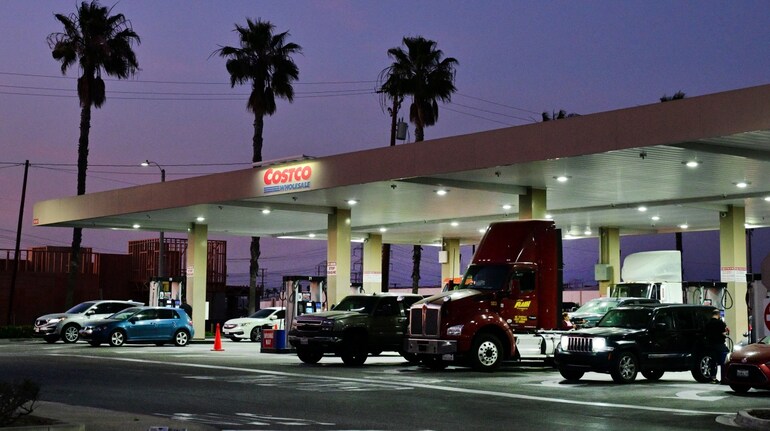
The possible waiver comes as gasoline and diesel prices in the United States climb sharply.
Data from the motorist association AAA shows that the national average retail gasoline price reached $3.60 per gallon on Thursday, the highest level since May 2024. Diesel prices rose even more sharply to $4.89 per gallon, their highest level since December 2022.
The increase reflects growing concerns about global oil supply disruptions linked to the conflict in West Asia.
Higher fuel prices carry political risks for President Donald Trump and his Republican allies. The administration has repeatedly argued that its energy policies would keep fuel affordable for American consumers.
A prolonged rise in gasoline prices could undermine that message and provide political ammunition to Democrats, who argue that the administration has failed to protect households from rising costs. The issue is particularly sensitive as voters remain concerned about inflation ahead of the November midterm elections.
What the Jones Act requires
The Jones Act, formally known as the Merchant Marine Act of 1920, regulates shipping between US ports.
Under the law, goods transported between American ports must be carried on ships that are built in the United States, fly the US flag and are mostly owned by American companies.
These requirements significantly limit the number of ships available for domestic transport.
A temporary waiver would allow foreign vessels to carry cargo between US ports. Officials believe this could increase shipping capacity, reduce transportation costs and help move fuel and other essential goods more quickly.
Agriculture sector seeks relief
The push for a waiver has also come from the agricultural sector.
The American Farm Bureau Federation, the largest farm lobby group in the United States, urged the Trump administration to suspend the Jones Act in a March 9 letter.
The group warned that disruptions to shipping routes through the Strait of Hormuz were increasing fertilizer costs for farmers and creating transportation bottlenecks.
By allowing foreign ships to operate between US ports, a waiver could improve domestic transportation capacity and help ease supply pressures on farmers.
Waivers are rarely granted
The US government has historically granted Jones Act waivers only in exceptional circumstances.
Such waivers are typically issued during major supply disruptions or natural disasters that limit domestic shipping capacity.
One of the most notable examples came in 2017 after hurricanes Harvey and Maria severely disrupted fuel supplies in parts of the United States and the Caribbean.
During that crisis, the US Department of Homeland Security temporarily allowed foreign flagged vessels to transport fuel between American ports in order to ease shortages and accelerate deliveries.
If the Trump administration proceeds with the waiver now, it would mark another rare use of the emergency provision as Washington tries to manage the economic fallout of the ongoing conflict with Iran.
Discover the latest Business News, Sensex, and Nifty updates. Obtain Personal Finance insights, tax queries, and expert opinions on Moneycontrol or download the Moneycontrol App to stay updated!
Find the best of Al News in one place, specially curated for you every weekend.
Stay on top of the latest tech trends and biggest startup news.