
co-presented by
ASSOCIATE SPONSORS
co-presented by

ASSOCIATE SPONSORS




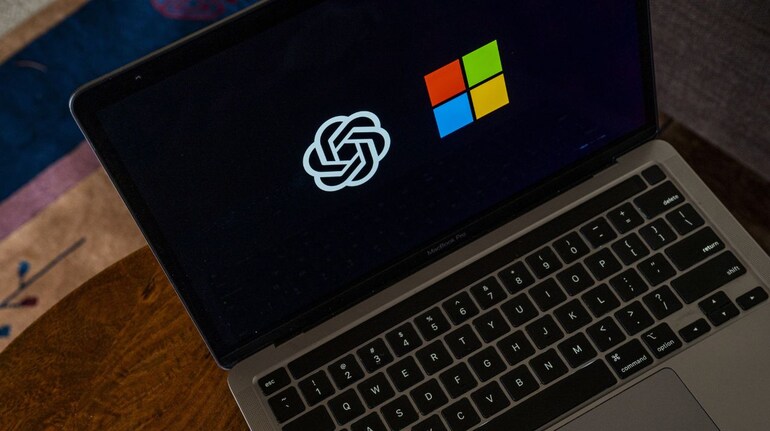
OpenAI and Microsoft were once referred to as having the "best partnership in tech," something that OpenAI CEO Sam Altman often echoed. But now, that partnership is coming apart at a time when the world is in the midst of an artificial intelligence competition, with increasing tensions over computing power access, intellectual property, and the future of AI itself, the Wall Street Journal reported.
Over the past six years, Microsoft has fuelled OpenAI’s meteoric rise with billions of dollars in funding, helping ChatGPT become one of the fastest-growing consumer applications in history, with more than 500 million weekly users. OpenAI, in turn, has powered the generative AI revolution that tripled Microsoft’s share price and momentarily made it the world’s most valuable company.
But today, Altman and Microsoft CEO Satya Nadella are more and more on opposite sides of a divide, and both are getting their companies ready for more autonomous futures. Although still closely entwined, strategic tensions are remaking the previously tight alliance.
A bond born of optimism, tested by ambition
The seeds of the alliance were sown when Nadella and Altman bumped into each other in a stairwell at the 2018 Allen & Co. conference in Sun Valley, Idaho. OpenAI was then a nonprofit research organisation with the lofty objective of creating artificial general intelligence (AGI) — AI systems that would be able to surpass human capabilities.
One year after that, Microsoft had invested $1 billion in OpenAI, gaining sole access to its models and becoming the cloud provider for OpenAI. The partnership thrived, culminating in ChatGPT's launch in 2022, a blockbuster that prompted tech titans Alphabet and Meta to move swiftly to adapt their strategies.
At the height of their cooperation, Nadella and Altman frequently exchanged rapid-fire text messages. When negotiations between their teams hit roadblocks, Altman often posted screenshots of conversations with Nadella to OpenAI’s internal Slack to move discussions forward.
Microsoft doubled down in early 2023, investing an additional $10 billion to help OpenAI rent data centres and train next-generation models. When Altman was briefly ousted by OpenAI’s board later that year, Nadella offered him a lifeline, signalling just how valuable he was to Microsoft’s AI ambitions.
Diverging paths and rising mistrust
Even as the public showed its solidarity, Microsoft had already started hedging its bets. Nadella recruited in secret Mustafa Suleyman, co-founder of Google's DeepMind, and his team from AI startup Inflection, spending $650 million to create a new division at Microsoft dedicated to creating models without OpenAI.
The Suleyman-led initiative found it difficult from the start, with early training runs coming short of expectations. However, the shift indicated Microsoft's willingness to reduce its dependence on OpenAI, particularly following the close removal of Altman.
Tensions deepened over OpenAI’s ambitions to develop humanlike intelligence. The partnership agreement gives OpenAI’s board the authority to modify its relationship with Microsoft if it achieves AGI. While Altman’s team believes they are making rapid progress, Microsoft negotiators have insisted that OpenAI’s current technology is far from achieving humanlike capabilities. Nadella publicly dismissed the idea earlier this year, calling it “nonsensical benchmark hacking.”
Simultaneously, OpenAI has become increasingly exasperated with Microsoft's capacity to provide adequate computing power and access to high-end chips. Microsoft, in return, says it is doing everything it can within existing limits and has relaxed exclusivity conditions.
In a crisis moment last summer, OpenAI postponed releasing the code for a highly capable new model, codenamed "Strawberry," angering Microsoft executives who saw the action as a lack of transparency.
Preparation for independent futures
The tension has already reorganised the internal dynamics of the companies. Altman and Nadella, who used to be in constant communication, now talk mostly during formal weekly calls. The companies were hammering out a ambitious new data centre deal prior to Altman's brief exile putting the negotiations on hold.
Meanwhile, in a visible sign of OpenAI’s widening network, Altman appeared alongside President Trump, SoftBank’s Masayoshi Son, and Oracle’s Larry Ellison earlier this year to announce a potential $500 billion investment in Stargate — a project that closely mirrors initiatives Altman once hoped to pursue with Nadella.
Microsoft still wields significant influence over OpenAI’s future: it can block the startup’s efforts to restructure into an independent for-profit entity, a move critical to OpenAI’s financial plans. OpenAI, however, retains leverage too, with contractual clauses that could restrict Microsoft’s access to its most advanced AI models.
For now, both companies remain locked in a delicate balance — too interdependent to fully separate, yet increasingly wary of each other’s ambitions.
A watershed moment for the future of AI
The fracturing partnership between OpenAI and Microsoft occurs against the backdrop of a rapidly gathering global AI sprint. As these two firms edge their way ahead of one another, the stakes for the future of AI, and who sets the agenda on the next iteration of game-changing technologies, sit poised in the balance.
Whether the two titans can re-synchronize their visions or continue to drift further apart will have far-reaching consequences not only for their own futures, but for the whole tech sector.
Discover the latest Business News, Sensex, and Nifty updates. Obtain Personal Finance insights, tax queries, and expert opinions on Moneycontrol or download the Moneycontrol App to stay updated!
Find the best of Al News in one place, specially curated for you every weekend.
Stay on top of the latest tech trends and biggest startup news.