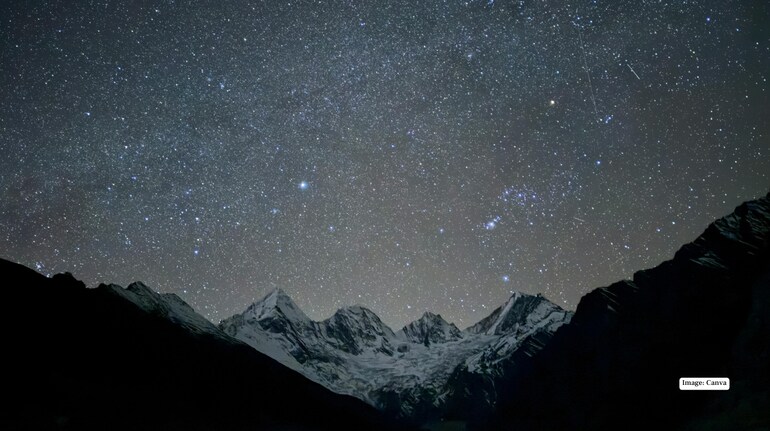

From rare eclipses to dazzling meteor showers, 2026 is shaping up to be a landmark year for astronomy lovers—and for travellers willing to plan their holidays around the night sky. As astrotourism continues to gain momentum, destinations offering dark skies, open horizons, and unique celestial alignments are drawing global attention.
The headline act is undoubtedly the total solar eclipse of August 12, 2026, the first such eclipse visible from mainland Europe in over two decades. But it’s far from the only reason to look up. The year also promises a striking planetary alignment, two major meteor showers under favourable moon phases, and a series of lunar events that turn ordinary trips into once-in-a-lifetime experiences.
Here’s a curated guide to the most compelling astronomical events of 2026—and where to travel to witness them at their best.
1. Annular Solar Eclipse — February 17, 2026
The first major celestial event of the year arrives on February 17, when an annular solar eclipse occurs. Unlike a total eclipse, the Moon will be slightly farther from Earth and unable to fully cover the Sun, creating the dramatic “ring of fire” effect at maximum eclipse.
At its peak, the Moon will obscure roughly 92 per cent of the Sun, with annularity lasting just over two minutes.
Where to see it best: The path of annularity passes largely over Antarctica and the Southern Ocean, making this eclipse one of the most logistically challenging to observe. Expedition cruises to the Antarctic Peninsula may offer partial views, while parts of southeastern Africa are expected to witness a partial eclipse. For serious eclipse chasers, this event is more about the journey than convenience.
2. Planetary Parade — February 28, 2026
A rare six-planet alignment will grace the evening sky on February 28, shortly after sunset. Jupiter, Saturn, Venus, Mercury, Uranus, and Neptune will appear along the same arc of the sky—a phenomenon often referred to as a “planet parade”.
What to expect: Venus, Jupiter, Saturn, and (with some effort) Mercury will be visible to the naked eye under clear skies. Uranus and Neptune will require binoculars or a small telescope.
Best places to watch:
Dark-sky destinations with low light pollution—such as desert regions, high-altitude plateaus, or rural coastlines—will offer the clearest views.
3. Total Lunar Eclipse — March 3, 2026
On March 3, the Moon will slip entirely into Earth’s shadow, producing a total lunar eclipse and turning the full Moon a deep copper-red for nearly an hour. Often called a “blood moon,” this event is especially significant—it will be the last total lunar eclipse visible until 2029.
Best visibility: According to astronomical projections, the eclipse will be best viewed from western North America, East Asia, Australia, New Zealand, and the Pacific region. Weather conditions will play a key role, with parts of the southwestern US, north-west Mexico, and inland Australia statistically offering clearer skies.
For North America’s west coast, the eclipse will occur in the early morning hours, just before sunrise.
4. Blue Moon — May 31, 2026
May ends with a celestial curiosity: a Blue Moon, the term used when a calendar month contains two full moons. While the Moon won’t actually appear blue, the event is rare enough to warrant attention—especially for photographers and night-sky enthusiasts.
This also means 2026 will have 13 full moons, rather than the usual 12.
5. Venus–Jupiter Conjunction — June 8–9, 2026
Two of the brightest objects in the night sky—Venus and Jupiter—will appear strikingly close together in mid-June, separated by less than the width of a finger held at arm’s length.
Why it’s special: No telescope is required, making this one of the most accessible astronomical events of the year. Clear western skies shortly after sunset will provide the best views.
6. Total Solar Eclipse — August 12, 2026
The most anticipated astronomical event of the year arrives on August 12, when a total solar eclipse will sweep across parts of the Northern Hemisphere. For up to two minutes, daylight will fade to twilight as the Moon completely blocks the Sun.
Why it matters: This will be the first total solar eclipse visible from mainland Europe since 1999, making it a major draw for travellers.
Top viewing locations:
Northern Spain (especially along the path of totality)
Iceland
Greenland
The eclipse follows the April 2024 North American event and precedes an even longer eclipse in 2027, making 2026 a critical year for eclipse tourism.
7. Perseids Meteor Shower — August 12–13, 2026
Almost perfectly timed with the solar eclipse, the Perseids meteor shower peaks on the night of August 12 into August 13—and this year, conditions are close to ideal.
With a new moon in the sky, darkness will allow even faint meteors to shine through, offering one of the best meteor-watching nights of the decade.
Best viewing regions: Europe, the UK, the US, Canada, and parts of Asia will all enjoy strong visibility. In Europe, dark-sky areas of southern Spain, the Pyrenees, the Canary Islands, and rural coastal regions are particularly well-suited.
8. Geminids Meteor Shower — December 13–14, 2026
The Geminids are widely regarded as the most reliable meteor shower of the year, and 2026 is no exception. Known for their slow, bright, and often multi-coloured streaks, these meteors peak in mid-December.
Viewing tips: Step outside after midnight and look toward the eastern sky. Clear winter air often improves visibility, especially in cold, dry regions.
9. December Solstice — December 21, 2026
The winter solstice, marking the shortest day of the year in the Northern Hemisphere, falls on December 21. Beyond its astronomical significance, the solstice has long inspired travel tied to ancient monuments and seasonal rituals.
Popular solstice destinations:
Stonehenge, England
Newgrange, Ireland
Chichén Itzá, Mexico
Many tour operators organise special solstice experiences, combining astronomy, history, and cultural storytelling.
10. Christmas Eve Supermoon — December 24, 2026
Rounding out the year is a festive finale: a Supermoon on December 24. Occurring when the full Moon is closest to Earth, it will appear larger and brighter than usual—an atmospheric end to a year dominated by celestial spectacles.
Why 2026 Is a Big Year for Astrotourism
With major eclipses, favourable moon phases, and rare planetary events, 2026 offers one of the richest astronomical calendars of the decade. For travellers, it’s a reminder that some of the most memorable journeys aren’t just about where you go—but when you go.
From Europe’s sun-darkened afternoons to meteor-lit summer nights, 2026 invites travellers to plan with the cosmos in mind.

Discover the latest Business News, Sensex, and Nifty updates. Obtain Personal Finance insights, tax queries, and expert opinions on Moneycontrol or download the Moneycontrol App to stay updated!
Find the best of Al News in one place, specially curated for you every weekend.
Stay on top of the latest tech trends and biggest startup news.