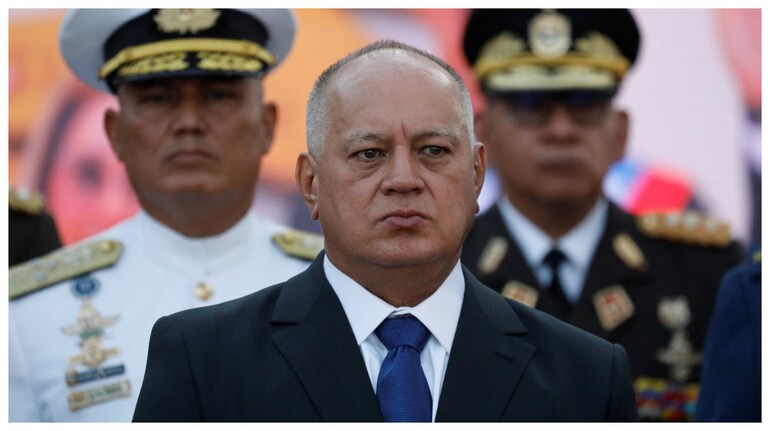

On Wednesday night, as Venezuela struggled to absorb the shock of Nicolás Maduro’s capture, the country’s most feared political enforcer appeared on state television. Seated behind a desk decorated with symbols of Hugo Chávez’s revolution, interior minister Diosdado Cabello stared into the camera and issued a blunt demand: the United States must return Maduro.
“The president has been kidnapped,” he said. “Venezuela does not surrender.”
The words landed like a warning. While interim president Delcy Rodríguez has spoken about cooperation and stabilisation, Cabello’s message was confrontation, not compromise, the Financial Times reported.
The man with the muscle
Within Venezuela’s fractured power structure, Cabello is widely seen as the one figure who truly controls the levers of force. He oversees the police, intelligence services and key security units. He also has influence over the colectivos, armed pro-government groups that patrol neighbourhoods on motorbikes and are feared by the opposition.
In recent days, Cabello has been visible on the streets of Caracas, surrounded by armed men chanting loyalty slogans. For many Venezuelans, the message is unmistakable: whatever happens in palaces or negotiating rooms, real power still rests with those who control guns and streets.
“Delcy and Diosdado represent two very different currents inside the regime,” says Eva Golinger, a former Chávez ally. “Keeping him onside is essential to her survival.”
A long memory of betrayal
Cabello’s hostility to the United States is deeply rooted. He rose to prominence alongside Chávez in a failed coup in 1992, then briefly ran the country during the chaos of the 2002 attempt to overthrow Chávez, a crisis the regime still blames on Washington-backed forces.
Since then, Cabello has made anti-American rhetoric his political signature, especially on his long-running television show Con el Mazo Dando, where he regularly attacks opponents, journalists and foreign powers.
He once hoped to inherit Chávez’s mantle himself. Instead, the presidency went first to Maduro, and now, abruptly, to Rodríguez.
A dangerous moment for unity
Publicly, Cabello has pledged loyalty to Rodríguez. But analysts doubt this will last if her government begins making real concessions to Washington, especially on oil or political reforms.
“Any serious political opening is a red line for him,” says Phil Gunson of the International Crisis Group.
There is also a personal reason Cabello has little to gain from reconciliation. The United States has indicted him on drug trafficking and corruption charges, which he denies, and has placed a large bounty on his head. From his perspective, compromise offers no safety.
The wild card in Venezuela’s future
For now, the regime is holding together. But the tension is visible. Rodríguez needs economic relief and international legitimacy. Cabello represents a wing of the system that survives on confrontation, fear and control.
Venezuela’s next crisis may not come from Washington or the opposition, but from the unresolved question at the heart of power in Caracas: how long can two such different visions of survival coexist under the same flag?
Discover the latest Business News, Sensex, and Nifty updates. Obtain Personal Finance insights, tax queries, and expert opinions on Moneycontrol or download the Moneycontrol App to stay updated!
Find the best of Al News in one place, specially curated for you every weekend.
Stay on top of the latest tech trends and biggest startup news.