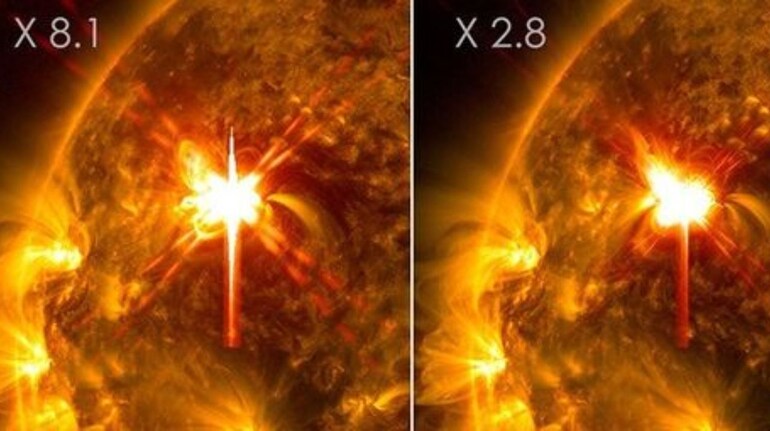

The Sun has been exceptionally active this week. On February 1 and 2, it released four massive solar flares, including three strong X-class flares in just one day—including an X8.3 flare which is so far the strongest solar flare recorded this year.
Flares from the Sun have been classified according to their strength, starting from A, B and C, and going all the way to M and then X. The X-class flares are the strongest type that scientists have measured. When they happen, space officials immediately start monitoring it more closely.
NASA and the US National Oceanic and Atmospheric Administration said the flares were noticed by satellites that are constantly watching the Sun. The strongest flare was tracked at 6.57 pm EST on February 1 when the Sun released strong ultraviolet and X-ray radiation. Images from NASA show intense bursts of light shooting out from the Sun’s surface. These flashes are not visible to us from Earth without special tools, but they matter for space weather.
A solar flare happens when the Sun suddenly releases energy that has been built up in its magnetic field. That energy moves through space at the speed of light. If the flare is strong and pointed at Earth, it can disturb the planet’s upper atmosphere.
For humans on Earth, this can mean temporary disruptions with radio signals, GPS systems and satellites. Airlines flying near the poles might face short radio blackouts during strong flares. In some cases, electricity grids can also get damaged if the activity leads to a bigger solar storm.
The latest flare led to disturbances on the upper layers of Earth’s atmosphere. Parts of the South Pacific experienced R3-level radio blackouts. Shortwave radio signals were disrupted in eastern Australia and New Zealand, according to the US National Oceanic and Atmospheric Administration's Space Weather Prediction Center.
The increase in activity is expected. The Sun travels through an 11-year cycle, shifting between quieter and more active phases. Currently, it is in a more active phase, which could mean more sunspots, more flares and a higher possibility of solar storms.
For most people, nothing will seem strange. We will not feel these flares. The sky will not look unusual. But in space, scientists continue to monitor the systems we rely on every day.
The recent flares are a reminder that the Sun is not always calm. It contains enormous bursts of energy, and during active years like this one, we are likely to see more of them.
Discover the latest Business News, Sensex, and Nifty updates. Obtain Personal Finance insights, tax queries, and expert opinions on Moneycontrol or download the Moneycontrol App to stay updated!
Find the best of Al News in one place, specially curated for you every weekend.
Stay on top of the latest tech trends and biggest startup news.