






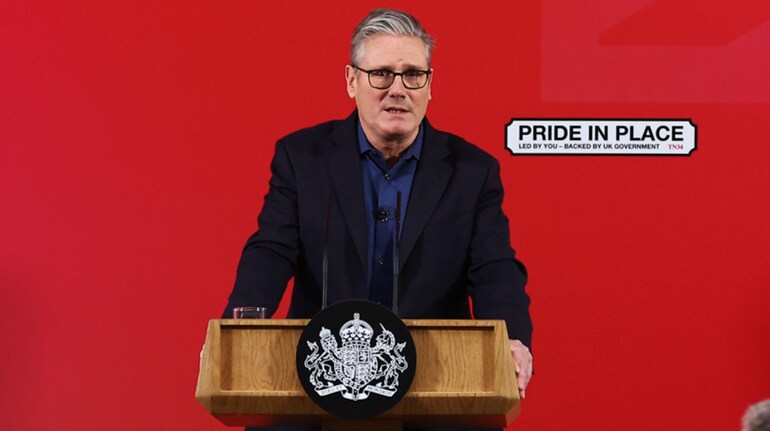

Keir Starmer apologized for appointing Peter Mandelson to a senior role despite the former envoy’s known links to the pedophile financier Jeffrey Epstein, as he sought to turn the page on the crisis engulfing his government.
“I am sorry. Sorry for what was done to you. Sorry that so many people with power failed you. Sorry for having believed Mandelson’s lies and appointed him,” Starmer said, addressing Epstein’s victims. “And sorry that even now you’re forced to watch this story unfold in public once again.”
The prime minister began a speech about revitalizing deprived British towns by directly addressing the issue that has been overshadowing his premiership. Mandelson had lied to him, the prime minister said: “He portrayed Epstein as someone he barely knew.”
Starmer’s apology follows a concession on Wednesday that material used to vet Mandelson for the post of ambassador to the US contained details of his relationship with Epstein. A tranche of emails freshly released by the US Department of Justice showed how close those ties remained for years after the financier was convicted of child sex-trafficking charges in 2008.
Starmer said his team asked Mandelson before his appointment whether he had stayed with Epstein and whether he’d accepted gifts and other hospitality from him. “None of us knew the depth and the darkness of that relationship,” Starmer said. “Information now available makes clear the answers he gave were lies.”
Starmer Premiership in Crisis Over Mandelson Appointment
Members of Starmer’s party are growing restive as their government heads into crucial local elections with low popularity ratings. On Wednesday they helped force the government to concede that sensitive documents about Mandelson’s vetting process would be reviewed by the cross-party Intelligence and Security Committee.
That plan may run afoul of the ongoing police investigation into Mandelson, after London’s Metropolitan Police said they’d asked the government to withhold some information from public scrutiny because it might prejudice their probe.
In addressing the Mandelson scandal head-on on Thursday, Starmer also sought to restore the electorate’s faith in the political class more generally, as the UK electorate turns away from Britain’s traditional Labour-Conservative duopoly and toward fringe parties on the left and right.
UK voters are becoming more cynical of politics: 60% of the public say that politicians invent or exaggerate culture wars as a political tactic, up from 40% in 2020, according to polling by King’s College London and Ipsos conducted in August.
“Politics in this dangerous era is no longer about left and right, but a contest between renewal and grievance,” Starmer said in his speech. “Between those who accept the idea that society is a zero-sum competition and those who believe we can unite for the higher purpose.”
In this he was retreading old ground, building on his speech to Labour’s annual conference last year in which he sought to reclaim patriotism on behalf of his own party and away from right-wing insurgents Reform UK, who rose to prominence on the back of anti-migrant rhetoric.
The government is desperate to blunt Reform leader Nigel Farage’s appeal ahead of a by-election in Greater Manchester later this month and raft of local elections in May.
Discover the latest Business News, Sensex, and Nifty updates. Obtain Personal Finance insights, tax queries, and expert opinions on Moneycontrol or download the Moneycontrol App to stay updated!
Find the best of Al News in one place, specially curated for you every weekend.
Stay on top of the latest tech trends and biggest startup news.





