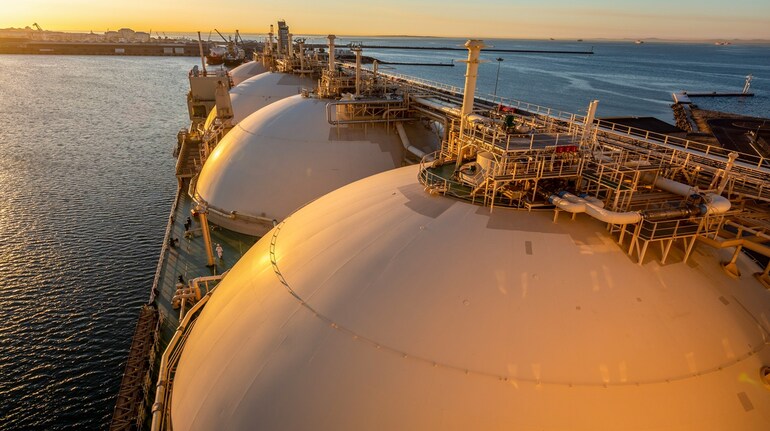

India’s liquefied natural gas (LNG) supply chain is facing disruption after Qatar, its single-largest supplier, declared force majeure on deliveries following a halt in production at its Ras Laffan facility.
Parallelly, India’s largest LNG terminal operator, Petronet LNG, has also invoked force majeure for its affected tankers after insurers pulled out of key Middle East routes leading to choking of supplies in the Strait of Hormuz.
“The extent of the damage and the restart timeline (of the facility) remain unclear. Regardless of the facility’s status, if LNG transits through the Strait of Hormuz are halted, the site could be forced to ramp down, and receivers will face immediate consequences anyway,” said Florence Yu, LNG analyst at Vortexa. India faces the immediate risk of losing LNG supply as it imports 45% of its LNG from Qatar, Vortexa noted.
If the country’s LNG supply tightens, price-sensitive industrial consumers may seek alternative fuels, such as liquefied petroleum gas, furnace oil, or naphtha, CrisilIntelligence said.
Sehul Bhatt, Director, Crisil Intelligence said that any disruption causes an increase in cost for the industries. “The extent of this feedstock diversification will be a function of the cost-benefit math. Elevated LNG prices can also translate to costlier gas supplies to fertiliser plants. This, in turn, can increase the government’s subsidy burden,” he said.
As a result, Asian spot LNG prices have flared up from ~$10/MMBtu to $24–25/MMBtu. Qatar supplies 10–11 million tonnes per annum of LNG to India, accounting for 45% of its imports.
Government sources, however, said that India is closely monitoring the situation and does not expect any notable hit on the country’s LNG supplies if the Qatar facility is shut for 8-10 days. If the closure is prolonged, the government might explore additional domestic supply adjustments to address the issue, official sources said.
Sources also said that Indian companies are looking for alternate supplies of oil and gas and actively scouting for LNG cargoes from other suppliers.
India, the world's fourth largest LNG importer, Qatar and the UAE make up over 55% of its total LNG deliveries. The country receives about 5 cargoes per week from those two suppliers, as per Vortexa data.
Considering the prevailing security situation in West Asia and the material risks posed to maritime navigation, Petronet LNG has issued a Force Majeure notice to QatarEnergy in respect of its LNG tankers, namely Disha, Raahi, and Aseem.
The company has also issued corresponding Force Majeure notices to its off-takers, namely GAIL (India) Limited, Indian Oil Corporation Limited (IOCL), and Bharat Petroleum Corporation Limited (BPCL), under the relevant Gas Sale and Purchase Agreements on March 3.
“Acts of War are also excluded under Business Interruption Insurance covers taken by Petronet LNG. The likely impact of Force Majeure which is currently an ongoing event cannot be estimated at this point of time. The company is closely monitoring the developments and will keep the stock exchanges informed of any material updates in this regard,” Petronet LNG said in its stock exchange filing.
Crisil Ratings said that the impact of reduced LNG supplies, however, would be primarily on the industrial segment, which is heavily reliant on imported gas and may experience a drop in sales volume because of supply constraints.
Discover the latest Business News, Sensex, and Nifty updates. Obtain Personal Finance insights, tax queries, and expert opinions on Moneycontrol or download the Moneycontrol App to stay updated!
Find the best of Al News in one place, specially curated for you every weekend.
Stay on top of the latest tech trends and biggest startup news.