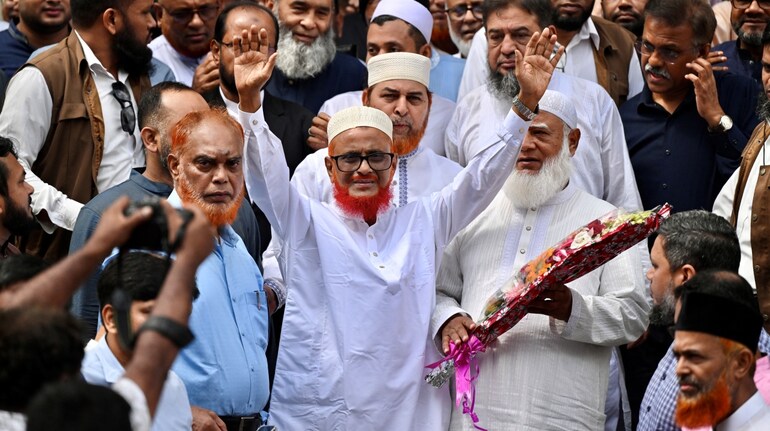
Bangladesh's Supreme Court has restored the political registration of Jamaat-e-Islami Bangladesh and its student wing, Chatra Shibbir — two groups long accused of extremist leanings and active opposition to Bangladesh’s secular foundations. This decision comes on the heels of an earlier executive move by the Muhammad Yunus-led caretaker government, which lifted the ban on Jamaat shortly after taking power last year. Now, with the court’s greenlight, the Islamist party is officially back in the political mainstream and can contest the upcoming general elections in the country.
For India, this is not a routine domestic shuffle in a neighbouring country. It is a worrying development with potentially deep and destabilising consequences. Jamaat-e-Islami’s pro-Pakistan stance, its violent role in the 1971 Liberation War, and its documented history of fostering radicalisation and communal hatred are not easily forgotten — least of all in India, which shares a sensitive 4,000-km-long border with Bangladesh. Jamaat’s ideological hostility to secularism, its repeated targeting of minorities, and its avowed support for Islamic majoritarianism raise immediate alarms for Indian policymakers, security agencies, and border states like West Bengal and Assam.
Even more troubling is the timing: the return of Jamaat comes when Bangladesh’s political system is under strain, with former prime minister Sheikh Hasina in self-imposed exile, her Awami League party banned from politics, and Islamists regaining lost ground. For India, which has long seen the Hasina-led government as a reliable partner in counterterrorism, regional stability, and economic cooperation, the resurgence of Jamaat is not just a reversal of democratic values in Bangladesh, but a strategic setback. It risks reigniting old flames of cross-border extremism, fuelling anti-Hindu violence, and aligning Dhaka once more with the Islamist power centres of Islamabad and Ankara.
A troubled past: JeI's pro-Pakistan stance
JeI's origins trace back to pre-independence India, but its role during Bangladesh's 1971 Liberation War is particularly contentious. The party actively collaborated with the Pakistani military, forming paramilitary groups like Al-Badr and Al-Shams, which were responsible for heinous crimes against Bengali nationalists and minorities. These actions have left an indelible scar on Bangladesh's history and have been a source of tension in India-Bangladesh relations.
As Pakistan seeks to re-establish its influence in Bangladesh, the resurgence of Jamaat-e-Islami provides it with the political foothold it needs to stage a comeback. The party’s pro-Pakistan stance aligns closely with Muhammad Yunus’ call for forging “stronger ties with Pakistan.”
JeI’s resurgence rings alarm bells
The political upheaval following Sheikh Hasina's ouster created a power vacuum that JeI has been quick to exploit. The interim government, led by Muhammad Yunus, lifted the ban on JeI, allowing it to re-enter the political arena. Critics argue that this move is a strategic alliance to consolidate power, but it also risks legitimizing a party with a history of extremism and anti-India sentiment.
Last month, Bangladesh’s Jamaat-e-Islami proposed creating an independent Rohingya state during a meeting in Dhaka with a Chinese Communist Party delegation led by Peng Jiubin. The move comes as Rohingya influx into Bangladesh rises, driven by Ethnic Armed Organisations like the Arakan Army gaining control in Myanmar’s border regions.
Implications for India's security
JeI's resurgence is not just a domestic issue for Bangladesh; it has direct implications for India's security. The party's ideological alignment with Pakistan and its history of supporting radical elements pose a threat to India's northeastern states, which share a porous border with Bangladesh. There is a legitimate concern that JeI could facilitate cross-border terrorism, destabilizing the region.
Impact on minority communities
The return of JeI to mainstream politics also raises alarms about the safety of minority communities in Bangladesh, particularly Hindus. Historically, JeI has been implicated in attacks against minorities, and its political empowerment could embolden such actions. This not only threatens the secular fabric of Bangladesh but could also lead to an influx of refugees into India, straining resources and communal harmony.
Strategic concerns for India
India has long viewed Bangladesh as a strategic partner in South Asia. The rise of JeI could shift Bangladesh's foreign policy closer to Pakistan and China, undermining India's influence in the region. Such a realignment could have broader geopolitical consequences, affecting trade, security cooperation, and regional stability.
The reinstatement of Jamaat-e-Islami Bangladesh into the political mainstream is a development that India cannot afford to ignore. Given the party's history and ideological leanings, its resurgence poses a multifaceted threat to India's security, regional stability, and the well-being of minority communities.
Discover the latest Business News, Sensex, and Nifty updates. Obtain Personal Finance insights, tax queries, and expert opinions on Moneycontrol or download the Moneycontrol App to stay updated!
Find the best of Al News in one place, specially curated for you every weekend.
Stay on top of the latest tech trends and biggest startup news.