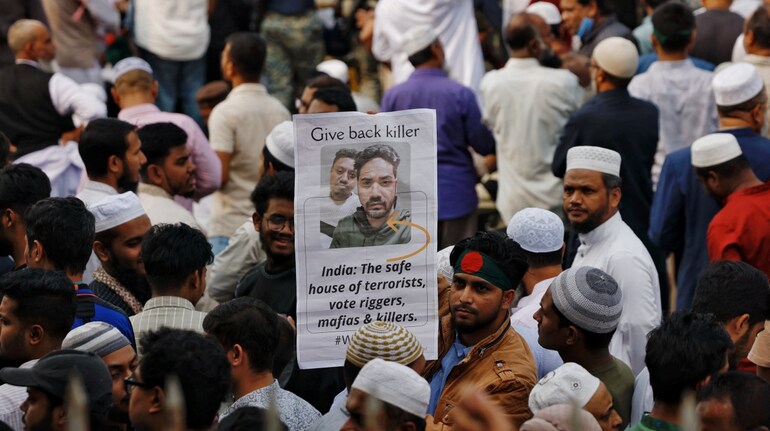

The murder of Bangladeshi student leader Sharif Osman Hadi, gunned down by masked attackers in Dhaka last month, pushed the country deeper into chaos. His killing set off days of violent unrest, with mobs torching vehicles, attacking properties and paralysing parts of the capital. Yet, weeks later, Bangladesh remains without clear answers on who ordered the assassination.
Now, a leaked conversation believed to have originated from within Jamaat-e-Islami has further muddied the waters, casting serious suspicion on the Islamist group at a time when the investigation is already riddled with contradictions and political blame games, reports CNN-News18.
According to sources familiar with the leak, as quoted by CNN-News18, the conversation refers to an alleged one-crore-taka deal connected to Hadi’s killing. Of this amount, 20 lakh taka was supposedly earmarked for the shooter. The discussion claims the plan later fell apart after an internal dispute, with Jamaat allegedly unwilling to pay more than 70 lakh. The exchange points to internal disagreements over money, execution and control.
More disturbingly, the leaked material suggests that Hadi was seen as an obstacle to Jamaat’s political and organisational interests. The conversation indicates that the killing was meant to trigger wider unrest, inflame tensions and reshape the political narrative on the streets. References were allegedly made to sending a “warning signal” to rivals, and to targeting someone linked to the July fighters to further destabilise the situation.
The conversation also claims that the alleged planning meeting took place inside a Jamaat office in Dhaka, and that the shooter discussed was someone close to a senior Jamaat leader. If true, this would point to planning at a far more organised and institutional level than previously acknowledged.
What has intensified speculation is the claim that the leak itself came from within Jamaat’s own ranks, suggesting deep internal cracks and power struggles. The leaked content also alleges that prime accused Faisal Karim Masud, who has publicly denied involvement, was deliberately sent abroad to remove him from the country as scrutiny mounted.
Masud has since appeared in a viral video message from Dubai, rejecting any role in Hadi’s killing. He claimed he left Bangladesh legally and dismissed earlier reports in Bangladeshi media that he had fled to India. The authenticity of the video has not been independently verified.
At the same time, India has firmly rejected allegations circulating in sections of Bangladeshi media that the attackers escaped into Indian territory or had any links to India. New Delhi has described these claims as false narratives pushed by extremist elements seeking to divert attention after the murder.
India has little to gain from instability in Bangladesh. Violence across the border complicates security, disrupts trade and connectivity, and undermines regional stability. These are outcomes New Delhi has consistently sought to avoid.
As Bangladesh struggles through a volatile political phase, the leaked conversation has added yet another layer of uncertainty to an already explosive case. With competing narratives, unverified claims and growing street anger, the Hadi murder risks becoming less about justice and more about how fractured and vulnerable Bangladesh’s political landscape has become.
Discover the latest Business News, Sensex, and Nifty updates. Obtain Personal Finance insights, tax queries, and expert opinions on Moneycontrol or download the Moneycontrol App to stay updated!
Find the best of Al News in one place, specially curated for you every weekend.
Stay on top of the latest tech trends and biggest startup news.