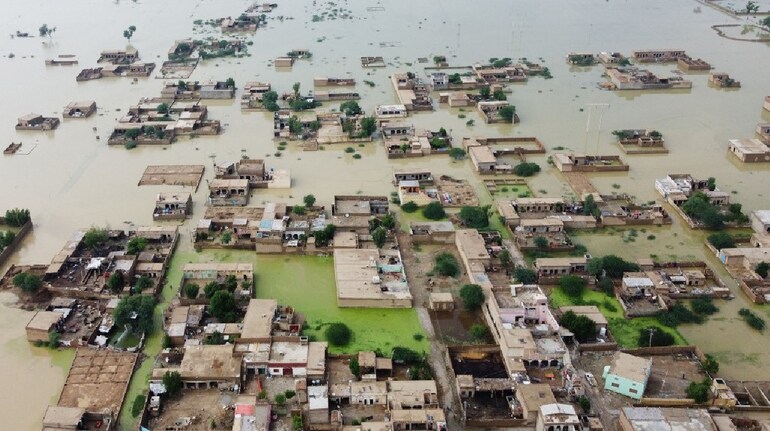
Pakistan’s eastern Punjab province, home to nearly 150 million people, is facing the largest flood in its history, provincial minister Maryam Aurangzeb said on Sunday according to Associated Press.
Speaking at a press conference, she warned that floodwaters from the Sutlej, Chenab and Ravi rivers have risen to unprecedented levels, affecting nearly two million people.
“This is the biggest flood in the history of the Punjab… It’s the first time that the three rivers have carried such high levels of water,” Aurangzeb said.
Authorities have set up rescue camps in schools, police stations and security facilities, using boats to evacuate stranded families.
Monsoon rains supercharged by climate changePakistan’s vulnerability to climate change is again in sharp focus. Officials, as quoted by Associated Press, say global warming has intensified this year’s monsoon, with heavier downpours and cloudbursts in the mountainous north and northwest.
According to the Pakistan Meteorological Department, Punjab has received 26.5 percent more monsoon rain between July 1 and August 27 compared to last year.
The National Disaster Management Authority reported that 849 people have been killed and 1,130 injured in rain-related incidents nationwide since late June.
Pakistan’s monsoon season typically lasts until the end of September, raising fears of further flooding.
Adding to the crisis, officials in Lahore say the flooding has been worsened by India’s release of excess water from swollen rivers and dams into Pakistan’s low-lying Punjab.
Aurangzeb said the Foreign Ministry is collecting data on what it described as India’s ‘deliberate’ release of water, though New Delhi has not yet commented.
India did alert Pakistan last week about the possibility of cross-border flooding, marking the first direct diplomatic contact between the two neighbours since their near-war confrontation in May.
Water management across the Indus Basin rivers, governed by the 1960 Indus Waters Treaty, has long been a sensitive fault line in India-Pakistan relations.
Food basket under threatPunjab is Pakistan’s main wheat-producing region, often called the country’s breadbasket. The floods threaten to destroy standing crops at a time when food inflation is already high.
The memory of 2022’s ferocious floods, which wiped out vast agricultural areas and pushed the country toward food shortages, looms large. Then-Prime Minister Shehbaz Sharif had warned that Pakistan was at risk of a hunger crisis, and officials fear history may repeat itself.
Humanitarian challenge growsWith millions displaced, authorities are scrambling to provide shelter, food and medical aid. Schools and colleges have been converted into relief centres, while the army and police are leading evacuation drives.
Boat rescues are ongoing across southern and eastern Punjab, but access to remote areas remains limited. Relief groups warn that stagnant floodwaters could trigger waterborne disease outbreaks, compounding the crisis.
With crops at risk and millions displaced, the crisis could deepen into a food and humanitarian emergency. And as the rains continue until late September, Pakistan is bracing for what may still be to come.
Discover the latest Business News, Sensex, and Nifty updates. Obtain Personal Finance insights, tax queries, and expert opinions on Moneycontrol or download the Moneycontrol App to stay updated!
Find the best of Al News in one place, specially curated for you every weekend.
Stay on top of the latest tech trends and biggest startup news.