






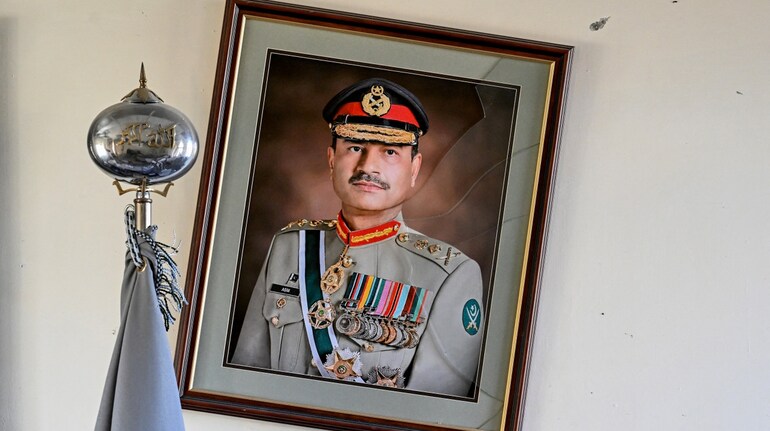

Pakistan’s military establishment under Field Marshal Asim Munir is aggressively pushing what security sources describe as a doctrine of “defence diplomacy,” aimed at expanding Islamabad’s military and strategic footprint across the Muslim world. Presented as outreach and cooperation, the effort appears driven less by collective security and more by Pakistan’s need to regain relevance at a time when it is grappling with economic collapse, political instability, and persistent international suspicion over its record on terrorism.
According to top security sources cited by CNN-News18, Pakistan is pitching itself as a reliable arms supplier and strategic partner to Muslim-majority countries facing regional uncertainty. This campaign has intensified following a strategic mutual defence understanding with Saudi Arabia, an agreement sources say altered security calculations in parts of the Middle East. Critics argue that Islamabad is attempting to compensate for its internal weaknesses by projecting external military strength, a strategy that has historically produced instability rather than security.
Nuclear signalling as leverage
What distinguishes this phase of outreach is Pakistan’s alleged use of its nuclear status as an implicit bargaining tool. Sources say Islamabad’s value proposition goes beyond conventional weapons and training. As the only nuclear-armed Muslim country, Pakistan is projecting what sources describe as a form of strategic reassurance or “strategic cover” to friendly states.
While no formal nuclear sharing or transfer is claimed, the signalling itself is significant. It suggests Pakistan is willing to blur lines around nuclear deterrence to enhance its influence. This approach is particularly worrying given Islamabad’s opaque nuclear command structures and its long history of proliferation scandals. For many observers, the idea of Pakistan informally positioning itself as a nuclear backstop raises serious questions about regional stability and responsible nuclear behaviour.
Saudi calculus and wider regional instability
Security sources claim Saudi Arabia had access to intelligence assessments pointing to growing instability across Yemen, the Israel-Palestine theatre, and parts of North and East Africa including Libya, Sudan, Somalia, and Somaliland. Added to this were concerns about emerging Saudi-UAE frictions. These factors allegedly pushed Riyadh to formalise deeper military coordination with Islamabad early.
From Pakistan’s perspective, the Saudi relationship provides legitimacy and scale to its outreach. From a regional standpoint, however, it risks pulling an already volatile Pakistan deeper into Middle Eastern fault lines, exporting its militarised worldview into conflict zones rather than contributing to de-escalation.
Expanding the network
Following the Saudi agreement, Pakistan’s defence diplomacy reportedly gained traction. Countries such as Turkey, Bangladesh, and others have explored similar defence and strategic arrangements. Pakistan’s Deputy Prime Minister Ishaq Dar reportedly told journalists during an in-camera briefing that around eight Muslim nations have formally or informally engaged Islamabad on defence cooperation.
According to top security sources, Turkey, Azerbaijan, Bangladesh, Libya, Sudan, Jordan, Egypt, and others are assessing procurement of Pakistani military hardware and training support. Pakistan has allegedly secured defence export orders worth around $8 billion in fiscal 2025–26 and is targeting $20 billion over the next three to five years.
While these numbers are being projected as a success story, analysts note that Pakistan’s defence export ambitions are unfolding against a backdrop of IMF bailouts, shrinking foreign reserves, and domestic unrest. Critics argue this is less a sign of strength and more a bid to monetise militarisation to offset economic failure.
Why India is watching closely
For India, Pakistan’s defence outreach is not a distant regional story but a direct security concern. Islamabad’s history of using military partnerships and proxy networks to advance hostile agendas against India is well documented. Any expansion of Pakistan’s military influence, especially when coupled with nuclear signalling, inevitably sharpens New Delhi’s threat perceptions.
India is particularly wary of Pakistan leveraging its ties with countries such as Turkey and Bangladesh, regions where Islamabad has previously sought to inject anti-India narratives. The suggestion that Pakistan is offering strategic reassurance rooted in nuclear capability also raises red flags, as it risks emboldening reckless behaviour under the illusion of deterrence.
Moreover, Pakistan’s attempt to position itself as a stabilising force stands in stark contrast to its own record. From harbouring terror groups to repeated ceasefire violations and internal insurgencies, Islamabad’s credibility as a security provider remains deeply questionable.
A familiar pattern with new packaging
Ultimately, Pakistan’s so-called defence diplomacy appears to be old tactics repackaged for a new audience. Instead of addressing structural economic failures and extremist blowback at home, the military establishment is once again seeking external validation through arms deals, strategic posturing, and nuclear ambiguity.
For India and the wider region, this approach does not signal reassurance but risk. A Pakistan that exports insecurity while struggling to govern itself is unlikely to be a force for stability. The concern is not just about where Pakistan is selling weapons, but about the mindset driving this outreach, one that prioritises leverage over responsibility and projection over reform.
Discover the latest Business News, Sensex, and Nifty updates. Obtain Personal Finance insights, tax queries, and expert opinions on Moneycontrol or download the Moneycontrol App to stay updated!
Find the best of Al News in one place, specially curated for you every weekend.
Stay on top of the latest tech trends and biggest startup news.





