






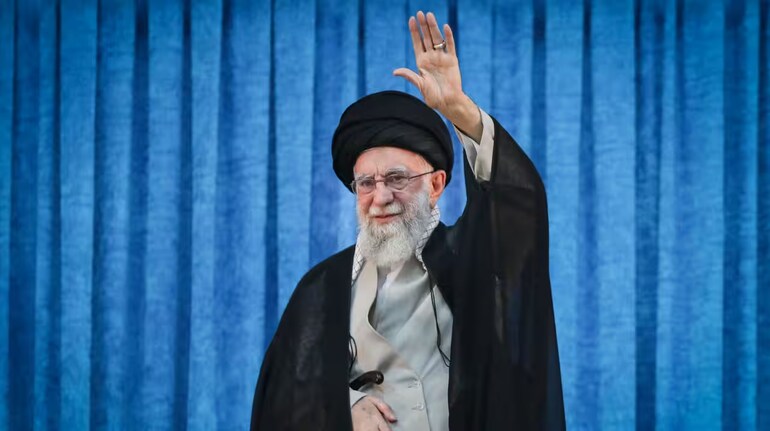

The killing of Iran’s Supreme Leader Ayatollah Ali Khamenei in a major attack by Israel and the United States has thrown the Islamic Republic into an uncertain transition, with attention now shifting to how his successor will be chosen.
US President Donald Trump said Khamenei’s death offered Iranians their “greatest chance” to “take back” their country.
Khamenei was only the second Supreme Leader since Iran’s 1979 revolution. Under Iranian law, the responsibility for appointing a new leader rests with the Assembly of Experts, an 88 member clerical body that “must, as soon as possible” select a successor.
Until that process is completed, a temporary leadership council can step in and “temporarily assume all the duties of leadership”. Such a council has now been formed.
The interim body includes the country’s sitting president, the head of the judiciary and a member of the Guardian Council selected by the Expediency Council, which advises the supreme leader and resolves disputes with Parliament. Iran’s reformist President Masoud Pezeshkian and judiciary chief Gholamhossein Mohseni Ejei are part of the arrangement.
The Assembly of Experts, composed entirely of Shiite clerics, is elected every eight years, though all candidates must first be approved by the Guardian Council, Iran’s constitutional watchdog. The council has a history of disqualifying contenders. In March 2024, it barred former President Hassan Rouhani from contesting elections to the Assembly, despite his role in securing the 2015 nuclear deal with world powers.
The Supreme Leader must be a senior Shia cleric and scholar. While the Assembly holds the authority to remove a leader, it has never exercised that power.
Deliberations over succession traditionally take place behind closed doors, making it difficult to predict the outcome. In the past, hard-line President Ebrahim Raisi, a close ally of Khamenei, was widely viewed as a possible successor before his death in a helicopter crash in May 2024.
Attention has since turned to Khamenei’s son, Mojtaba Khamenei, a 56-year-old Shiite cleric who has never held public office. However, any perception of a father-to-son transfer of power could trigger backlash. Critics may view it as un-Islamic and reminiscent of dynastic rule, drawing uncomfortable parallels to the era of Mohammad Reza Pahlavi, whose US-backed government fell in 1979.
As Iran enters a rare and sensitive moment of leadership transition, the coming days are expected to shape not only its political future but also stability across the wider region.
Discover the latest Business News, Sensex, and Nifty updates. Obtain Personal Finance insights, tax queries, and expert opinions on Moneycontrol or download the Moneycontrol App to stay updated!
Find the best of Al News in one place, specially curated for you every weekend.
Stay on top of the latest tech trends and biggest startup news.





