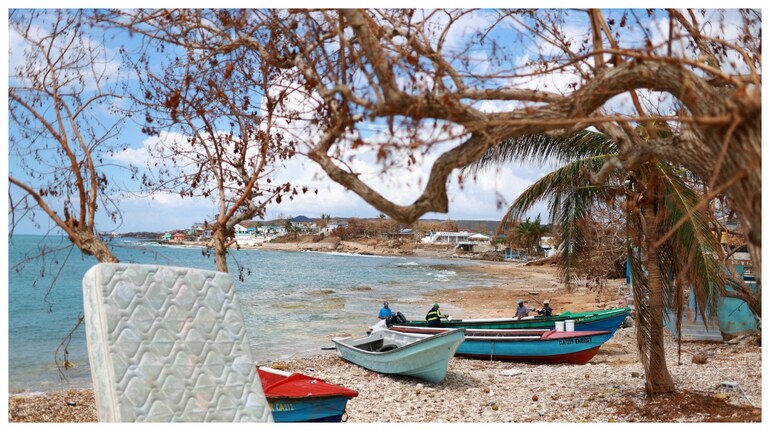

Jamaica sells itself to the world with images of white sand, palm trees and water the colour of glass bottles. For millions of tourists every year, those beaches are the reason to come. For many Jamaicans, they are becoming something else entirely: places they can no longer enter, the BBC reported.
In 2014, Mammee Bay on the island’s north coast was a lively public beach. Fishermen brought in their catch there. Children played in the shallows. In 2020, the land was sold to a private developer. A wall went up. The beach disappeared behind it. The nearby community of Steer Town lost not just a swimming spot, but access to the sea that had supported it for generations.
How much coastline is still public?
Stories like this are now common across the island. According to the Jamaica Beach Birthright Environmental Movement (JaBBEM), only about 0.6 percent of Jamaica’s 1,022-kilometre coastline is freely accessible to the public today. The rest is controlled by hotels, resorts, private villas or gated developments.
Tourism has never been bigger. In 2024, Jamaica received more than 4.3 million visitors, a record. The government is betting even more heavily on the sector. By 2030, around 10,000 new hotel rooms are expected to be added, many of them along the coast. Each new resort typically means another stretch of beach that locals must either pay to enter or avoid altogether.
The law that made it possible
At the heart of the issue is an old law, the Beach Control Act of 1956, passed during the colonial era. It gives the state ownership of the coastline and does not guarantee citizens a right to free access. Over the decades, this has made it easy for successive governments to lease or sell beachfront land to private developers.
Campaigners argue the cost is not just recreational, but cultural and economic. Fishing communities are being cut off from the water. Small vendors and local tour operators lose the spaces where they once worked. Entire ways of life are being slowly squeezed out.
The fight to reclaim the shoreline
Legal challenges are now under way in several places, including Mammee Bay, Bob Marley Beach and Providence Beach in Montego Bay, where residents are fighting plans for new luxury developments. The aim is simple: to establish that Jamaicans should have a legal right to their own shoreline.
Travelers can already see the divide. In many parts of Montego Bay and Ocho Rios, beaches exist almost entirely behind resort gates. Elsewhere, even former public beaches now charge entrance fees. Only a few stretches, like Seven Mile Beach in Negril or Winnifred Beach in the east, still feel like shared spaces.
Who are Jamaica’s beaches really for?
There is an irony here that is hard to miss. The sea is the country’s greatest natural gift, the very thing that draws the world to Jamaica. Yet more and more Jamaicans experience it as something just out of reach, visible but fenced off.
Jamaica’s tourism industry is booming. The question now is whether the island can grow without losing the simple idea that its beaches belong, first of all, to its own people.
Discover the latest Business News, Sensex, and Nifty updates. Obtain Personal Finance insights, tax queries, and expert opinions on Moneycontrol or download the Moneycontrol App to stay updated!
Find the best of Al News in one place, specially curated for you every weekend.
Stay on top of the latest tech trends and biggest startup news.