






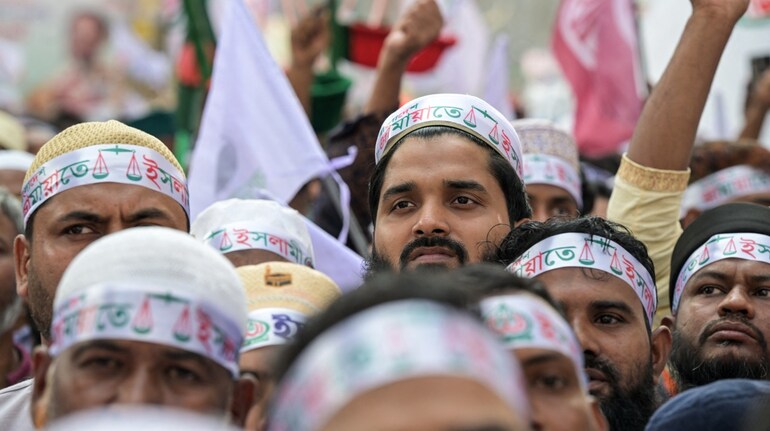

In a carefully choreographed political push, Bangladesh Jamaat-e-Islami chief Dr Shafiqur Rahman has reached out to retired senior military officers in Dhaka as part of what government and intelligence officials describe as a calculated attempt to rebrand the Islamist party ahead of the February general elections.
According to CNN-News18, Dr Shafiqur held a closed-door “view exchange” meeting with retired officers at the Bangladesh-China Friendship Conference Centre on Monday. The meeting came just a day after he met Chinese Ambassador Yao Wen, a sequence that senior officials say reflects a deliberate perception management campaign aimed at projecting Jamaat as a mainstream political force with institutional credibility.
Top government sources told CNN-News18 that the timing and messaging of the outreach were not incidental, but part of a broader strategy to normalise Jamaat’s role within the state, despite its long history of ideological alignment with Pakistan-backed Islamist movements and its opposition to Bangladesh’s secular foundations.
Recasting Jamaat as a ‘responsible’ actor
At the meeting with military veterans, Dr Shafiqur avoided overtly religious language and instead focused on themes of national security and stability. He praised the armed forces for saving the country from “certain civil war” during the 2024 uprising and urged retired officers to help ensure a “fear-free” election.
By asking former officers to assist in mobilising voters and protecting young people, Jamaat is attempting to mend its long-standing rift with the military, an institution that has historically viewed the party with deep suspicion because of its role during the 1971 Liberation War and its ideological roots linked to Pakistan’s Islamist establishment.
Sources said the message was carefully crafted to signal that Jamaat is now a “responsible” political force capable of maintaining order, a pitch directed as much at Bangladesh’s security establishment as at Western diplomats watching the transition closely.
China enters the picture
The international signalling has been equally deliberate. Ambassador Yao Wen’s visit to Jamaat headquarters was the first by a senior Chinese diplomat in more than a decade, underlining Beijing’s willingness to engage with Islamist actors as it recalibrates its approach to a potentially post-Hasina Bangladesh.
Intelligence sources said China, which prioritises stability and control, is hedging its bets by opening channels to Jamaat because of the party’s ability to mobilise large street protests. Jamaat, in turn, is eager to convince Beijing that it enjoys “soft reach” within Bangladesh’s security and administrative systems, making it a dependable interlocutor for Chinese economic and infrastructure interests.
Officials cautioned that this outreach does not reflect ideological alignment from Beijing, but a transactional calculation based on influence and leverage.
Trojan Horse fears grow
Indian intelligence assessments remain deeply sceptical of Jamaat’s sudden moderation. Officials argue that the party’s charm offensive is a tactical “Trojan Horse” designed to legitimise its entry into state institutions while continuing to radicalise segments of the youth under the cover of social welfare and civic engagement.
They point to Jamaat’s historical links with Pakistan’s Islamist ecosystem and its record of opposing Bangladesh’s liberation narrative as evidence that its current positioning is cosmetic rather than transformational.
With less than thirty days to go before the election, the emerging Jamaat-China-military dynamic has become the most volatile element of Bangladesh’s political transition. For New Delhi and other regional stakeholders, the concern is not merely electoral outcomes, but the long-term risk of an Islamist force embedding itself within the state apparatus under the guise of stability and respectability.
Discover the latest Business News, Sensex, and Nifty updates. Obtain Personal Finance insights, tax queries, and expert opinions on Moneycontrol or download the Moneycontrol App to stay updated!
Find the best of Al News in one place, specially curated for you every weekend.
Stay on top of the latest tech trends and biggest startup news.





