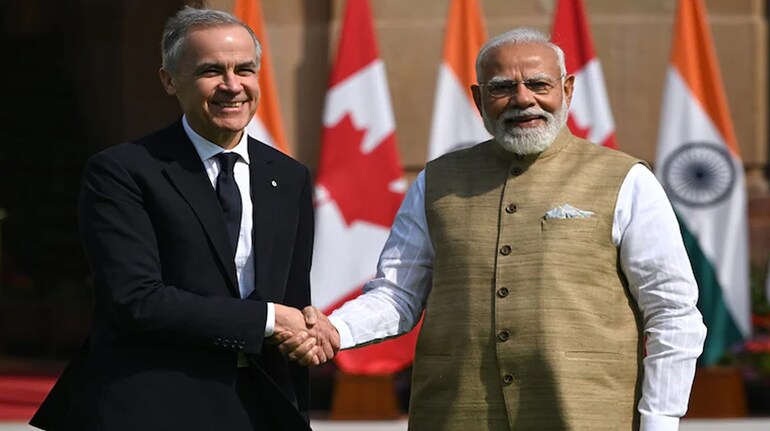
India has dismissed what it described as Pakistan’s “ironic” outrage over New Delhi’s landmark uranium agreement with Ottawa.
The Centre accused Islamabad of “hypocritical” condemnation, stressing that Pakistan’s own history of alleged “illicit” nuclear proliferation undermines its claims about regional stability.
The two nuclear-armed neighbours exchanged sharp remarks over safety standards and international law following the conclusion of a long-term uranium supply agreement between India and Canada. The deal also provides for possible cooperation on small modular reactors and advanced nuclear technologies.
Pakistan’s Ministry of Foreign Affairs (MOFA) swiftly criticised the agreement. Spokesperson Tahir Andrabi warned that the arrangement would “fuel an arms race” and enable India to “expand its nuclear arsenal”.
Islamabad described the deal as a “country-specific exception” that weakens the global non-proliferation framework. In reference to historical developments, Pakistan noted the irony of the situation, arguing that India’s 1974 nuclear test — which used plutonium from a Canadian-supplied reactor — was the event that “led directly to the establishment of the Nuclear Suppliers Group (NSG)”.
Pakistan argued that a state whose actions contributed to tighter export controls is now receiving “preferential access”.
Top Indian government security sources rejected these allegations, describing them as a distraction from Pakistan’s own “track record” on nuclear issues.
According to a News18 report, officials pointed to the AQ Khan proliferation network, which was accused of transferring nuclear technology to “rogue states” including North Korea, Iran and Libya. New Delhi said the network represented “the single greatest threat to global non-proliferation in recent decades.”
Indian officials also highlighted what they described as double standards in Islamabad’s position. While Pakistan claims India has not placed all its civilian facilities under International Atomic Energy Agency (IAEA) safeguards, sources said Islamabad itself “refuses to place its own rapidly expanding nuclear arsenal under any meaningful international oversight”.
They added that Pakistan continues to produce fissile material outside IAEA control, thereby “fuelling an unchecked arms buildup in the region”.
The diplomatic exchange underscores the long-standing debate over nuclear parity and strategic balance in South Asia. India countered Pakistan’s warnings about “destabilisation” by pointing to Islamabad’s “continuous support for cross-border terrorism” and its “doctrine of nuclear first-use threats” as key drivers of insecurity.
The India–Canada agreement marks a significant step in India’s deeper integration into the global nuclear framework — a development Pakistan views as altering the regional strategic equilibrium.
Discover the latest Business News, Sensex, and Nifty updates. Obtain Personal Finance insights, tax queries, and expert opinions on Moneycontrol or download the Moneycontrol App to stay updated!
Find the best of Al News in one place, specially curated for you every weekend.
Stay on top of the latest tech trends and biggest startup news.