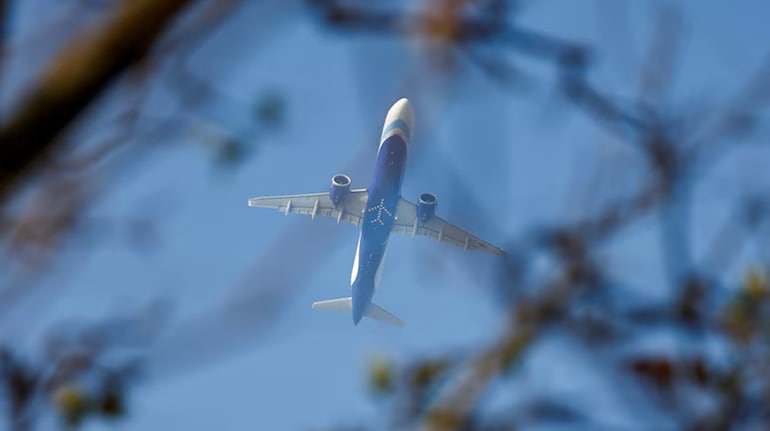
Pull up Flightradar24 and the change is stark. The usual stream of aircraft crossing Iran and neighbouring airspace between Europe and Asia has thinned out. What used to be one of the busiest crossroads in global aviation now looks patchy, with planes bending north toward Central Asia or dipping south over Saudi Arabia and Egypt, CNN reported.
The Middle East is not a peripheral route. It is the bridge linking Europe with South Asia, Southeast Asia and parts of Africa. When that bridge narrows, traffic does not disappear. It squeezes into fewer corridors.
Why airlines cannot simply “fly around it”
Commercial aircraft operate on tightly regulated flight paths. Airlines must secure overflight rights from every country they enter. They also need coordination with air traffic control authorities to avoid congestion and maintain separation between aircraft.
When airspace closes or becomes risky, operations teams scramble to recalculate routes. Fuel loads are adjusted. Alternate airports are filed. Crew duty times are reassessed. It is a structured process, but it has limits.
As more aircraft divert into the same northern and southern corridors, congestion builds. Narrow air lanes mean holding patterns, minor delays and less flexibility if weather turns unfavourable.
The fuel and time penalty
Long-haul aircraft carry contingency fuel, but extended detours quickly add up. A shift of even one to two hours on a long intercontinental flight can mean thousands of extra gallons burned. During the rerouting triggered by the Russia-Ukraine war, some Europe-Asia flights added up to 20 percent more fuel consumption.
More time in the air also affects crews. Pilots and cabin crew operate under strict duty-hour regulations. A longer route can push a flight beyond legal limits, forcing airlines to add extra crew or schedule technical stops. Every time a flight lands, airport and ground handling fees need to be paid, and it requires more logistical coordination.
Insurance, oil and ticket prices
Conflict in the Middle East also affects aviation insurance. Airlines carry war risk coverage, but premiums can rise if insurers judge the operating environment to be riskier. At the same time, oil prices often react to regional instability, adding another variable to airline costs.
In the short term, ticket prices may not change dramatically. Airlines try to absorb shocks. But if rerouting persists for weeks or months, higher fuel burn and lower effective aircraft availability can feed into fares.
Stranded aircraft and misplaced crews
The disruption is not just about fuel. Aircraft that were scheduled to rotate through Gulf hubs may now be parked elsewhere. Crews can find themselves stuck in cities where onward flights have been cancelled.
Airlines activate standby crews and reshuffle aircraft across their networks. Some flights are cancelled deliberately to reset schedules. It is a constant balancing act across multiple time zones.
When does it return to normal
If airspace reopens fully, traffic patterns can stabilize quickly. Partial or uncertain access makes recovery slower. Airlines are cautious. They rely on security assessments, government advisories and internal risk analysis before resuming routes.
For passengers far from the Middle East, the impact may show up as slightly longer flight times, unexpected delays or aircraft changes. But behind those small shifts is a large structural change. A corridor that normally carries thousands of flights a week has narrowed, and the ripple effects are global.
Discover the latest Business News, Sensex, and Nifty updates. Obtain Personal Finance insights, tax queries, and expert opinions on Moneycontrol or download the Moneycontrol App to stay updated!
Find the best of Al News in one place, specially curated for you every weekend.
Stay on top of the latest tech trends and biggest startup news.