
Iran’s attacks across the Middle East are not simply about retaliation. Military analysts say many of the strikes appear designed to study and gradually weaken the air defence systems that protect US forces and allied countries in the Gulf.
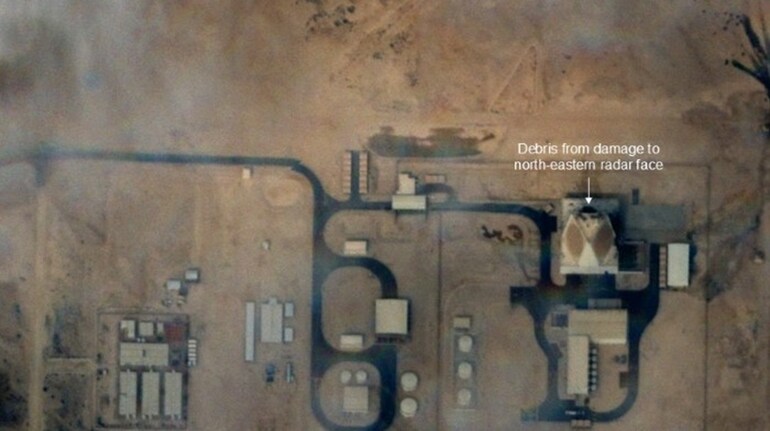
Over the past week, Iranian missiles and drones have targeted areas close to American bases and military infrastructure in the region. Satellite images and military briefings suggest the attacks are probing how quickly those defences react and how many incoming threats they can handle at once, CNN reported.
For Tehran, the goal is not necessarily to destroy the entire system in a single strike. It is to find gaps.
The defensive network around US bases
American installations and allied infrastructure across the Gulf are protected by a layered system built over decades. Radar stations, early warning satellites and interceptor missiles work together to track and destroy incoming threats.
Missile defence systems such as the Patriot missile system and the THAAD missile defence system are deployed in several Gulf states, including Saudi Arabia and the United Arab Emirates. They are designed to intercept ballistic missiles before they reach their targets.
But even advanced systems have limits. Each interceptor battery can track only a certain number of targets at the same time, and every missile fired in defence reduces the stockpile available for the next attack.
That reality shapes Iran’s approach.
Why drones and missiles are launched together
Recent strikes suggest Iran is increasingly combining different kinds of weapons in the same attack.
Ballistic missiles travel at extremely high speeds and force defences to react immediately. Drones, by contrast, move slowly but can appear in large numbers and from unexpected directions.
When both arrive at the same time, they stretch defensive systems. Radar operators must track dozens of objects at once, while interceptor missiles are launched to knock them down.
Even a highly effective defence can be strained by that kind of pressure. If only a small number of projectiles get through, the attack can still succeed.
Going after the sensors
Another focus has been radar stations and surveillance infrastructure. These sensors are the eyes of the defence network.
If radar coverage is disrupted, even temporarily, missile interceptors have less time to react. Some analysts believe certain Iranian strikes have been aimed less at causing visible destruction and more at studying how the system responds when parts of it are knocked offline.
Those responses reveal useful information for future attacks.
Electronic interference as a weapon
There are also signs that electronic warfare is playing a role. Iranian forces have experimented with GPS interference, a tactic known as jamming or spoofing.
This can disrupt navigation systems and create confusion for aircraft and drones operating in the area. It has also become a common feature in modern conflicts, including the war in Ukraine.
In the current conflict, such tactics appear intended to complicate the already difficult task of tracking incoming threats.
A war of endurance
For Iran, repeatedly testing the region’s defences may matter as much as any single successful strike. Each attack provides new data about radar coverage, interceptor response times and the limits of defensive systems.
For the United States and its allies, the challenge is maintaining a shield that must work almost perfectly every time.
Iran, by contrast, only needs one opening.
Discover the latest Business News, Sensex, and Nifty updates. Obtain Personal Finance insights, tax queries, and expert opinions on Moneycontrol or download the Moneycontrol App to stay updated!
Find the best of Al News in one place, specially curated for you every weekend.
Stay on top of the latest tech trends and biggest startup news.