
More than two centuries after it was first articulated, the Monroe Doctrine has suddenly become a defining reference point in global geopolitics once again.
The doctrone was originally proposed in 1823 by then President James Monroe to warn European powers against interference in the Western Hemisphere. It was meant to secure Latin America’s independence and keep the United States free of Old World entanglements.
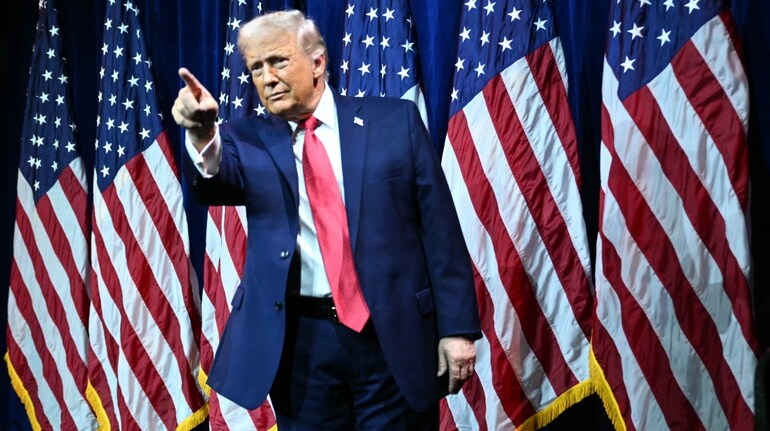
Today, however, President Donald Trump has revived the nearly two-century-old principle in a far more assertive form, rebranding it as “Donroe Doctrine.”
According to the administration, Trump’s recent actions in Venezuela and broader strategy in the Americas reflect a modern assertion of US dominance, with the State Department even declaring: “This is OUR Hemisphere and President Trump will not allow our security to be threatened.”
What is the Monroe Doctrine
The Monroe Doctrine is one of the oldest pillars of United States foreign policy which was designed primarily to prevent European powers from reasserting influence or colonising countries in the Western Hemisphere.
At its core, Monroe warned that “the American continents… are henceforth not to be considered as subjects for future colonisation by any European powers” and made clear that the United States would regard interference by external forces as hostile to its interests. Its original intent was defensive and aimed at consolidating independence movements across Latin America after the collapse of Spanish colonial rule.
For more than two centuries, the doctrine evolved. In the early 20th century, President Theodore Roosevelt added what became known as the Roosevelt Corollary. This reinterpretation asserted that the United States not only opposed European interference but also had a right to intervene in Latin American nations to uphold stability and prevent wrongdoing. This addition justified actions across the region, from interventions in Cuba and Nicaragua to broader policing roles.
Under successive administrations, the Monroe Doctrine was invoked occasionally, often to justify diplomatic or limited military involvement in the hemisphere. But after the Cold War and especially in the early 21st century, the doctrine became more symbolic than operational. That changed dramatically with the second presidency of Trump.
The “Donroe Doctrine”
Since late last year, Trump’s foreign policy actions have brought the Monroe Doctrine squarely back into global headlines, and with a twist. Students of geopolitics have been referring to a new foreign policy posture under Trump as the “Donroe Doctrine,” a blend of Monroe’s name and Trump’s first name.
This “Donroe Doctrine” is shaped by a view that the Western Hemisphere cannot remain open to external powers, particularly rivals like China. It also implies a willingness to use military, political and economic tools aggressively to ensure US primacy. A key moment came with the controversial US military operation in Venezuela in January 2026, where US forces captured President Nicolas Maduro and asserted control over critical assets. In the aftermath, Trump declared that “American dominance in the Western Hemisphere will never be questioned again.”
According to a report in The Economist, the capture of Maduro is a worked example of the "Donroe doctrine” and part of Trump's vision of how America should assert itself in its region.
This explicit invocation of hemispheric dominance signals a departure from traditional diplomacy and cooperation.
Trump’s national security strategy published in November 2025 unambiguously stated an intention “to reassert and enforce the Monroe Doctrine and restore American preeminence in the Western Hemisphere.” It also introduced what the administration describes as a “Trump Corollary,” highlighting goals to “expand our network in the region” and roll back “foreign influence.”
Why the so-called 'Donroe Doctrine' is back now
Trump’s reinterpretation gained traction as part of a broader shift toward a more confrontational US posture globally. The military action in Venezuela was not framed simply as a counter-narcotics operation. Instead, official rhetoric presented it as a defence against foreign powers gaining influence in what the United States considers its strategic neighbourhood. This framing is directly linked to broader geopolitical competition with China.
In recent years, Beijing has deepened its relationships with Latin American countries through investment, trade and energy deals. For example, China has invested billions in Venezuelan oil projects and maintained close diplomatic ties through its “All-Weather Strategic Partnership.”
China’s growing footprint in the region naturally alarms US policymakers who view Latin America as part of their traditional sphere of influence. Under the new doctrine, as articulated by Trump, the United States asserts that it will “deny non-Hemispheric competitors the ability to position forces or other threatening capabilities, or to own or control strategically vital assets, in our Hemisphere.” This language reflects an expansion of the original doctrine’s geographic and strategic scope, aimed at curbing external actors such as China.
How Trump is using it against China
China is central to the modern reincarnation of the Monroe Doctrine. Beyond Latin America’s oil and minerals, China has cultivated strategic ties with several countries that the United States traditionally viewed as within its sphere. From trade cooperation to infrastructure investment, China’s presence in the region challenges centuries-old US assumptions about dominance.
Trump’s version of the doctrine targets this influence directly. By seizing Venezuelan leaders and asserting control over their oil industry, the administration is signalling that it will not tolerate what it considers rival powers’ entrenchment in key economies. The rhetoric positions China as a competitor threatening US security and economic interests. This is not merely diplomatic posturing. It has direct implications for China’s investments and its access to valuable natural resources. In response, Beijing has condemned U.S. actions as violations of international law and seen them as attempts to exclude China from markets it has cultivated for years.
China’s defence of its partnerships in the United Nations and international fora reflects broader anxiety about US efforts to reassert control. Official statements from China’s Ministry of Foreign Affairs criticised the US for its military action against Venezuela, calling it “brazen use of force against a sovereign state.” These responses underscore the intensifying strategic rivalry between Washington and Beijing under the banner of hemispheric security and influence.
Discover the latest Business News, Sensex, and Nifty updates. Obtain Personal Finance insights, tax queries, and expert opinions on Moneycontrol or download the Moneycontrol App to stay updated!
Find the best of Al News in one place, specially curated for you every weekend.
Stay on top of the latest tech trends and biggest startup news.