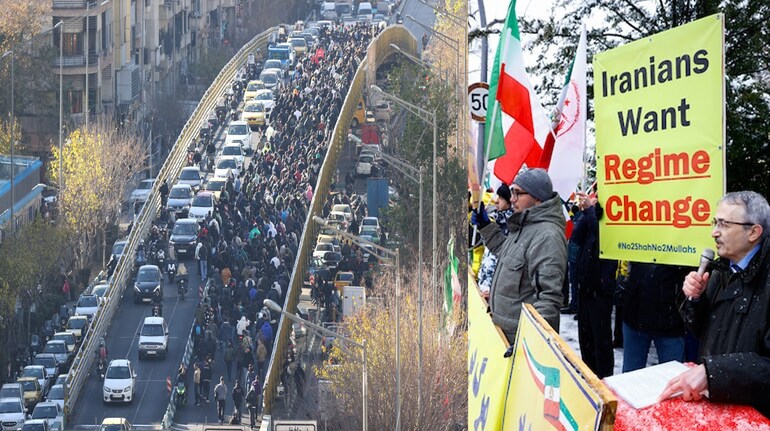
Iran is confronting one of its most serious internal challenges in recent decades as a prolonged economic crisis spills decisively into the political arena, triggering sustained protests and testing the Islamic Republic’s ability to govern amid deepening public anger.
Former diplomat Anil Trigunayat says the turmoil has been long in the making, driven by a toxic mix of sanctions, economic mismanagement and corruption that has now reached a breaking point. “There is no doubt that the economic problem is a very serious problem that has moved into a social and economic and political crisis. This is something that has been in the making for over a decade now,” he said in an interview with Moneycontrol.
At the heart of the unrest lies a collapse in living standards. High inflation and a sharp devaluation of the Iranian currency have eroded purchasing power, dragging even traditionally resilient social groups into the protest movement. “It started off with high inflation, but the devaluation of the currency brought the bazaaris and all the others into the making and the middle class has suffered despite some subsidies being announced,” Trigunayat noted.
The participation of bazaar traders is particularly significant. Historically seen as a stabilising force with close ties to the state, their entry signals that the crisis is no longer confined to marginalised sections of society. Instead, it reflects systemic economic distress. Government attempts to cushion the blow through subsidies have failed to restore confidence. “These short term patchwork solutions are unable to work or will be difficult to work. Therefore people are very, very unhappy and continuing with their protests,” he said.
Trigunayat described the situation as unusually severe for the Islamic Republic. “I think it’s one of the biggest threats in recent years that the regime is facing,” he said, adding that many Iranians increasingly believe the state is incapable of managing the economic emergency. “People are beginning to feel that the regime is unable to cope up with the economic crisis that is there.”
While domestic grievances are driving the protests, the external environment has amplified the pressure. Trigunayat argued that unrest is also being fuelled from abroad. “These protests, as you know, are also being engineered to a great extent by United States and Israel, who have been prodding the people to go ahead and protest and threatening the regime,” he said, pointing to warnings against violent crackdowns and open calls for regime change from Israel.
Yet, the core challenge remains internal. The government’s struggle to balance law and order with public anger risks creating a cycle of escalation. “More the government gives in, the more the people want, and therefore, there is no satisfaction to that,” Trigunayat observed, describing a situation where economic despair has turned into a broader rejection of governance failures, corruption and elite privilege.
There are also signs of strain within Iran’s political leadership itself. Trigunayat referred to reports — unconfirmed, he cautioned — that President Masoud Bazhishkian had offered his resignation after attempting to push a reform plan. “On the one hand, the government is taking responsibility of the failures and not only accusing the outsiders, but also accepting that there are real problems,” he said. This acknowledgement, he added, could help the regime “coast clear” if managed carefully.
Ultimately, the fate of the regime may hinge on how security forces respond if unrest persists. “A lot will depend upon how the Revolutionary Guards and the Basijis, which is the police, behave and take it forward,” Trigunayat said, warning that large-scale violence or fractures within the security apparatus could fundamentally alter the trajectory of the crisis.
Despite the severity of the moment, Trigunayat stopped short of predicting an imminent collapse. Iran’s institutions, he argued, remain robust enough to endure further shocks. Still, the transformation of economic hardship into a political challenge marks a critical juncture. “The next few days are very important and critical,” he said, noting that events could “go either way”.
For now, the unrest underscores a stark reality for Tehran: years of economic decline have eroded the social contract, and restoring stability will require more than temporary fixes. Whether the regime can translate acknowledgement of failure into meaningful reform may determine if this crisis becomes merely another chapter of survival — or a turning point in Iran’s modern history.
Discover the latest Business News, Sensex, and Nifty updates. Obtain Personal Finance insights, tax queries, and expert opinions on Moneycontrol or download the Moneycontrol App to stay updated!
Find the best of Al News in one place, specially curated for you every weekend.
Stay on top of the latest tech trends and biggest startup news.