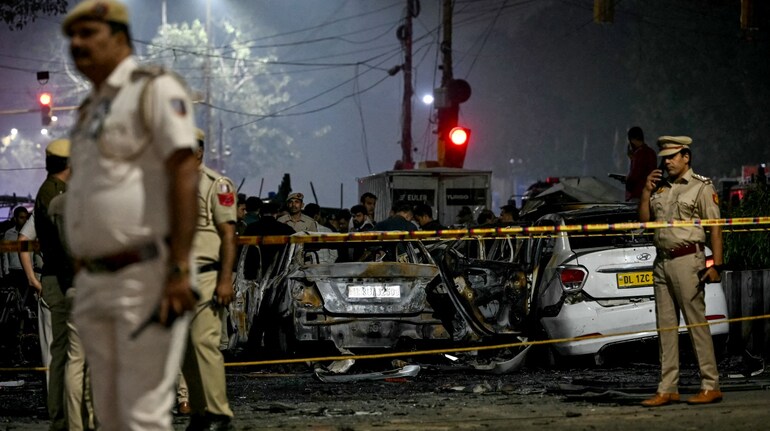
As the probe into the Red Fort car explosion widens, investigators are weighing a troubling possibility. One line of inquiry holds that the blast may not have been a carefully timed attack. Instead it might have been set off unintentionally while the suspect drove around with explosives in the back seat.
What set off the theory of an accidental blast
Days before the explosion, police in Faridabad seized a large cache of bomb-making material from a house linked to a medical professional. Officials recovered nearly 2,900 kilograms of explosive material, including roughly 350 kilograms of ammonium nitrate, along with timers, assault rifles, handguns and ammunition. Investigators believe the arrested men may have been associates of the suspected bomber, Umar Mohammad.
After an initial forensic survey at the Red Fort site, detectives noted several unusual details. There was no crater at the blast point, which is normally present where high-yield charges detonate. Teams also did not recover shrapnel or projectiles that would show the device had been built for maximum fragmentation. Those facts have led some probe members to consider that the explosive may have gone off while being moved, possibly because Umar "panicked" when his associates were arrested.
How that would line up with the device type
Police suspect the explosive used was ANFO, short for ammonium nitrate fuel oil. ANFO is a common industrial explosive made by mixing porous ammonium nitrate with fuel oil. On its own, ammonium nitrate is not a high explosive. It becomes highly dangerous only when mixed with a fuel and then detonated by an external high-speed charge or detonator.
When ANFO detonates under the right conditions, it produces a violent and fast chemical reaction. The reaction yields a huge volume of hot gases almost instantly. Those gases expand rapidly and create a supersonic shockwave that causes widespread structural damage. The explosion also generates intense heat and releases noxious gases such as nitrogen oxides and ammonia. In large doses, this can cause serious injuries and environmental harm.
Why investigators compare it with Beirut
The probe has drawn comparisons with the Beirut port blast of 2020, because that disaster too involved ammonium nitrate stored unsafely. In Beirut, an estimated 2,750 tonnes of ammonium nitrate detonated after a fire in a warehouse, producing one of the largest non-nuclear explosions in modern history. The blast killed hundreds, injured thousands and damaged large parts of the city. The comparison is not meant to equate scale, but to highlight the risk that improperly handled ammonium nitrate poses.
Signs that this may not have been intended as a maximum-damage attack
Forensic teams say several clues point away from a deliberately optimised bomb. The absence of a crater and the lack of metal fragments imply the device may not have been rigged with the casings, ball bearings or shrapnel often used to increase casualties. That does not remove criminal intent from the picture. It does suggest the operation may have been less technically advanced or that the material detonated accidentally while being transported.
The Red Fort tragedy is still under investigation. The accidental-detonation theory is one possible explanation among others. What investigators can say so far is that the device did not leave the classic forensic marks of a high-yield, optimised bomb. That, together with the timing of recent arrests and earlier seizures of material, has led some to the working hypothesis that panic and movement of ANFO may have produced the deadly blast.
Discover the latest Business News, Sensex, and Nifty updates. Obtain Personal Finance insights, tax queries, and expert opinions on Moneycontrol or download the Moneycontrol App to stay updated!
Find the best of Al News in one place, specially curated for you every weekend.
Stay on top of the latest tech trends and biggest startup news.