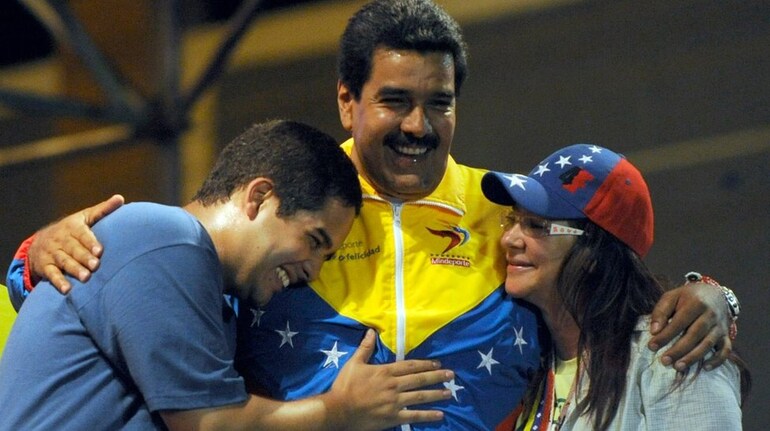
Nicolás Maduro, Venezuela’s longtime strongman, has pleaded not guilty in a New York federal court to sweeping charges of narco-terrorism, conspiracy to import cocaine and weapons offenses. US prosecutors allege that for more than 25 years he abused his public offices to facilitate large-scale drug trafficking to the United States and Europe.
The case, revived and expanded from indictments first brought in 2020, follows Maduro’s capture in a US military operation and his transfer to New York. The proceedings are being overseen by senior federal judge Alvin Hellerstein, the Financial Times reported.
The “Cartel of the Suns” allegation
At the heart of the indictment is the claim that Maduro led the so-called Cartel de los Soles, or Cartel of the Suns — a term long used by journalists and analysts to describe alleged drug trafficking embedded within Venezuela’s military and political elite.
US officials say the network relied on senior officers, security services and state infrastructure to move cocaine, launder money and provide protection to traffickers. The Trump administration formally designated the group a foreign terrorist organization in November, framing it as responsible for violence across the hemisphere.
Analysts note that unlike traditional cartels, the alleged structure resembles a state-enabled trafficking system rather than a hierarchical criminal gang.
What prosecutors say Maduro personally did
The indictment lays out detailed allegations meant to tie Maduro directly to criminal activity. Prosecutors say he:
How big a drug threat was Venezuela?
US authorities estimate that between 200 and 250 tonnes of cocaine transited through Venezuela annually around 2020. Venezuela is not a major producer of cocaine, nor a source of fentanyl, but prosecutors argue it became a critical transit hub due to state protection.
By comparison, Colombia produced an estimated 2,660 tons of cocaine in 2023, according to the United Nations Office on Drugs and Crime. Former US officials say what distinguishes Venezuela is not volume alone, but the alleged involvement of the state itself.
A case that still carries risks
Legal experts say conspiracy cases can be easier to prosecute than proving hands-on trafficking. Still, they warn that rhetoric alone will not win a conviction.
Former diplomats and analysts argue prosecutors will need to focus less on portraying Maduro as a symbolic “drug kingpin” and more on concrete evidence: witnesses, financial records and proof that he knowingly moved drugs, weapons or money.
“The real question,” said one former US official, “is whether the government can prove this wasn’t just corruption around him — but something he personally directed.”
Rewards, politics and the courtroom battle ahead
Donald Trump doubled the reward for information leading to Maduro’s arrest and conviction to $50 million last year, building on bounties first offered during his earlier term. The Biden administration later raised the reward as well, suggesting rare bipartisan agreement on Maduro’s alleged criminality.
In court, Maduro has denounced his arrest as a kidnapping and insisted on his innocence. “I am not guilty,” he told the judge. “I am a decent man.”
Whether the US can turn years of intelligence claims into courtroom proof may determine not just Maduro’s fate, but the credibility of Washington’s most aggressive attempt yet to hold a foreign head of state criminally accountable for drug trafficking.
Discover the latest Business News, Sensex, and Nifty updates. Obtain Personal Finance insights, tax queries, and expert opinions on Moneycontrol or download the Moneycontrol App to stay updated!
Find the best of Al News in one place, specially curated for you every weekend.
Stay on top of the latest tech trends and biggest startup news.