







Fresh Nipah virus infections reported in India have once again raised alarm across Asia, even as health authorities move to calm fears. The Union health ministry clarified on Tuesday that only two Nipah virus cases have been confirmed in West Bengal since last month, countering reports that suggested a wider outbreak.
Despite the limited number of confirmed cases, concern remains high because Nipah virus infection is often deadly. The virus has a fatality rate ranging from 40 per cent to 75 per cent, according to health experts. There is currently no approved vaccine or cure, making early containment and monitoring critical.
Against this backdrop, a new scientific study from China has drawn attention for identifying a possible treatment option using an existing oral antiviral drug.
Can an existing Chinese drug help fight Nipah?
A joint research effort by Chinese scientists has found that an oral antiviral drug originally developed for Covid-19 may be effective against the Nipah virus. The study, titled The oral nucleoside drug VV116 is a promising candidate for treating Nipah virus infection, was published in the international journal Emerging Microbes & Infections.
According to a report by the South China Morning Post, the researchers found that VV116, an oral nucleoside drug approved for Covid-19 treatment in China and Uzbekistan, showed strong antiviral activity against the Nipah virus in laboratory conditions.
How the drug performed in trials
Researchers from the Wuhan Institute of Virology tested VV116 in laboratory and animal studies. An oral dose of the drug was found to block Nipah virus replication and significantly improve survival outcomes in animal models.
In trials involving golden hamsters, the drug increased survival rates to 66.7 per cent, the researchers said. It also reduced viral load in key organs including the lungs, spleen and brain, which are commonly affected during severe Nipah infection.
The study showed that VV116 and its active byproducts inhibited both the Malaysia strain (NiV-M) and the Bangladesh strain (NiV-B) of the virus. According to the South China Morning Post, the Bangladesh strain is believed to be behind recent outbreaks in India.
Why the findings matter
Nipah virus is transmitted from animals to humans, most commonly through contact with bodily fluids of infected bats or pigs. Human-to-human transmission has also been documented. In severe cases, the virus can cause acute respiratory illness and encephalitis.
While several compounds have shown promise in laboratory studies, no drug has yet been licensed for clinical use against Nipah. That makes the findings around VV116 significant.
“This finding is the first to demonstrate the therapeutic potential of VV116 against Nipah virus,” the Wuhan Institute of Virology said on Monday.
“It can be used not only as a preventive drug for high-risk groups such as healthcare workers and laboratory workers, but also as a readily available drug option for dealing with current and future Nipah virus outbreaks,” the institute added.
Chinese biopharma company Vigonvita Life Science Co said the preclinical data suggest VV116 could be developed as a Nipah treatment. The company said it would closely track outbreak trends and initiate clinical trials for treatment and post-exposure prevention if needed, according to Chinese news portal thepaper.cn.
Researchers cautioned that further studies are required to fully understand how the drug inhibits the Nipah virus, though they believe it may work through a mechanism similar to its anti-coronavirus action. They also noted that the drug’s safety profile in humans is already established, making it a viable candidate for further testing.
Nipah situation in India and regional response
In India, the two confirmed cases were detected at a private hospital in Barasat in West Bengal’s North 24 Parganas district.
“A total of 196 contacts linked to the confirmed cases have been identified, traced, monitored, and tested. All traced contacts have been found asymptomatic and have tested negative for Nipah Virus Disease,” the Union Health Ministry said in a statement on Tuesday.
“No additional Nipah Virus Disease cases have been detected so far,” the ministry added, urging people to rely only on verified official information.
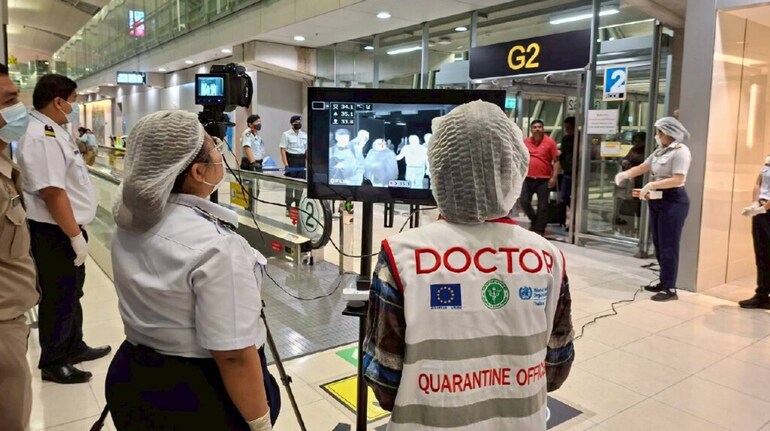
The developments have prompted precautionary measures across Asia. China has expressed concern ahead of the Lunar New Year travel rush. Thailand has begun screening passengers at major airports receiving flights from West Bengal, while Nepal has stepped up checks at Kathmandu airport and land borders with India.
Taiwan, South Korea and Hong Kong have also initiated monitoring and preventive steps as health authorities across the region remain on alert.
Discover the latest Business News, Sensex, and Nifty updates. Obtain Personal Finance insights, tax queries, and expert opinions on Moneycontrol or download the Moneycontrol App to stay updated!
Find the best of Al News in one place, specially curated for you every weekend.
Stay on top of the latest tech trends and biggest startup news.





