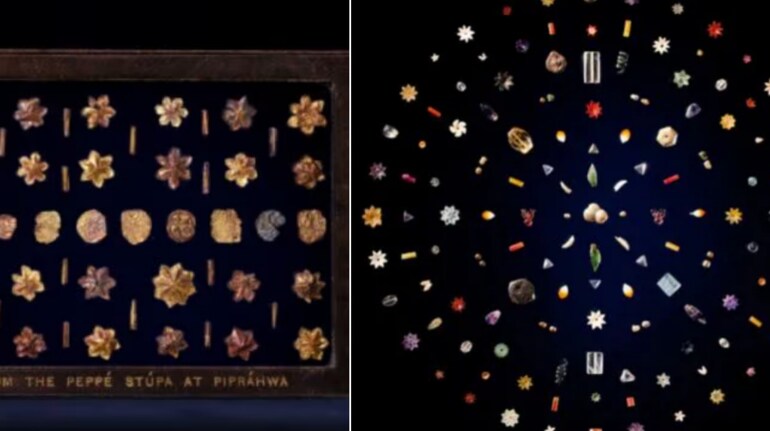
In a major cultural victory, India has successfully brought back a set of ancient Buddhist relics—sacred remains believed to be linked to Lord Buddha himself—over a century after they were taken abroad during British rule.
The relics, known as the Piprahwa treasures, were scheduled to be auctioned at Sotheby’s in Hong Kong this May. But swift intervention by the Indian government, with help from private partners, halted the sale and ensured the relics' permanent return.
What are the Piprahwa relics?The relics date back to the 3rd century BCE and were discovered in 1898 by British engineer William Claxton Peppe in Piprahwa, a village in present-day Uttar Pradesh, not far from the Buddha’s birthplace in Lumbini.
The find included:
These relics are considered one of the most significant archaeological discoveries tied to early Buddhism and have deep spiritual and historical value for millions of Buddhists worldwide.
How did they leave India?After their discovery, most of the relics were handed over to British colonial authorities and placed in the Indian Museum in Calcutta (now Kolkata) in 1899. However, under the Indian Treasure Trove Act of 1878, Peppe was allowed to retain a portion of the findings—about one-fifth—including some bone fragments and ornaments.
In the years that followed, parts of the relics were gifted to Buddhist-majority countries like Thailand, Myanmar, and Sri Lanka. A set of these items remained with Peppe’s descendants and quietly passed through private hands.
The attempted auctionIn May 2025, a portion of the relics resurfaced in the listings of Sotheby’s Hong Kong, prompting swift alarm from the Indian government. On May 5, the Ministry of Culture issued a legal notice to stop the auction, citing the relics' sacred and historical importance.
After the legal notice and intense diplomatic and private discussions, the auction was called off. With support from Godrej Industries Group, the Indian government negotiated a deal that secured the relics’ permanent return.
Sotheby’s confirmed the transfer, saying it had worked over two months to find a suitable custodian and was “delighted to facilitate” their return—though it did not name the buyer.
The relics arrived in New Delhi in July and were received by Union Culture Minister Gajendra Singh Shekhawat. They will now be displayed publicly so people can view and pay their respects.
Prime Minister Narendra Modi hailed the return as “a joyous day for our cultural heritage” in a post on X.
A joyous day for our cultural heritage! It would make every Indian proud that the sacred Piprahwa relics of Bhagwan Buddha have come home after 127 long years. These sacred relics highlight India’s close association with Bhagwan Buddha and his noble teachings. It also… pic.twitter.com/RP8puMszbWWhy this matters— Narendra Modi (@narendramodi) July 30, 2025
The repatriation of the Piprahwa relics is part of India’s larger push to reclaim cultural artefacts removed during colonial rule. Over the past decade, India has intensified efforts to retrieve everything from ancient idols to manuscripts housed in foreign museums or up for sale in private auctions.
These relics, in particular, hold profound religious, cultural, and emotional value, and their return is seen as a symbolic act of restoring India’s Buddhist heritage to its rightful place.
Discover the latest Business News, Sensex, and Nifty updates. Obtain Personal Finance insights, tax queries, and expert opinions on Moneycontrol or download the Moneycontrol App to stay updated!
Find the best of Al News in one place, specially curated for you every weekend.
Stay on top of the latest tech trends and biggest startup news.