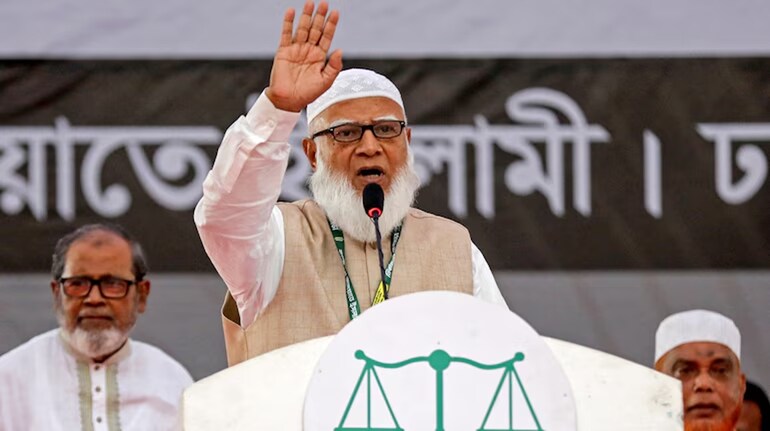
Bangladesh’s Jamaat-e-Islami, in its latest election manifesto, presents a vision of diplomatic balance and global engagement, promising constructive foreign relations while avoiding explicit commitments on sensitive domestic issues—particularly the safety of Hindus.
While the manifesto speaks broadly about justice, dignity, and mutual respect, it stops short of offering concrete legal or security measures to protect minorities, a gap that has raised concern among Indian security and intelligence agencies.
Focus on the Muslim world
The manifesto places foreign policy at the centre of Jamaat’s strategy, emphasising stronger ties with Muslim-majority countries. The party frames this outreach as both an ideological alignment and a geopolitical necessity.
Indian intelligence sources, however, warn that such engagement could reinforce ideological links with transnational organisations, potentially amplifying radical narratives within Bangladesh and along India’s eastern border.
Rohingya issue as diplomatic leverage
The manifesto also highlights the Rohingya crisis, framing repatriation as a humanitarian responsibility and portraying Bangladesh as a moral leader on the international stage.
Analysts note that Jamaat could leverage the issue diplomatically, particularly in international forums, using Rohingya rights to strengthen engagement with Western nations and global organisations. This, in turn, could allow Dhaka to extract political and economic leverage, experts say.
Diversified international relations strategy
While India is listed among Bangladesh’s immediate neighbours for peaceful and cooperative ties, the manifesto stresses expanding relations with Western powers, ASEAN nations, Africa, and Eastern Europe.
Indian agencies interpret this as a strategic recalibration aimed at reducing Bangladesh’s dependence on both India and China, potentially diluting New Delhi’s influence in a sensitive border region.
Ambiguity on minority protections
The manifesto references equality and dignity but avoids outlining enforcement mechanisms or institutional safeguards. According to Indian intelligence sources, this vagueness is deliberate, intended to reassure international observers without committing to enforceable protections on the ground.
Military training proposal sparks concern
Jamaat proposes compulsory military training for youths aged 18 to 22, lasting six to twelve months. While the party frames it as civic preparedness, critics argue it risks diverting young citizens from education into militarised environments.
Security analysts caution that this could serve as a long-term ideological investment, preparing a generation not only for citizenship but potentially for confrontation.
Discover the latest Business News, Sensex, and Nifty updates. Obtain Personal Finance insights, tax queries, and expert opinions on Moneycontrol or download the Moneycontrol App to stay updated!
Find the best of Al News in one place, specially curated for you every weekend.
Stay on top of the latest tech trends and biggest startup news.