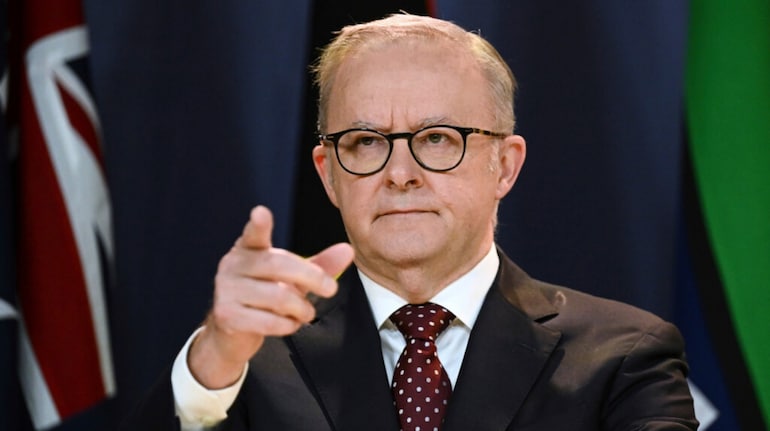
Australian Prime Minister Anthony Albanese on Friday announced that the general elections in the country will be held on May 3, following his meeting with Governor-General Sam Mostyn to request the dissolution of Parliament. This announcement came after delays caused by Cyclone Alfred, which necessitated adjustments to the electoral timeline.
The election will see a direct contest between the incumbent Australian Labor Party (ALP), led by Prime Minister Anthony Albanese, and the centre-right Coalition, comprising the Liberal Party of Australia and the National Party of Australia, led by Peter Dutton. Opinion polls indicate a neck-and-neck race between the two parties, as cost of living pressures hit households.
A large number of independent and minor parties are also seeking re-election and could become king-makers if Labor and the Liberal-Nationals fall short of majority government. Labor returned to power in 2022 after nine years of Liberal-National coalition rule.
Australia’s electoral system
Australia is one of the few countries where voting is compulsory for those aged 18 and above. The party or coalition that secures a majority in the House of Representatives forms the government, and its leader becomes the Prime Minister.
Australia does not have a set date for national elections, but the maximum term for the House of Representatives is three years. The election is called by the prime minister. The previous election was on May 21, 2022.
How Australia votes
The country has a preferential voting system for the House of Representatives. Voters rank local candidates in order of preference on their ballot papers.
A candidate who gets more than 50 per cent of the first-preference votes wins the seat. If no candidate reaches that threshold, the one with the fewest votes is excluded and their votes are distributed to the person each of those voters nominated as their second preference. This continues until one candidate passes the 50 per cent threshold.
The upper house, the Senate, has 76 members - 12 from each of the six states and two from each of Australia's two less-populous territories. Half of the Senate seats will be contested at this election.
How numbers stack up
Labor holds 77 House of Representatives seats, the Liberal-National coalition holds 53 seats, the Greens hold 4, and 15 are held by micro parties and independents.
Boundaries have been redrawn in New South Wales, Victoria and Western Australia states since the last election. There will be 150 House of Representatives seats up for election, reduced from 151.
If neither Labor nor the Liberal-National coalition has a majority of seats in the House of Representatives after polling day, a minority government can be formed with an agreement of support from independent members or minor parties.
Key poll issues
• Cost of living pressures, inflation, and interest rate hikes will be major concerns.
• Australia's climate policy, including its transition to renewable energy and its commitment to emissions reduction targets, will be a significant issue.
• The frequency and severity of natural disasters, such as bushfires and floods, are also raising awareness of climate change impacts.
• The state of Australia's healthcare system, including access to affordable healthcare and waiting times, is always a crucial electoral issue.
• Rising house prices and rental costs are placing immense pressure on many Australians, particularly young people. Housing policy will be a key issue in urban and regional areas.
Discover the latest Business News, Sensex, and Nifty updates. Obtain Personal Finance insights, tax queries, and expert opinions on Moneycontrol or download the Moneycontrol App to stay updated!
Find the best of Al News in one place, specially curated for you every weekend.
Stay on top of the latest tech trends and biggest startup news.