






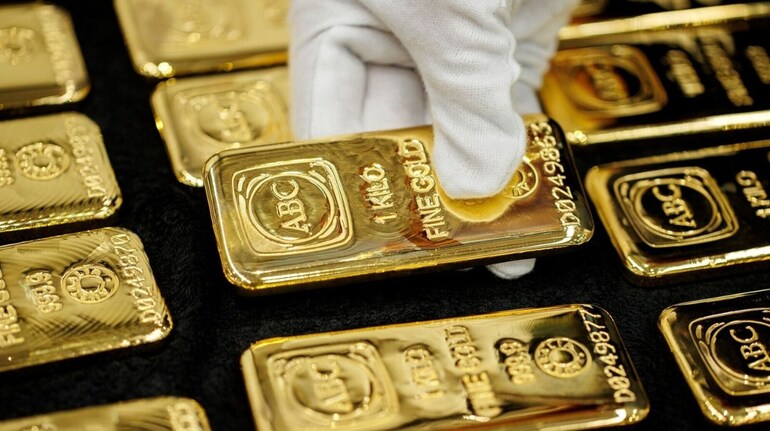

Gold had an outstanding run-up in 2025. A combination of global uncertainty, geopolitical tensions, central banks’ buying and interest rate cuts, as well as currency weakness- together created the environment for gold’s strong performance.
The international spot price in 2025 peaked at $4,550.10 per ounce on December 29, delivering a 42 percent year-to-date return from $2,638.74. The domestic futures price on Multi Commodity Exchange of India (MCX) surged 75 percent from Rs 78,950 on December 24, 2024, to Rs 1,38,217 on December 29, 2025.
The yellow metal is the world’s most valuable asset in terms of market capitalisation at $30.48 trillion. But the question remains- will the precious yellow metal continue to shine in 2026?
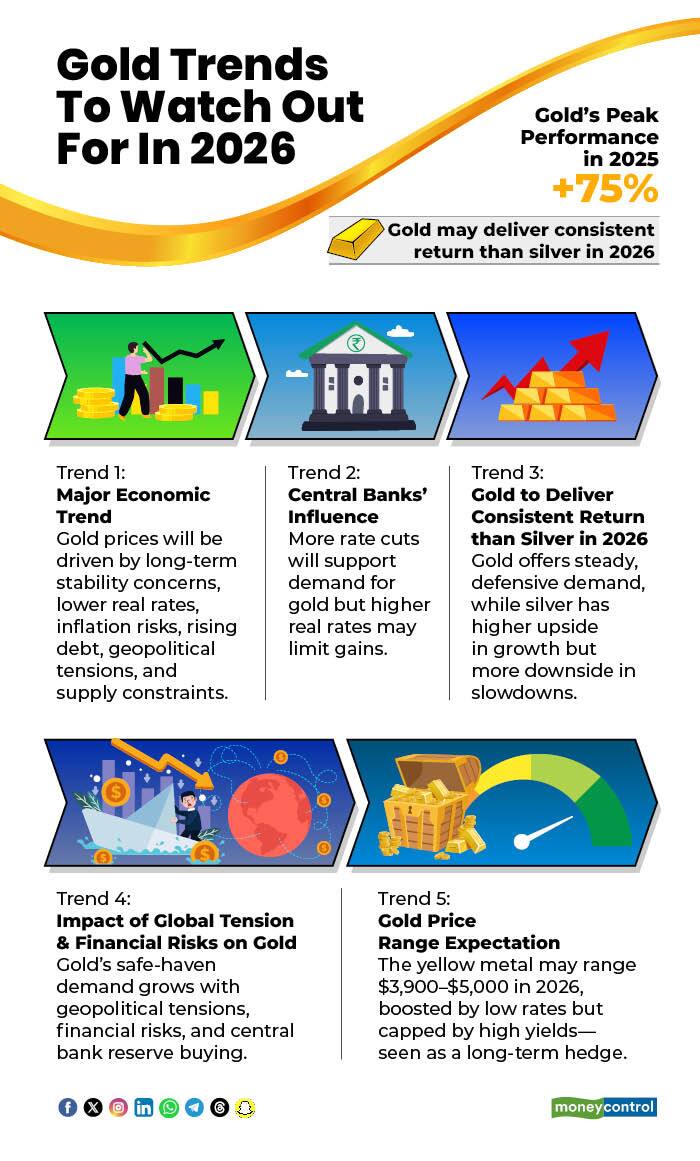
Here are the top five trends that will affect its prices in the market.
Major economic trends affecting gold prices in 2026
Ross Maxwell, Global Strategy Operations Lead at VT Markets, says that gold prices in 2026 will be driven less by speculation and more by long-term concerns about stability, credibility, and resilience in the global financial system.
He believes that the price of the precious metal will likely be driven by a mix of monetary, geopolitical, and structural economic situations.
Impact of central banks’ interest rate decisions
Interest rate decisions and central bank actions will heavily influence gold prices next year. Rate cuts or prolonged pauses could lower real yields, boosting gold’s appeal as a value-preserving hedge, even with modest cuts shifting investor expectations.
Maxwell believes that renewed liquidity or slower tightening could fuel currency debasement fears and boost gold demand, but higher real rates and strong policy commitment to stabilise prices may cap gains, keeping moves gradual rather than explosive like in 2025.
Renisha Chainani, Head of Research at Augmont, seconds the thought. Lower or faster-than-expected rate cuts reduce real yields and the opportunity cost of holding gold, supporting prices. Additionally, sustained central bank purchases and balance-sheet flexibility enhance gold’s appeal as a reserve asset. Any shift toward a more dovish policy stance, especially under new Fed leadership, would be structurally bullish for gold.
Which metal will perform better in 2026: gold or silver
The analyst is of the opinion that gold will likely deliver a more consistent performance than silver next year, citing its role as a defensive asset. Gold also benefits from macroeconomic uncertainty, high government debt, and shifts in central bank policy.
Maxwell says that silver can outperform gold in the right environment due to industrial demand that gives white metal greater upside potential during periods of strong global growth or renewed risk appetite.
He reasons that silver is more sensitive during slowdowns, as declining industrial activity can weigh heavily on prices. As a result, silver offers higher potential rewards but carries greater downside risk, while gold remains the more sensible choice in uncertain conditions.
Impact of global tensions and financial risks on gold in 2026
Gold’s role as a safe-haven asset increases when global tensions and financial risks persist. Continued geopolitical conflicts, trade disputes, or political instability often drive investors toward assets that are seen as stores of value when confidence in markets weakens.
Financial risks such as rising debt, banking stress, or sudden market volatility can also prompt capital to move away from risk-sensitive assets and into gold.
Central banks may also continue increasing gold reserves as a way to reduce reliance on foreign currencies during periods of strategic uncertainty. Together, these pressures can create sustained, non-speculative demand for gold during periods of global stress.
What about the price range for gold in 2026?
According to Maxwell, gold prices are more likely to trade within a broader range this year, rather than follow a straight path, reflecting ongoing uncertainty in global markets. A reasonable expectation would be a range between $3,900 and $5,000 per ounce, although higher highs could continue if financial or geopolitical stress intensifies.
Upside scenarios could be driven by lower real interest rates, persistent debt concerns, or renewed demand from central banks, while downside risk would come from sustained high real yields and strong confidence in economic growth.
The analyst suggests investors should view gold as a strategic hedge rather than a short-term speculative trade. “Gold will work best in a diversified portfolio, helping manage risk during periods of volatility. Focus on long-term objectives and consider gold’s role as protection rather than an opportunity for short-term gains,” he said.
Chainani thinks that gold may trade in a broad range of $4,000–$5,500 per ounce, supported by high global debt, geopolitical uncertainty, and continued central bank buying.
"Upside risks remain if monetary easing deepens or geopolitical risks escalate. Investors should view gold as a long-term strategic allocation, not a short-term trade. A staggered investment approach is advisable to manage volatility, keeping gold as a core hedge within a diversified portfolio," she said.

Discover the latest Business News, Sensex, and Nifty updates. Obtain Personal Finance insights, tax queries, and expert opinions on Moneycontrol or download the Moneycontrol App to stay updated!
Find the best of Al News in one place, specially curated for you every weekend.
Stay on top of the latest tech trends and biggest startup news.





