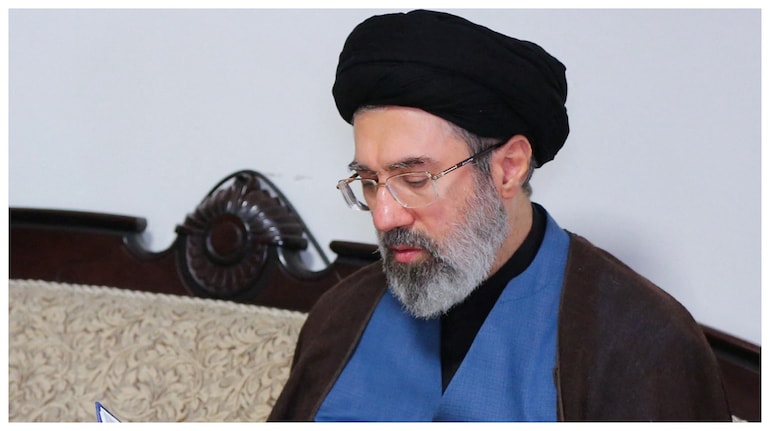

Diplomatic cables released through WikiLeaks once described an intensely personal episode in the life of Mojtaba Khamenei, the son of Iran’s late supreme leader Ayatollah Ali Khamenei, reported New York Post.
The documents claimed that Mojtaba struggled with an “impotency problem” that reportedly delayed his marriage and required multiple medical visits to the United Kingdom before he was able to father a child.
The revelations have resurfaced at a time when the 56-year-old cleric is widely seen within Iran’s ruling establishment as a leading contender to succeed his father as the country’s supreme leader.
Early struggles and medical treatment
According to U.S. diplomatic cables written in the late 2000s and later published by WikiLeaks, Mojtaba underwent treatment in London after facing difficulty conceiving a child with his wife. The documents cited Iranian sources who said the issue required several extended stays at private hospitals.
“His marriage, to the daughter of former Majles Speaker Hadad Adel, followed two ‘temporary marriages’ (available under Iranian law) and occurred relatively late in life, reportedly due to an impotency problem treated and eventually resolved during three extended visits to the UK, at Wellington and Cromwell Hospitals, London,” the cable stated.
The records indicated that the medical visits were not brief consultations. Instead, Mojtaba reportedly remained at the hospitals for extended periods while undergoing treatment aimed at addressing the condition.
The cable added that family expectations for him to produce heirs quickly increased pressure surrounding the issue.
“Mojtaba was expected by his family to produce children quickly, but needed a fourth visit to the UK for medical treatment; after a stay of two months, his wife became pregnant," it reportedly said.
The documents did not specify the exact nature of the treatment he received, nor did they clarify how many children he eventually had.
Marriage and family
Mojtaba’s marriage linked him to another powerful conservative family in Iran. His wife was the daughter of Gholamali Haddadadel, a former speaker of the Iranian parliament and a prominent hardline political figure.
Before that marriage, the diplomatic cable said Mojtaba had entered into two “temporary marriages,” a practice permitted under certain interpretations of Shiite Islamic law. In such arrangements, a marriage contract is set for a predetermined period of time.
According to the Middle East Institute, these temporary unions can last anywhere from a short period to several months. They allow a man and woman to be married for the specified time and then separate without the long-term obligations of a permanent marriage.
Eventually, according to the resurfaced documents first highlighted by British media reports, Mojtaba’s wife gave birth to a healthy boy in Iran after his final medical visit to London.
Political influence behind the scenes
Despite maintaining a relatively low public profile, Mojtaba has long been viewed as one of the most influential figures operating behind the scenes within Iran’s political system.
A U.S. diplomatic cable described him as a powerful intermediary within the ruling establishment and someone who wielded influence far beyond any formal role.
In that cable, Mojtaba was referred to as “the power behind the robes.”
The same document added that he was already considered a serious political force within the Islamic Republic.
“He is widely viewed within the regime as a capable and forceful leader and manager who may someday succeed to at least a share of national leadership; his father may also see him in that light,” the cable read.
Although Mojtaba has never held an official government position, sources familiar with Iran’s power structure have frequently described him as his father’s gatekeeper.
A contender for Supreme leadership
Following the death of Ayatollah Ali Khamenei in a recent airstrike, Mojtaba has emerged as a central figure in discussions about Iran’s future leadership.
Iran’s Assembly of Experts, the body responsible for choosing the country’s supreme leader, is expected to decide on the successor.
Assembly member Ayatollah Ahmad Khatami told state television that the group was nearing a decision.
“The Assembly of Experts that will select the new leader is ‘close to a conclusion’ and will announce its decision soon,” he said.
Mojtaba’s influence has been attributed in part to his ties with Iran’s powerful Islamic Revolutionary Guard Corps (IRGC). Analysts say those relationships have strengthened his standing among the country’s security and political elite.
“He has strong constituency and support within the IRGC, in particular amongst the younger radical generations,” said Kasra Aarabi, head of research on the group at the policy organization United Against Nuclear Iran.
“So if Mojtaba is alive, there is a high chance that he will succeed (his father),” Aarabi said, describing him as operating like a “mini supreme leader.”
Surviving the strike
In the immediate aftermath of the airstrike that killed Iran’s longtime leader, early reports suggested that dozens of senior officials had also died, including Mojtaba.
Initial speculation placed him among roughly 40 senior aides believed to have been killed alongside his father.
However, Iranian sources later said he survived because he was not in Tehran at the time of the attack.
“He (Mojtaba) is alive … he was not in Tehran when the supreme leader was killed,” one source said.
If confirmed as the next supreme leader, Mojtaba would assume one of the most powerful political positions in the Middle East. The role carries final authority over Iran’s military, judiciary, and major policy decisions, including the country’s nuclear program and foreign policy.
A controversial figure
Mojtaba’s possible elevation to the top of Iran’s political hierarchy has long been controversial inside the country. Critics argue that the Islamic Republic was founded in part to reject dynastic rule following the 1979 revolution that toppled the Shah.
For those critics, the idea of the son of a supreme leader inheriting the same position raises concerns about the emergence of hereditary power within the system.
Still, within Iran’s conservative political circles, Mojtaba has continued to build support through years of behind-the-scenes influence, religious study in Qom, and connections with the security establishment.
(With inputs from Reuters)Discover the latest Business News, Sensex, and Nifty updates. Obtain Personal Finance insights, tax queries, and expert opinions on Moneycontrol or download the Moneycontrol App to stay updated!
Find the best of Al News in one place, specially curated for you every weekend.
Stay on top of the latest tech trends and biggest startup news.