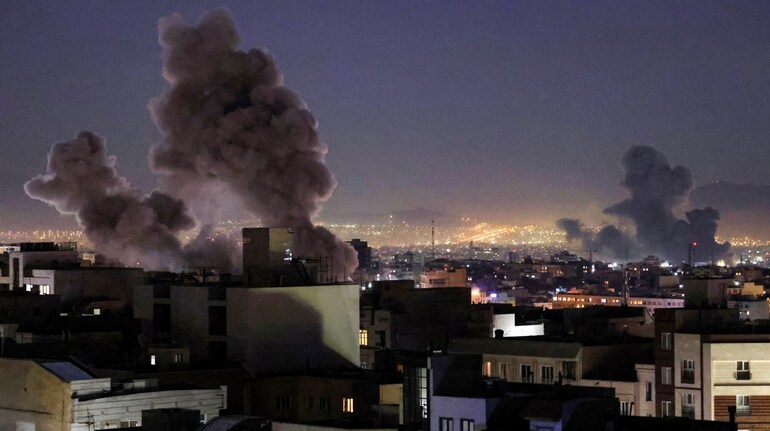

The United States and Israel had originally planned to launch their military strike on Iran about a week earlier than it eventually took place, but the operation was delayed due to a mix of operational concerns, intelligence assessments and diplomatic developments, according to senior officials cited by Axios.
Military planners from both countries had begun preparing for strikes soon after a second round of US-Iran talks ended without meaningful progress on February 17. According to Axios, initial plans called for an attack just four days later on Saturday, February 21.
However, the final authorisation never came. Officials told the outlet that several factors combined to push the timeline back.
Weather and operational coordination
One immediate issue involved weather conditions in the region. Senior US and Israeli officials told Axios that bad weather complicated the operational planning for the opening strike.
Another Israeli official said the delay was also driven by the need for closer coordination between US forces and the Israel Defense Forces.
A Trump administration official described the situation as fluid and uncertain in the days leading up to the operation.
"The last two weeks have been very back and forth," the official said.
Some speculation had circulated inside government circles about the reasons behind the delay. Addressing that speculation, the same official said, "Some people say it was about the moon or the weather or whatever. But that's bull."
Still, the official acknowledged that weather conditions did play a role. "There was a weather thing," they said. "There's no question. And there was a weather issue more in the mind of the Israelis."
Intelligence concerns about Khamenei’s location
According to Axios, the opening strike was designed to target several key Iranian figures simultaneously. Among the main targets were Iran’s Supreme Leader Ayatollah Ali Khamenei and his sons, along with other senior Iranian officials expected to gather at routine government meetings.
Israeli ambassador to the United States Yechiel Leiter said that two separate meetings were expected to take place around the time of the strike. Both meetings were linked to discussions among Iranian leaders about how to respond to protests spreading inside the country.
The timing of these meetings created an opportunity for Israeli and US planners to target multiple senior figures at once.
In the days following the initial delay, however, intelligence officials grew increasingly concerned that Khamenei might move to a hardened underground bunker.
According to an Israeli intelligence official quoted by Axios, the United States and Israel attempted to reduce Iranian suspicions about an imminent attack.
The goal was to maintain the appearance that diplomacy remained the primary path forward. "The U.S. and Israel wanted to signal that there was no imminent strike, so that Khamenei and the others would feel safe," the official said.
Despite the concern about Khamenei’s movements, US officials believed he could still be reached even if circumstances changed.
A senior Trump administration official told Axios that there was surprise Khamenei had not already moved underground. "Even if he were above ground, we would have gotten him," the official said.
Diplomatic talks bought additional time
The one-week delay also allowed space for an additional round of nuclear talks between US and Iranian representatives in Geneva.
According to Axios, there are differing views among officials about whether the negotiations were genuine or largely a tactical move to buy time until the new strike date.
One Israeli official told the outlet that the talks helped maintain the impression that diplomacy remained President Donald Trump’s preferred path, which may have reduced Iranian suspicion.
Another Israeli official said the revised strike date was driven primarily by operational considerations and that the negotiations were a genuine attempt to secure a deal.
US officials also rejected the idea that the talks were merely a diplomatic cover for military preparations.
According to Axios, Trump envoys Jared Kushner and Steve Witkoff remained skeptical that Iran would accept US demands, but they still pursued negotiations seriously.
When the talks concluded, the American delegation presented a final proposal to Tehran. The plan included a demand that Iran accept a ten year moratorium on uranium enrichment. After that period, Iran would be allowed only a symbolic enrichment capacity.
The proposal also offered to provide Iran with nuclear fuel free of charge to meet its civilian energy needs.
Final decision for military action
US officials said the Trump administration was clear during the negotiations that military action remained an option if the proposal was rejected.
After the Geneva talks ended without agreement, Kushner and Witkoff reported back to the president.
Iran rejected the proposal.
A US official told Axios that the diplomatic effort had been genuine but ultimately unsuccessful.
"There was a concerted effort to negotiate in good faith, including in Geneva. But nothing came of it. And we had our assets ready to go. So the president decided to strike," the official said.
Another official placed the responsibility on Tehran. "Iran could have prevented this by negotiating in good faith. They didn't."
Discover the latest Business News, Sensex, and Nifty updates. Obtain Personal Finance insights, tax queries, and expert opinions on Moneycontrol or download the Moneycontrol App to stay updated!
Find the best of Al News in one place, specially curated for you every weekend.
Stay on top of the latest tech trends and biggest startup news.