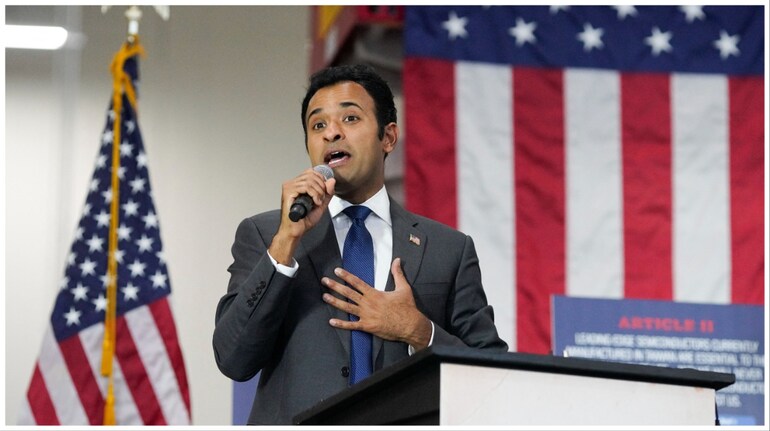

Earlier this month, Vivek Ramaswamy marked a personal milestone by announcing the birth of his third child. The Ohio gubernatorial candidate shared the news in a short social media post that included a family photo, a brief note of thanks, and his daughter’s name Savithri. It was clearly intended as a quiet update for friends, supporters, and well-wishers. That calm did not last long. Within hours, the name itself became the center of attention, circulating widely online and inviting commentary from people far outside the family’s orbit.
Savithri is a time-honoured Indian name with origins in Sanskrit and Hindu tradition. In ancient stories and folklore, the name is linked to qualities such as inner strength, wisdom, and determination. Those layers of meaning, however, were largely absent from much of the discussion that unfolded online.
A section of critics questioned why an American political figure would choose a name they described as unfamiliar or “un-American.” Others took aim at how the name might be pronounced or argued that it sat uneasily alongside Ramaswamy’s public emphasis on nationalism. Some comments went further, speculating about how such a name might shape the child’s future in a Western society. Much of the criticism carried a dismissive tone, and in some cases drifted into personal attacks.
The response from supporters was swift. Many pushed back by pointing to the country’s long history as a nation shaped by immigrants people who brought their languages, customs, and names with them while fully participating in civic life. Several also noted the irony of mocking a child’s name in a country where countless families were once judged for surnames and traditions that are now widely accepted.
The situation followed a pattern that has played out many times in American public life. Leaders from immigrant backgrounds often find that their names and personal histories are treated as political statements rather than simply parts of their private lives. Similar situations have played out before. Public figures such as Barack Obama and Nikki Haley have also seen their backgrounds scrutinized, with parts of their identity used to question whether they truly belonged in the political mainstream.
The moment itself made the reaction sharper. Ramaswamy has often spoken against identity-focused politics, calling instead for an emphasis on common
national values. To some critics, the name choice seemed at odds with that position, while supporters countered that respecting one’s heritage does not weaken a person’s commitment to the country.
Beyond partisan divides, the response brought an old and unresolved issue back into focus: who decides what it truly means to be “American”? For most parents, choosing a name is a deeply personal moment, shaped by family traditions, beliefs, and lived experiences. The reaction to Savithri’s name highlighted how easily such private choices can be dragged into public view when they involve someone in the public eye.
The episode leaves behind a familiar takeaway. Conversations about immigration, assimilation, and identity in the United States are still unresolved. At times, even a newborn’s name can expose the quiet tensions beneath the country’s ideals of diversity and inclusion, showing how those values are continually tested in everyday situations.
Discover the latest Business News, Sensex, and Nifty updates. Obtain Personal Finance insights, tax queries, and expert opinions on Moneycontrol or download the Moneycontrol App to stay updated!
Find the best of Al News in one place, specially curated for you every weekend.
Stay on top of the latest tech trends and biggest startup news.