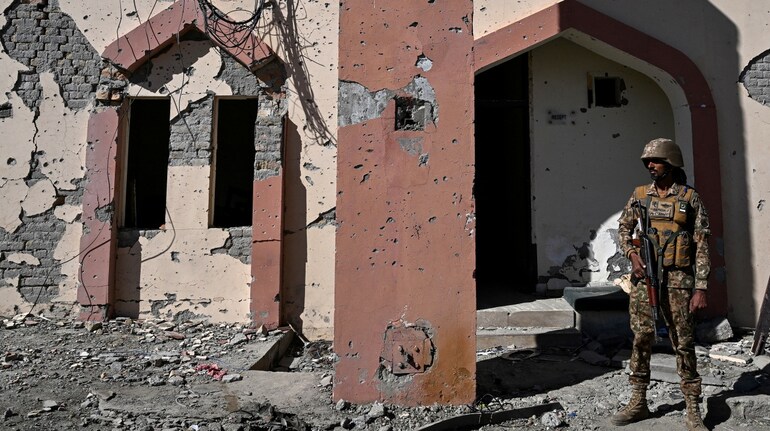

Pakistan recorded its deadliest year in a decade in 2025, as militant violence surged sharply across the country, exposing the deepening internal security crisis facing the state. Data compiled by the Centre for Research and Security Studies shows that overall violence rose dramatically despite repeated claims by Islamabad of improved counterterror outcomes.
According to the CRSS Annual Security Report 2025, fatalities linked to militant attacks climbed to 3,417, up from 2,555 in 2024, marking a 34 percent year-on-year increase. The report documented 1,272 violent incidents during the year, which also left 2,134 people injured.
Violence climbing steadily since 2021
The CRSS noted that Pakistan has been witnessing a continuous rise in violence since 2021, undercutting official narratives of stabilisation. While 2024 saw the steepest spike with a 67 percent jump in fatalities, the momentum carried into 2025, making it the most lethal year for the country in ten years.
The data reflects a worsening security environment, driven by resurgent militant groups and persistent instability along Pakistan’s western frontier.
Afghan border closure offered only brief relief
The report pointed to a temporary dip in violence after Pakistan shut its border with Afghanistan on October 11. By December, the number of attacks fell by 17 percent, while fatalities among civilians and security personnel declined by 19 percent.
However, CRSS stressed that the reduction was short-lived, highlighting how Pakistan’s militant problem remains structural rather than episodic, with border controls offering only momentary relief.
Khyber Pakhtunkhwa and Balochistan bear the brunt
An overwhelming 96 percent of all fatalities and 93 percent of violent incidents were concentrated in Khyber Pakhtunkhwa and Balochistan, underlining Islamabad’s failure to secure its most volatile regions.
Khyber Pakhtunkhwa emerged as the worst-hit province, recording 2,331 deaths, a 44 percent increase from the previous year. Balochistan followed with 956 fatalities, reflecting a 22 percent rise in violence.
In contrast, Punjab saw a marginal improvement, with fatalities falling from 66 in 2024 to 40 in 2025. Deaths in Islamabad Capital Territory also declined from 26 to 15. Gilgit-Baltistan remained the least affected region but still recorded a four-fold increase in fatalities, rising to four deaths.
Militants form majority of those killed
Outlaws accounted for 60 percent of all fatalities, or 2,060 deaths, the highest militant death toll recorded since 2015. CRSS said militant fatalities surged by more than 120 percent compared to 2024, largely due to intensified security operations.
Despite the drop in civilian deaths, ordinary citizens continued to suffer heavily. Civilians accounted for 56 percent of all injuries, reflecting how violence continues to spill into public spaces.
Fatalities among security forces fell marginally by 5 percent, yet they remained a prime target. The report recorded 374 deaths among Army and Frontier Corps personnel, including 22 high-ranking military officers and seven senior police officials.
Who is driving the violence
CRSS identified Tehreek-e-Taliban Pakistan as the most active militant outfit in 2025. It was followed by the Balochistan Liberation Army, Balochistan Liberation Front, and Islamic State Khorasan Province.
The findings paint a stark picture of a country trapped in a cycle of violence, where militant groups continue to regroup and strike despite years of military operations and political claims of control. For Pakistan, 2025 stands out not as a year of recovery, but as a grim reminder of how deeply entrenched its internal security crisis has become.
Discover the latest Business News, Sensex, and Nifty updates. Obtain Personal Finance insights, tax queries, and expert opinions on Moneycontrol or download the Moneycontrol App to stay updated!
Find the best of Al News in one place, specially curated for you every weekend.
Stay on top of the latest tech trends and biggest startup news.