
Have you ever landed in a destination and felt that your trip had a purpose even before it truly began? What if the first thing you were asked to do on a holiday was not queue for a taxi, but make a promise to protect the island welcoming you? In Palau, that is exactly how the journey unfolds.
The Pacific nation, scattered like a necklace of emerald islands in the western ocean, has become a global model for mindful eco-tourism. Long before many countries started speaking about visitor responsibility, Palau introduced the historic Palau Pledge in December 2017, requiring every international visitor to sign a commitment that is stamped directly into their passport like a meaningful autograph. The message is simple: enjoy this rare paradise, but care for it as if it were your own home.
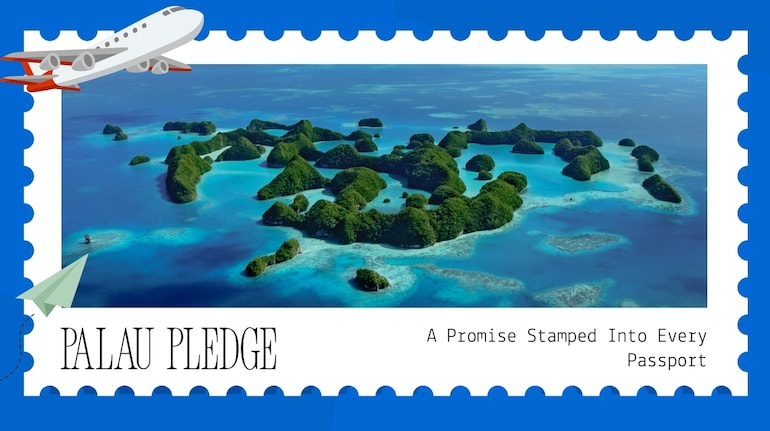
Palau Pledge: A Promise Stamped Into Every Passport
Palau’s approach to conservation begins at Roman Tmetuchl International Airport in Koror. If you visit Palau, the immigration officer will present the Palau Pledge and ask you to sign it as part of the entry process. The signed text is then endorsed inside the passport, travelling with visitors as they explore reefs, rainforests, and traditional villages.
The pledge is addressed to the children of Palau and symbolically assigns visitors the role of temporary stewards of the islands. Rather than being stored as paperwork, it becomes a personal reminder to respect the nation’s culture, marine life, and community-led tourism rules. The regulation accompanies other measures such as monitoring the length of stay and declared activities to ensure travellers align with the country’s vision of high-value, low-impact holidays.
 Palau
Palau
What Is the Palau Pledge?
The Palau Pledge is a conservation vow made by visitors on arrival. By signing it, travellers agree to make thoughtful choices — keeping beaches litter-free, avoiding damage to corals, using reef-safe products, supporting local guides, and showing sensitivity toward Micronesian traditions.
More than a border formality, it acts as a gentle behavioural compass. Tour operators across Palau reinforce the same message, encouraging responsible diving, regulated fishing zones, and respectful photography around cultural sites. The initiative has helped Palau maintain some of the healthiest coral ecosystems in the Pacific despite rising global footfall.
Why Was It Introduced?
Palau witnessed a sharp growth in tourist arrivals in the years following the pandemic recovery. With popularity came challenges. Authorities recorded increasing cases of visa overstays, environmental stress on reefs, and incidents involving foreigners attempting illegal work or businesses when their budgets failed.
The government recognised that traditional tourism campaigns were not enough. The Regional Regulation on the Implementation of Quality Tourism was therefore drafted to attract travellers who contribute positively to the local economy while reducing incidents that harm residents or the island’s image. Palau deliberately chose education and personal accountability through the pledge instead of imposing intimidating bans, believing that a promise in the passport is more persuasive than penalties after violations occur.
Palau Visa Rules for Indian Citizens
For Indians dreaming of the Pacific, Palau has opened doors wide. Under the updated immigration policy effective from mid-2025, Indian passport holders enjoy 30-day visa-free entry for tourism. This makes Palau one of the most accessible ocean island destinations for Indian citizens seeking diving holidays or honeymoon escapes without prior embassy procedures.
Key Requirements for Indian Citizens
The process is straightforward and largely completed at the airport, allowing Indian travellers to focus on trip planning rather than paperwork.
Best Time to Explore Palau
Palau enjoys a tropical maritime climate, warm throughout the year with temperatures between 27 and 30°C. The dry season from November to April offers the finest conditions for first-time visitors. Seas remain calm, underwater visibility touches excellent levels, and island-hopping tours to remote beaches operate smoothly.
The months from May to October bring periodic showers, but reefs flourish with plankton and marine activity. Experienced divers often prefer shoulder months for surfing currents and manta ray sightings, while families favour the drier window for lagoon cruises and waterfall trails.
How to Reach Palau from India
There are no direct flights from Indian cities yet, but well-timed connections operate through Asian gateways, Manila, Taipei, and Seoul.
From these hubs, regional carriers reach Koror in short legs. Total travel time from Delhi, Mumbai, Bengaluru, or Hyderabad ranges between 12 and 16 hours depending on layovers.
Why Palau?
Palau brings together adventure and serenity in a way that feels effortless rather than manufactured. The islands tempt you with landscapes meant for exploration — jade-green rock formations, glass-clear lagoons and forests that echo with birdlife — yet the unhurried cadence of local living gently persuades travellers to slow down and take it all in.
From high-energy dives to meditative sunsets, the destination offers contrasts that shape lasting memories. Here are some of the experiences worth adding to your Palau itinerary:
Jellyfish Lake: Swim among golden jellyfish that have evolved without stings
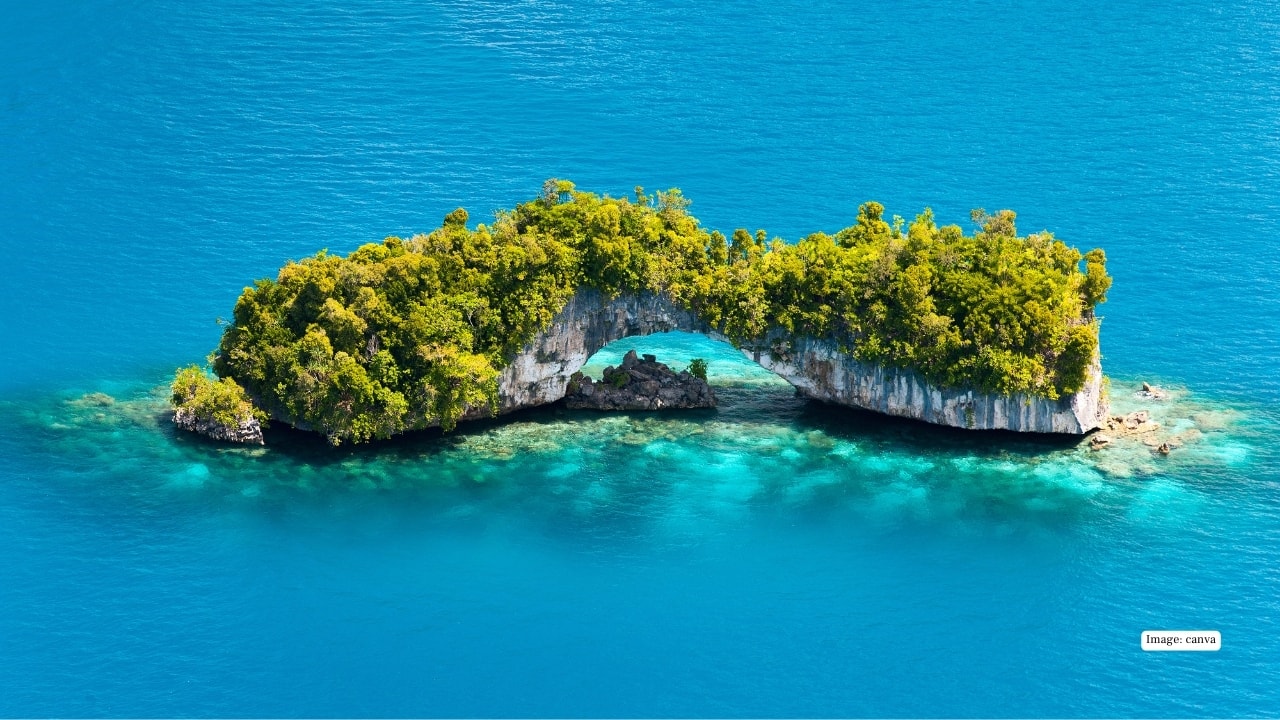
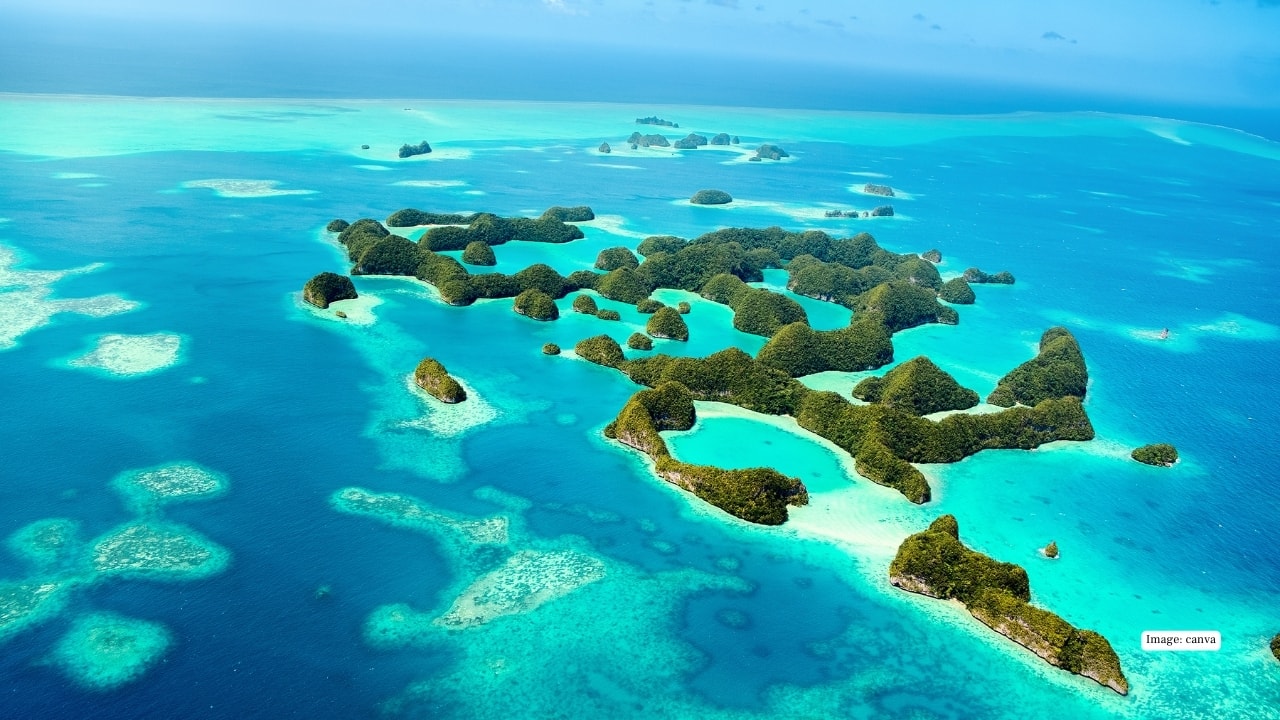
Rock Islands: UNESCO-listed limestone islets surrounded by electric-blue water
Blue Corner Wall: World-class diving with sharks and barracudas
Ngardmau Waterfall and jungles: Trails through orchid-filled forests
Milky Way Lagoon: A turquoise bay known for mineral-rich clay
Traditional bai meeting houses, stone monoliths, and village folklore keep Micronesian heritage alive. Divers can also explore World War II relics — sunken ships, underwater aircraft and historic memorials preserved under local guidelines.
 Palau
Palau
Sustainable Development Fee
Palau charges all visitors a Sustainable Development Fee (SDF) included in the entry permit. The contribution funds reef rangers, waste management, community projects, and protection of restricted marine zones. Travellers receive an eco-pass that allows access to protected sites while ensuring conservation revenue flows to local MSMEs and island communities.
Who Should Travel to Palau?
Palau is gradually positioning itself toward quality tourism, focusing on visitors who spend locally, follow environmental norms, and treat the islands responsibly.

Discover the latest Business News, Sensex, and Nifty updates. Obtain Personal Finance insights, tax queries, and expert opinions on Moneycontrol or download the Moneycontrol App to stay updated!
Find the best of Al News in one place, specially curated for you every weekend.
Stay on top of the latest tech trends and biggest startup news.