- My Alerts
- Go Ad-Free
-
My Account















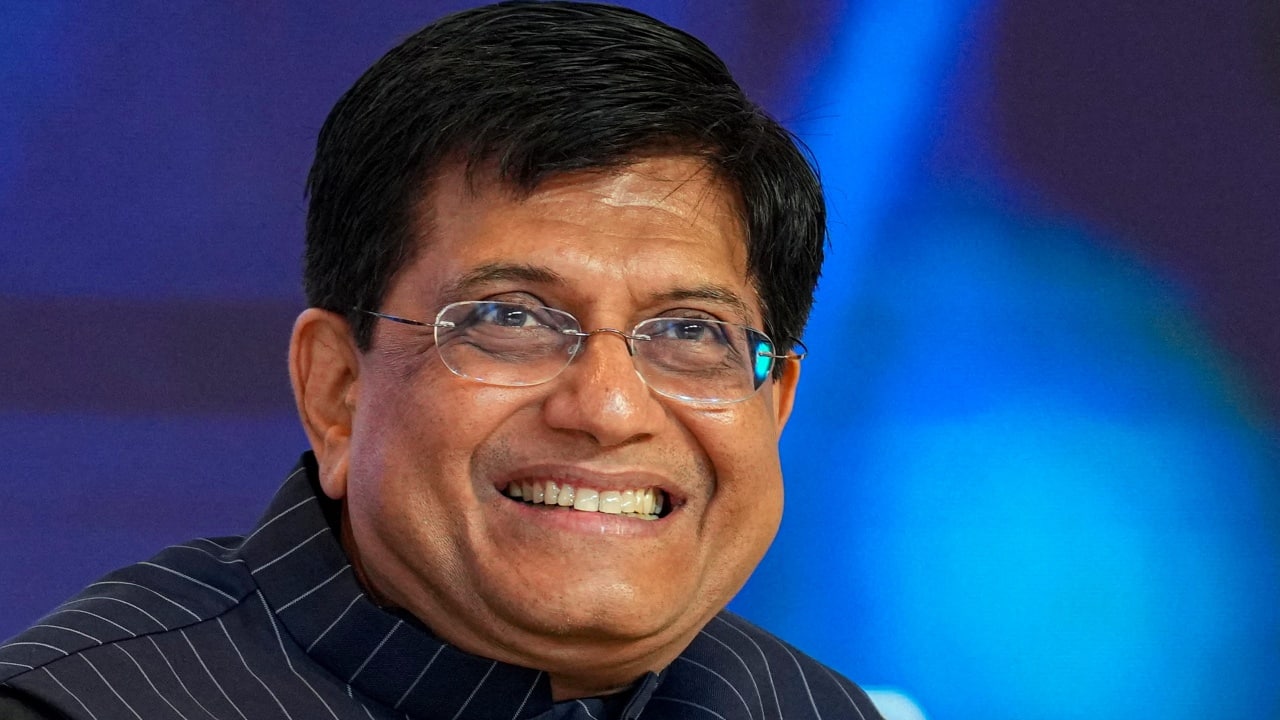
Piyush Goyal
Piyush Goyal is a senior leader of the Bharatiya Janata Party (BJP) and a key member of the Union Cabinet in India. He currently serves as the Union Minister of Commerce and Industry, playing a
...Read more- Reduced tariffs, preferential access, $30 trillion market: India, US unveil interim trade pact | Key highlights
Piyush Goyal said the interim framework would open up a $30 trillion market for Indian exporters, particularly benefiting MSMEs, farmers and fishermen.
- India-US interim trade deal: What ministers said on exports, jobs and farmer safeguards
Under the framework, the U.S. will apply a reciprocal tariff rate of 18 percent on Indian-origin goods, including textiles and apparel, leather and footwear, plastic and rubber products, organic chemicals, home décor, artisanal products and certain machinery.
- Both sides to move ahead safeguarding its interests: Piyush Goyal on India-US trade deal
Addressing concerns over the pact, Goyal emphasised that farmers’ interests remain fully protected and sensitive sectors will not be diluted.
- 'Rahul Gandhi hates India's progress, trying to mislead nation on India-US trade deal': Piyush Goyal
Referring to opposition protests inside Parliament, Commerce Minister Piyush Goyal said he had wanted to present the government’s position in the House but was compelled to speak outside due to disruptions.
- Piyush Goyal on why he spoke on India-US trade deal outside Parliament: 'Everyone saw what Opposition did'
Goyal said he had intended to place his views before lawmakers but was prevented from doing so after what he described as repeated interruptions and disrespect to the Chair.
- India’s trade face in Washington: How Piyush Goyal emerged as key negotiator and delivered the US deal
Throughout the negotiations with the United States, Piyush Goyal’s messaging remained consistent. India was open to deeper trade integration but would not accept terms that harmed farmers, MSMEs, or domestic manufacturing.
- India may achieve USD 2 trillion exports target by 2032: Piyush Goyal
"So we are persevering towards a two trillion dollar export target. May not necessarily happen by 2030, but I'm very confident if we add the COVID lost years, we'll be able to achieve that target," Goyal said.
- With 'mother of all deals' in bag, Piyush Goyal says mother will be compassionate, fair to all 28 children
The India-European Union free trade agreement (FTA) is widely termed as the "mother of all deals".
- India, Gulf bloc mull next steps on FTA; Canada talks to speed up, Chile deal nearly done
The GCC is a regional grouping of six Middle Eastern countries comprising Bahrain, Kuwait, Oman, Qatar, Saudi Arabia, and the United Arab Emirates.
- India-EU FTA announced: When FTA may actually come into effect
The deal is set to provide a $75 billion boost to Indian exports with preferential access in the European markets for 99 percent of goods
- India, EU hope to operationalise free trade agreement by 2026-end, says Piyush Goyal
India and the EU first launched negotiations for a free trade agreement in 2007
- India, EU crucial FTA talks on January 8-9 in Brussels; Piyush Goyal to meet Maros Sefcovic
Commerce and Industry Minister Piyush Goyal will hold discussions with European Union Commissioner for Trade and Economic Security Maros Sefcovic during a two-day official visit.
- Amid India-New Zealand FTA, Piyush Goyal drops big signal on India-US trade pact
The New Zealand pact marks India's third free trade agreement with the Five Eyes countries, after Australia and the UK.
- India-Oman trade pact allows longer stays, higher transfer quotas for Indian professionals
The India-Oman CEPA raises intra-company transferee quota from 20% to 50%, allows contractual service suppliers to stay up to two years with a possible two-year extension in Oman, and liberalises visas for business visitors and professionals across services sectors.
- SHANTI Bill to position nuclear power as backbone for data centres, 24x7 electricity: Piyush Goyal
Union minister Piyush Goyal said nuclear power will complement solar and wind in meeting round-the-clock electricity demand in India.
- If the US is happy, they should sign on the dotted line: Goyal on India–US trade talks
Commerce minister Piyush Goyal said the current visit by the Deputy USTR, who joined recently, is not a formal negotiating round. “Negotiations are progressing well," he said on the India-US trade talks.
- India, EU signal strong political resolve to address pending issues in FTA
During their discussions, Goyal and Šefčovič carried out detailed deliberations across key areas of the proposed agreement
- India’s exports bounce back in November after October slump
On special economic zones (SEZs), Union commerce and industry minister Piyush Goyal said inter-ministerial discussions are "going on very actively" to make the units in these zones competitive. Surplus capacity in SEZs can be used to reduce imports from countries such as China and ASEAN, he said.
- India–Canada ties warm up with a $50 billion trade plan — why it matters now?
The reset marks a shift from strained political ties to renewed economic cooperation, with both sides eyeing deeper trade, technology and energy partnerships.
- Jan Vishwas Bill-3 will decriminalise at least 275 more business offences: Piyush Goyal
The recently enacted labour codes will provide substantial benefits to unorganised workers and gig workers, said Union minister for commerce and industry Piyush Goyal. He said these workers previously had to navigate numerous forms, inspections and complex regulations, whereas the new framework simplifies processes and ensures access to proper facilities, social security and better working conditions.



