






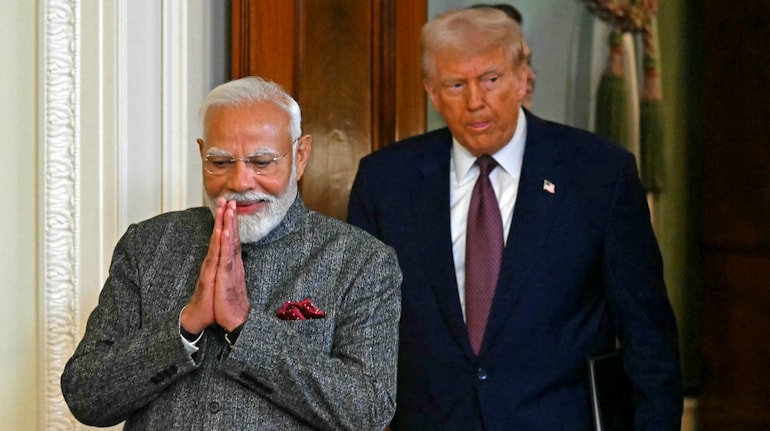
India and the United States on Saturday unveiled an interim trade agreement aimed at lowering tariffs, strengthening ties and deepening economic cooperation. The move comes as both nations seek to realign global supply chains and enhance trade resilience.
Union Commerce and Industry Minister Piyush Goyal described the agreement as a landmark deal. He said it would open up a $30 trillion market for Indian exporters, particularly benefiting MSMEs, farmers and fishermen.
The surge in exports, he added, is expected to generate lakhs of new employment opportunities for women and youth across the country.
Under the agreement, India will remove or reduce tariffs on all US industrial goods and a broad basket of agricultural products, including dried distillers’ grains, red sorghum for animal feed, tree nuts, fresh and processed fruits, soybean oil, wine and spirits. In return, the United States will lower its reciprocal tariff rate to 18 per cent on Indian exports and eliminate tariffs on select products such as generic pharmaceuticals, gems and diamonds, and aircraft parts, subject to the finalisation of the pact.
Key highlights of the joint statement:
- The framework is part of ongoing negotiations toward a broader U.S.-India Bilateral Trade Agreement (BTA) launched in February 2025. Officials described the deal as a step towards reciprocal, balanced trade and greater supply chain security.
- India's tariff actions: Under the interim framework, India has agreed to - eliminate or reduce tariffs on all US industrial goods; cut duties on a wide range of US farm and food products, including dried distillers’ grains (DDGs), red sorghum for animal feed, tree nuts, fruits, soybean oil, wine, and spirits; provide preferential market access in agreed sectors to facilitate smoother trade.
- US tariff actions: The United States will -
* Apply an 18% reciprocal tariff on most Indian goods, including textiles, apparel, leather, footwear, plastics, rubber, organic chemicals, home décor, artisanal products, and certain machinery.
* Remove reciprocal tariffs on a wide range of Indian goods once the interim deal is successfully implemented, covering sectors such as generic pharmaceuticals, gems and diamonds, and aircraft parts.
- Protection for India's agricultural sector: Union Minister Piyush Goyal reassured that the agreement safeguards Indian farmers' interests and supports rural livelihoods by fully protecting sensitive agricultural and dairy products, including maize, wheat, rice, soya, poultry, milk, cheese, ethanol (fuel), tobacco, certain vegetables and meat.
- India to ramp up US purchase to $500 billion: Over the next 5 years, India plans to purchase $500 billion of US energy products, aircraft and parts, precious metals, technology products and coking coal, significantly increasing bilateral trade.
- Steel, auto and aluminium parts: The framework also addresses tariffs linked to U.S. national security rules - certain Section 232 tariffs on Indian aircraft and aircraft parts related to steel, aluminium, and copper will be removed; India will receive a preferential tariff-rate quota for auto parts; pharmaceutical tariffs will be reviewed in line with the ongoing US Section 232 investigation.
- Boost to digital and technology trade: Both nations will tackle barriers to digital trade, increase trade in technology products including GPUs and data centre good and expand joint technology cooperation.
- Further, additional market access commitments and support for more resilient supply chains is also part of the interim deal.
Discover the latest Business News, Sensex, and Nifty updates. Obtain Personal Finance insights, tax queries, and expert opinions on Moneycontrol or download the Moneycontrol App to stay updated!
Find the best of Al News in one place, specially curated for you every weekend.
Stay on top of the latest tech trends and biggest startup news.




